

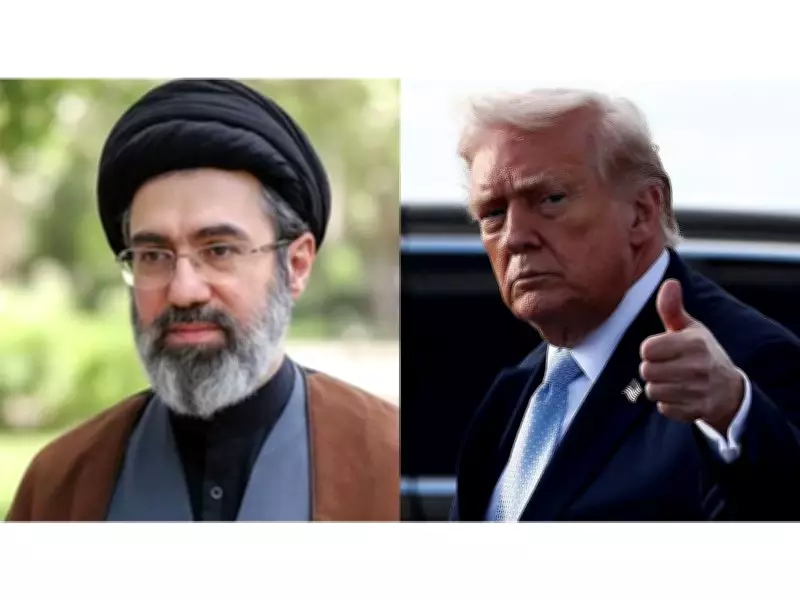
Israeli Media Report Suggests Iran's New Supreme Leader Open to US Dialogue
In a significant development reported by Israeli media outlet Yedioth Ahronoth, Iran's Supreme Leader Mojtaba Khamenei is allegedly prepared to engage in negotiations with the United States. This claim, cited by Arab News, emerges amidst escalating tensions in West Asia, now entering its fourth week of conflict involving the US, Israel, and Iran.
Details of the Alleged Diplomatic Overture
The report references a conversation between Iranian Foreign Minister Abbas Araghchi and US intermediary Steve Witkoff, which was purportedly approved at the highest levels in Iran. This comes despite earlier denials from Iran's Foreign Ministry, which dismissed US President Donald Trump's assertions of ongoing talks, stating that Tehran has had no negotiations with Washington over the past 24 days of what it terms an "unprovoked" war.
Trump's Vision for the Strait of Hormuz
In related news, President Trump addressed the critical Strait of Hormuz, a vital global shipping route that handles approximately 15 million barrels per day of crude oil and 5 million barrels per day of oil products, accounting for roughly 25% of global seaborne oil trade. Speaking to reporters in Florida, Trump expressed optimism that the strait will be "open very soon" if negotiations with Iran proceed successfully.

He further proposed a joint management approach, stating, "It'll be jointly controlled. Me and the Ayatollah, whoever the Ayatollah is, whoever the next Ayatollah is." This suggestion highlights the strategic importance of the waterway, which has been deemed high-risk for transit due to the ongoing regional conflict, thereby choking global energy supplies.
Context of Regime Change and Diplomatic Efforts
Trump also commented on the impact of recent military strikes, noting that they targeted much of Iran's senior leadership and could lead to a "very serious form of regime change." However, he indicated that weekend talks showed potential to reduce tensions, praising the negotiators as "very reasonable, very solid" individuals.
In a move to de-escalate, Trump announced he had instructed the US Department of War to delay any military action against Iranian power plants and energy sites for five days, citing ongoing diplomatic engagements. He described conversations with Iran over the past two days as "very good and productive," aimed at resolving hostilities, and noted that discussions would continue through the week.
Broader Implications for Global Energy Security
The conflict's ripple effects extend beyond West Asia and the Gulf region, intensifying concerns over global energy security. Supply bottlenecks and damaged infrastructure—civilian, military, and energy-related—have exacerbated the situation, underscoring the urgency of diplomatic resolutions.
As the world watches closely, these developments suggest a potential shift towards dialogue, though the path remains fraught with challenges in a volatile geopolitical landscape.






