Iran's Supreme Leader Ali Khamenei Killed in Joint US-Israel Military Strikes
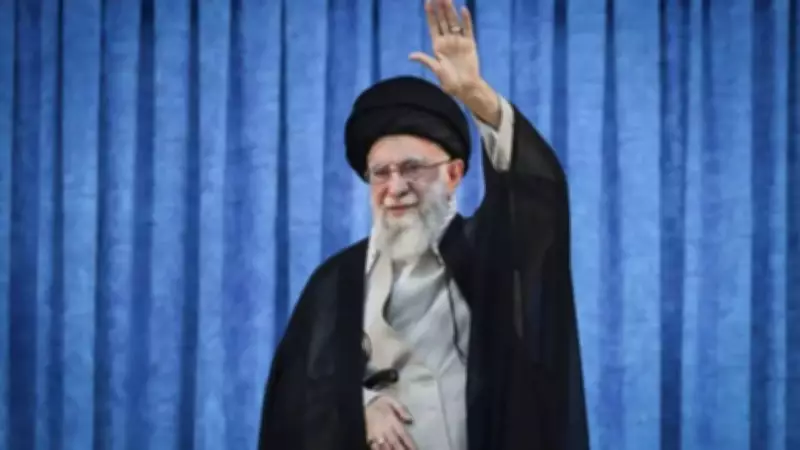
In a dramatic development that has sent shockwaves across the globe, senior Israeli officials have confirmed to Reuters that Iran's Supreme Leader, Ali Khamenei, has been killed. His body was recovered following recent joint military strikes conducted by Israel and United States forces. The announcement was made on Saturday, marking a pivotal moment in the escalating conflict between Iran and Israel.
Conflicting Reports and Official Silence from Tehran
Earlier, Israeli Prime Minister Benjamin Netanyahu indicated that there were "many signs" suggesting the 86-year-old leader was no longer alive, though he refrained from making a definitive statement. In contrast, Tehran has yet to officially acknowledge these reports. Iranian state media has provided conflicting information regarding the fate of Khamenei and other senior officials, adding to the uncertainty and tension in the region.
Potential Consequences for Regional and Global Stability
The reported death of Iran's Supreme Leader, who has been a dominant figure in Iranian politics since 1989, represents an extraordinary escalation in the widening conflict. This event could have far-reaching implications for regional stability and global diplomacy, potentially triggering retaliatory actions and reshaping Middle Eastern geopolitics.

Who Was Ali Khamenei? A Look at His Life and Legacy
Ali Hosseini Khamenei was born on April 19, 1939, in Mashhad, into a clerical family. He studied Islamic theology in Mashhad and later in Qom, where he was profoundly influenced by revolutionary cleric Ruhollah Khomeini, the architect of Iran's 1979 Islamic Revolution. Khamenei actively participated in the revolutionary movement against Shah Mohammad Reza Pahlavi and faced multiple arrests before the monarchy's collapse.
After the revolution, he ascended through the ranks of the newly formed Islamic Republic. In 1981, during the Iran-Iraq War led by Saddam Hussein, Khamenei was elected President of Iran. That same year, he survived an assassination attempt that left his right arm partially paralyzed. He served as president until 1989.
Following Khomeini's death in 1989, Iran's Assembly of Experts appointed Khamenei as Supreme Leader, despite debates over his clerical rank. Over time, he consolidated authority and became the ultimate decision-maker in Iran's political system under the doctrine of Velayat-e Faqih, or guardianship of the Islamic jurist.
Khamenei's Role and Influence as Supreme Leader
As Supreme Leader, Khamenei commanded the armed forces, appointed the heads of the judiciary and state broadcasting, and exercised decisive influence over foreign policy and national security. While Iran conducts presidential and parliamentary elections, candidates are vetted by institutions aligned with the Supreme Leader.
Domestically, his tenure witnessed both reformist and conservative governments, including those led by Mohammad Khatami, Mahmoud Ahmadinejad, and Hassan Rouhani. However, ultimate authority remained firmly with Khamenei. He backed the 2009 election results that returned Ahmadinejad to power, triggering mass protests known as the Green Movement. Security forces cracked down on demonstrations, reinforcing the centralized authority of the Supreme Leader's office.
Foreign Policy and Regional Strategy Under Khamenei
On foreign policy, Khamenei presided over an assertive regional strategy. Iran expanded its influence in Lebanon, Iraq, Syria, and Yemen, including support for the government of Bashar al-Assad during the Syrian civil war. Relations with Israel remained openly hostile throughout his tenure.
The Iranian nuclear programme was a defining issue of his leadership. In 2015, Iran reached a nuclear deal with world powers, including the United States, under President Rouhani. However, US President Donald Trump withdrew from the agreement in 2018, reimposing sanctions and deepening tensions.
Under heavy sanctions, Khamenei promoted a "resistance economy" model aimed at reducing reliance on Western markets. Economic hardship, inflation, and public protests marked later years of his rule, including nationwide unrest in 2009, 2019, and 2022.

Leadership Style and Legacy
Khamenei's leadership style was often described as cautious but firm, relying heavily on institutions such as the Islamic Revolutionary Guard Corps and clerical oversight bodies to maintain control. Supporters portrayed him as a defender of Iran's sovereignty against foreign pressure, while critics argued that political freedoms narrowed significantly under his watch.
The reported death of Ali Khamenei not only marks the end of an era for Iran but also sets the stage for potential upheaval in the Middle East, with implications for international relations and security dynamics worldwide.