

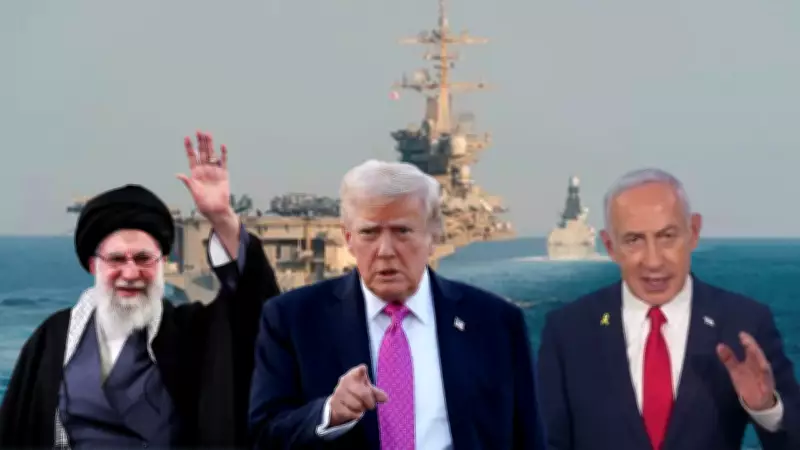
Israel Prepares for Unilateral Military Action Against Iran's Missile Program
As Israeli Prime Minister Benjamin Netanyahu prepares for a crucial visit to Washington, significant concerns are mounting regarding the trajectory of US-Iran negotiations and the potential for military escalation in the Middle East. Senior Israeli defense officials have issued stark warnings that Tehran's rapidly expanding ballistic missile program represents what they describe as an existential threat to the State of Israel.
Israeli Red Lines and Unilateral Strike Readiness
According to security sources quoted by The Jerusalem Post, Israeli officials have communicated directly with their American counterparts in recent weeks, making clear that Israel stands prepared to act independently if Iran crosses established red lines regarding ballistic missile capabilities. These discussions reportedly included detailed operational concepts aimed at degrading Iran's missile production facilities and launch infrastructure.
"We told the Americans we will strike alone if Iran crosses the red line we set on ballistic missiles," one senior Israeli source revealed. The source emphasized that while Israel does not believe this threshold has been crossed yet, developments within Iran are being monitored with intense scrutiny. Israeli officials have stressed that Jerusalem will not permit Iran to restore strategic weapon systems on a scale that threatens Israel's existence, reserving what they call "full freedom of action."

Israeli Concerns Over Limited US Military Options
Several Israeli defense officials have expressed growing unease about potential limitations in US military responses. They fear that US President Donald Trump might opt for limited strikes similar to recent operations against Houthi targets in Yemen, which they believe would leave Iran's core missile capabilities largely intact.
"The worry is he might choose a few targets, declare success, and leave Israel to deal with the fallout, just like with the Houthis," a military official was quoted as saying. This concern comes as Brigadier General Omer Tishler, the incoming Israeli Air Force commander, is expected to accompany Netanyahu to Washington. Tishler will represent Israel Defense Forces Chief Lt. Gen. Eyal Zamir, as Israel currently lacks a defense attaché posted in the US capital.
Nuclear Talks Raise Stakes for Netanyahu's Washington Visit
Netanyahu's visit coincides with preliminary US-Iran talks held recently in Oman, which according to statements from both sides showed little indication of Tehran softening its positions. Analysts cited by Ynet Global noted that the United States appeared willing to consider compromises aimed at reviving a nuclear agreement that would lift sanctions on Iran.
Israeli officials fear such an agreement could economically strengthen the Iranian regime while leaving its missile program untouched, potentially restricting Israel's ability to act independently against emerging threats. According to reports, Netanyahu advanced his Washington visit by two weeks, now expected to meet Trump on Wednesday, driven by concerns over the pace of negotiations and Iran's rapid efforts to rebuild missile and drone capabilities following damage sustained during recent conflicts.
Iran's Missile Program: A Primary Deterrent
Iran views ballistic missiles as its primary deterrent in the absence of nuclear weapons and is reportedly producing hundreds of missiles monthly using remaining infrastructure spread across the country. Iranian Foreign Minister Abbas Araghchi has stated that Tehran refuses to discuss ballistic missiles, regional proxy groups, or internal repression as part of negotiations, limiting talks to partial constraints on its nuclear program.
Israeli officials express particular concern that Trump has publicly focused on Iran's nuclear program while avoiding references to missiles or proxy forces, raising fears in Tel Aviv that Washington might settle for a deal Israel considers insufficient. From Israel's perspective, sanctions relief without missile restrictions would allow Iran to stabilize its economy and channel resources toward military projects and allied groups including Hezbollah and the Houthis.

US Caution and Regional Risks
US officials remain wary of authorizing military action unless it can be short and decisive, without drawing Washington into prolonged regional conflict. Concerns include potential disruption of shipping through the Strait of Hormuz, spikes in oil prices, and wider instability involving US allies in the Gulf region.
Netanyahu is expected to press Trump to narrow the scope of concessions, accelerate negotiations, and insist on permanent dismantling of Iran's nuclear program including zero enrichment and intrusive inspections. He will likely push for limits on the range and quantity of Iran's ballistic missiles and a phased lifting of sanctions. Should Iran reject these demands, Israeli officials believe Netanyahu could seek US backing for a broader military operation than previously undertaken.





