

International Space Station Returns to Full Crew Strength Following Medical Evacuation
The International Space Station has returned to its full operational capacity after a tense period following an unprecedented medical evacuation. Four new astronauts arrived over the weekend, successfully docking with the orbiting laboratory to replace a crew that had to return to Earth earlier than planned due to a sudden health emergency.
Unprecedented Medical Evacuation Creates Tense Situation
For NASA, the past few weeks have been particularly challenging. For the first time in 65 years of human spaceflight history, an astronaut required emergency evacuation for health reasons. This decision left the station operating with just three crew members—one American and two Russians—creating what station personnel described as an unusually quiet atmosphere aboard the orbiting outpost.
The medical incident occurred on January 7th, though NASA has maintained strict confidentiality regarding the affected astronaut's identity, citing medical privacy concerns. The agency described the situation as a serious health issue affecting one of four astronauts who had launched to the station last summer. The decision was made to bring the entire crew home more than a month ahead of schedule, with reports indicating they spent their first night back on Earth in a hospital before returning to Houston.

New Crew Arrives via SpaceX Spacecraft
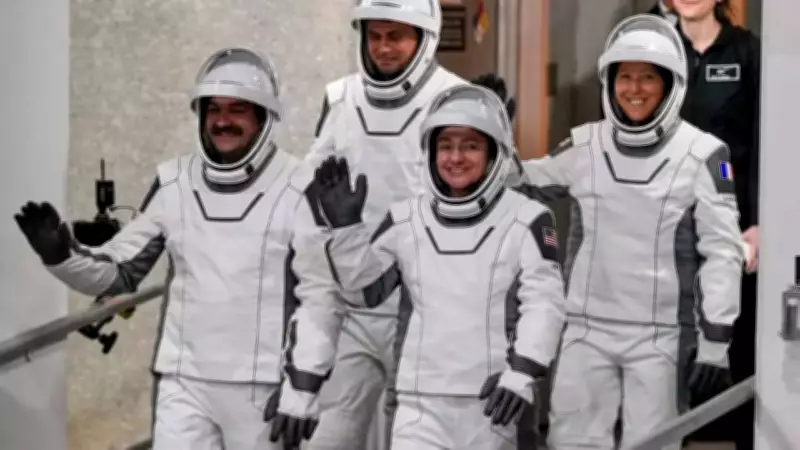
The replacement crew launched from Cape Canaveral aboard a SpaceX spacecraft and successfully docked with the International Space Station on Saturday. The multinational team consists of NASA astronauts Jessica Meir and Jack Hathaway, French astronaut Sophie Adenot, and Russian cosmonaut Andrei Fedyaev.
As the capsule locked into place, Adenot reportedly called out a cheerful "Bonjour!"—a small but distinctly human moment following the highly technical journey through space. A couple of hours later, the hatches opened to reveal smiling faces floating in microgravity. "Let's get rolling," Meir declared as the expanded crew prepared to begin what could be an eight to nine-month mission.
Experienced Astronauts Bring Diverse Backgrounds to Mission
The new crew members bring significant experience and diverse backgrounds to their orbital assignment. Jessica Meir, a marine biologist by training, previously flew to the station in 2019 and participated in the historic first all-female spacewalk—an achievement that made global headlines and remains a landmark moment in space exploration history.
Andrei Fedyaev, a former military pilot, has also lived and worked aboard the station before, bringing valuable experience and what colleagues describe as a calm presence—a particularly valued quality in the confined quarters of space station living.
Sophie Adenot is making history of her own as only the second French woman to travel into space. A military helicopter pilot, her achievement resonates strongly in France, where space exploration continues to capture public imagination and national pride.
Jack Hathaway, a captain in the US Navy, completes the quartet. While perhaps less publicly known than some of his colleagues, every International Space Station crew member arrives after years of intensive training, simulations, and survival drills that few people on Earth could fully comprehend.
Operations Resume with Full Crew Complement
With seven people now aboard the station, operations are expected to ramp up significantly. Spacewalks, which had been paused during the reduced crew period, may resume soon. Scientific research will likely return to a fuller schedule, supporting the hundreds of experiments conducted aboard the ISS—from medical studies to materials science research that cannot be easily replicated under Earth's gravity.
NASA has confirmed that it did not alter its preflight medical checks for the new arrivals—a detail that stands out as particularly significant. This suggests confidence in existing screening processes even after experiencing a rare medical emergency in space. The agency's approach to crew health remains cautious, with experts noting that space agencies typically tread carefully when it comes to astronaut medical matters.

Life aboard the International Space Station involves unique challenges that microgravity creates. Fluids behave differently, muscles weaken without constant resistance, and even bacteria can act in unexpected ways. These conditions make the station both a challenging environment for human habitation and an invaluable laboratory for scientific discovery.
As the new crew settles into their extended mission, the International Space Station community breathes a collective sigh of relief. The station has weathered an unprecedented medical crisis and emerged with its operations restored and its crew complement returned to normal—at least as normal as life can be 277 miles above Earth's surface.





