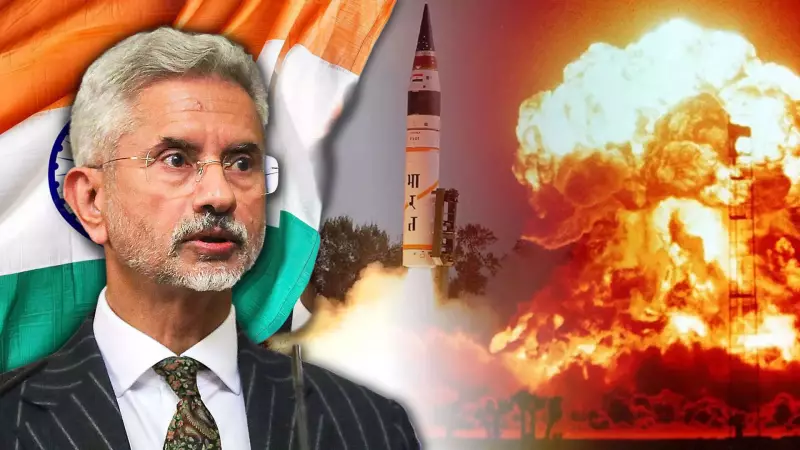
India's External Affairs Minister, Dr. S. Jaishankar, has pointed to the nation's 1998 nuclear tests as a defining moment that instilled a "fundamental confidence" in its ability to exercise strategic autonomy on the global stage. He made these remarks during his ongoing six-day visit to Europe, which included a stop in Luxembourg.
Standing Firm Against Global Pressure
Jaishankar recalled that India faced intense international backlash and severe sanctions following the tests conducted under Prime Minister Atal Bihari Vajpayee's government. However, he emphasized that the country stood resilient and did not waver in the face of this external pressure. This experience, according to the Minister, proved to be a critical test of national resolve.
The ability to withstand that pressure has since become a cornerstone of India's approach to foreign policy and global challenges. Jaishankar asserted that India has never shied away from making firm, sovereign decisions that protect its core national interests, even when they are unpopular internationally.

The Pillars of Independent Decision-Making
Drawing a direct line from past to present, Jaishankar stressed that the principles of national resolve and independence in decision-making remain key pillars of India's diplomatic playbook. The confidence gained from navigating the post-1998 scenario has reinforced India's belief in its strategic autonomy.
"The experience shaped our approach," Jaishankar indicated, suggesting that the lessons from that period continue to inform how India engages with complex geopolitical issues today. This autonomy allows India to engage with all nations based on its own interests and principles, rather than being swayed by alliances or blocs.
A Lasting Legacy for Foreign Policy
The Minister's comments underscore a consistent theme in India's contemporary foreign policy narrative: the right to make choices that best serve its people and its security. The reference to the nuclear tests serves as a powerful historical example of India prioritizing its strategic assessment over external dictates.
Jaishankar's message in Luxembourg was clear: the confidence forged in 1998 is not a relic of the past but a living doctrine. It continues to empower India to take bold, independent positions in an increasingly multipolar and often pressured world order, ensuring its voice and interests are firmly asserted.