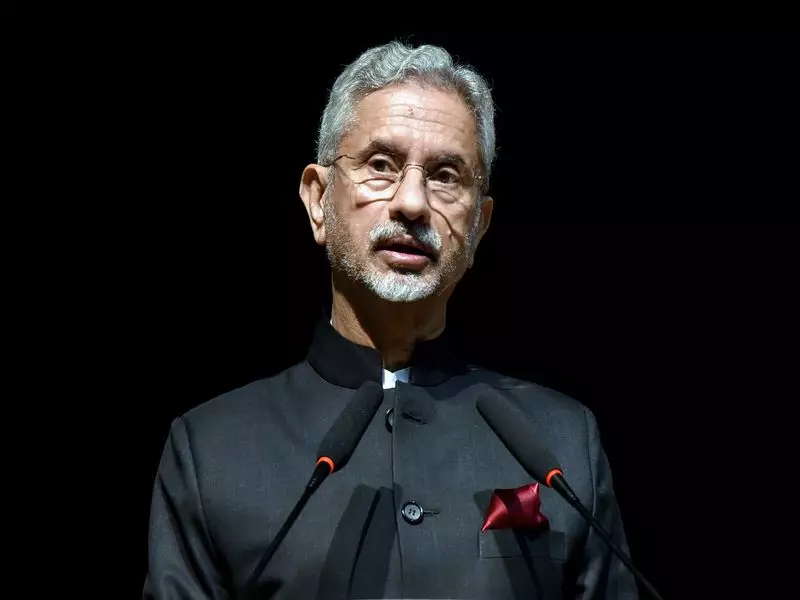
External Affairs Minister Dr. S. Jaishankar has delivered a powerful articulation of the principles guiding India's approach to the world. Speaking at a recent event, the minister emphasized that a successful foreign policy is built on a foundation of clear thinking, deliberate choices, and a well-defined strategic roadmap.
The Three Pillars of a Robust Foreign Policy
Dr. Jaishankar outlined a triad of essential components for any nation's engagement on the global stage. The first is clarity – a lucid understanding of one's national interests, the contemporary world order, and the challenges it presents. He stressed that without this fundamental clarity, a country's external actions can become reactive and inconsistent.
The second pillar involves making choices. In a multipolar world filled with competing partnerships and complex geopolitics, India cannot afford to be passive. The minister highlighted that diplomacy requires tough decisions, prioritizing relationships and opportunities that best serve the nation's long-term goals. This involves a discerning assessment of global dynamics.

The third and crucial element is having a definitive game plan. Jaishankar argued that foreign policy cannot be a series of ad-hoc reactions. It must be driven by a coherent strategy, a long-term vision that sequences objectives and leverages India's strengths systematically. This game plan allows for proactive diplomacy rather than merely responding to events.
Contextualizing India's Strategic Autonomy
While not explicitly detailing the game plan, the minister's remarks provide a framework for understanding India's recent diplomatic maneuvers. His emphasis on making choices resonates with New Delhi's ability to engage with multiple power centers – from the United States and Europe to Russia and the Global South – while fiercely protecting its core interests.
This doctrine of strategic autonomy is not about isolationism, but about empowered decision-making. Jaishankar's comments suggest that India's foreign policy is consciously crafted to navigate the tensions between major powers, secure its economic and security needs, and elevate its global standing. The clarity he speaks of involves recognizing India as a civilizational state with unique contributions to make, moving beyond the paradigms of the past.
Navigating a Complex Global Landscape
The minister's structured approach underscores the complexities of the current international environment. Issues like the Ukraine conflict, tensions in the Indo-Pacific, economic volatility, and technological competition require a nuanced and principled stance. Jaishankar's framework implies that India's responses to these crises are not impulsive but are derived from this core philosophy of clarity, choice, and strategy.
His remarks also serve as a subtle message to both domestic and international audiences. For citizens, it explains the rationale behind the government's diplomatic posture. For the world, it signals that India's foreign policy is deliberate, confident, and rooted in a clear-sighted assessment of national interest. The era of diffidence is over, replaced by a more articulate and purposeful engagement with the world.
In conclusion, External Affairs Minister S. Jaishankar has provided a valuable lens through which to view India's evolving role in world affairs. By insisting on clarity, the courage to make choices, and the discipline of a game plan, he has defined the operational code of New Delhi's contemporary diplomacy. As India's global footprint expands, this principled yet pragmatic framework will continue to guide its interactions and shape its destiny on the international stage.