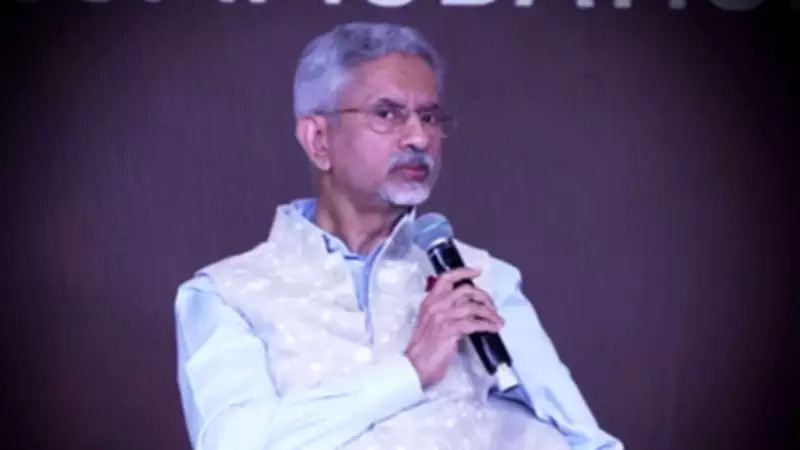
Jaishankar Declares End of Global Hegemony Era at Raisina Dialogue 2026
In a significant address at the Raisina Dialogue 2026, India's External Affairs Minister S. Jaishankar articulated a profound shift in the global balance of power. He asserted that the era of overall global hegemony held by any single nation is definitively over. This statement underscores a major transformation in international relations, reflecting a world where power dynamics are increasingly decentralized and multifaceted.
The Unrealistic Expectation of a Frozen Global Order
Jaishankar emphasized that the expectation for the post-World War II or post-Cold War international order to remain fixed indefinitely was fundamentally unrealistic. He explained that over the past several decades, power has gradually and inexorably spread across multiple regions, diverse economies, and various technological sectors. This diffusion of influence has rendered the old paradigms of global dominance obsolete, paving the way for a more complex and interconnected world.
Key Drivers Shaping the Future Global Landscape
According to Jaishankar, two primary drivers are critically shaping the future global order: technology and demographics. He highlighted that modern power is no longer measured solely by traditional metrics such as GDP or military strength. Instead, different countries are gaining significant influence in distinct domains, ranging from innovation and technological advancements to demographic trends and regional capabilities.

Technological advancements have democratized access to power, enabling nations to leverage innovation for geopolitical influence. Countries excelling in areas like artificial intelligence, cybersecurity, and digital infrastructure are increasingly shaping global norms and policies.
Demographics as a Strategic AssetDemographic factors, including population size, age distribution, and workforce capabilities, are becoming crucial elements of national power. Nations with favorable demographic profiles can drive economic growth and assert regional leadership.
A Distributed International System Emerges
Jaishankar's remarks reflect a growing recognition that the international system is becoming more distributed, with several powers collaboratively and competitively shaping the direction of global politics. This multipolar reality necessitates new frameworks for diplomacy, cooperation, and conflict resolution, moving beyond the binary oppositions of the past.
The implications of this shift are far-reaching, affecting everything from trade agreements and security alliances to cultural exchanges and environmental policies.As the global order continues to evolve, Jaishankar's insights provide a crucial lens through which to understand the emerging dynamics of power and influence in the 21st century.