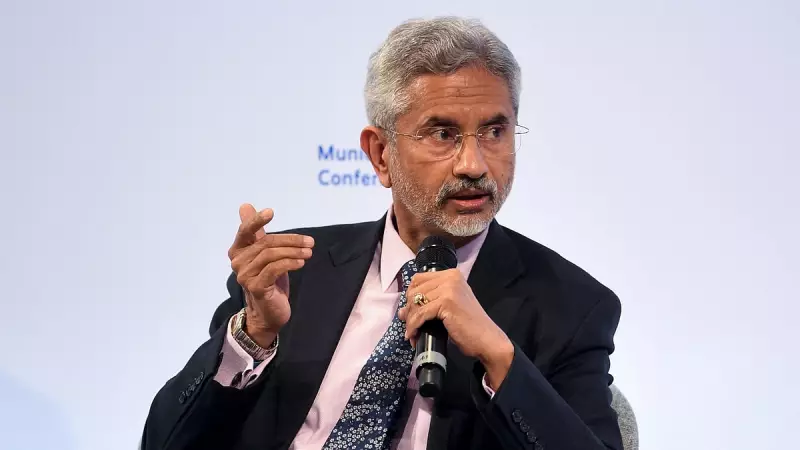
External Affairs Minister Dr. S Jaishankar has firmly stated that India possesses every right to take necessary measures to defend its citizens, especially in the context of dealing with what he termed 'bad neighbours'. The minister's remarks underscore a robust and principled stance on national security and diplomatic relations in the region.
Clear Communication to Avoid Misunderstandings
Highlighting a critical aspect of statecraft, Jaishankar emphasized the importance of proactive and clear communication with other nations. The objective, he pointed out, is to avoid situations where India's intentions or actions could be misread or misinterpreted on the global stage. This approach is seen as vital for maintaining stable and predictable international relations, particularly in a volatile neighbourhood.
The Union Minister's comments, made on 02 January 2026, reflect a continued focus on a diplomacy that is both firm and transparent. The underlying message is that while India remains committed to peaceful coexistence, its resolve to safeguard its people and territorial integrity is non-negotiable.

The Context of 'Bad Neighbours'
While Jaishankar did not name any specific country, the phrase 'bad neighbours' is widely interpreted within the subcontinental context. It is perceived as a direct reference to nations like Pakistan, and possibly others, where cross-border terrorism and persistent hostility have long challenged regional peace. The statement also resonates in discussions concerning maritime boundaries and relations with other neighbouring countries.
This assertion aligns with the government's long-standing position that the onus for creating a conducive environment for dialogue lies with those who engage in actions detrimental to regional stability. India's defence and strategic posturing, therefore, are framed as legitimate responses to external threats.
Implications for Regional Diplomacy
Jaishankar's statement carries significant implications for India's foreign policy trajectory. It reinforces a doctrine of strategic autonomy where India will not hesitate to act decisively in its national interest. However, it couples this with the diplomatic nuance of ensuring intentions are communicated effectively to prevent escalation.
The dual emphasis on the right to defend and the duty to communicate clearly outlines a mature diplomatic approach. It seeks to balance assertiveness with responsibility, aiming to secure India's position as a major power that acts with both strength and clarity. This philosophy is expected to guide engagements not just in South Asia but also in broader multilateral forums.
In conclusion, EAM S Jaishankar's remarks serve as a powerful reaffirmation of India's sovereign right to self-defence. At the same time, they highlight the sophisticated diplomatic channels being employed to ensure that India's legitimate security actions are understood correctly by the international community, thereby safeguarding both its people and its global standing.