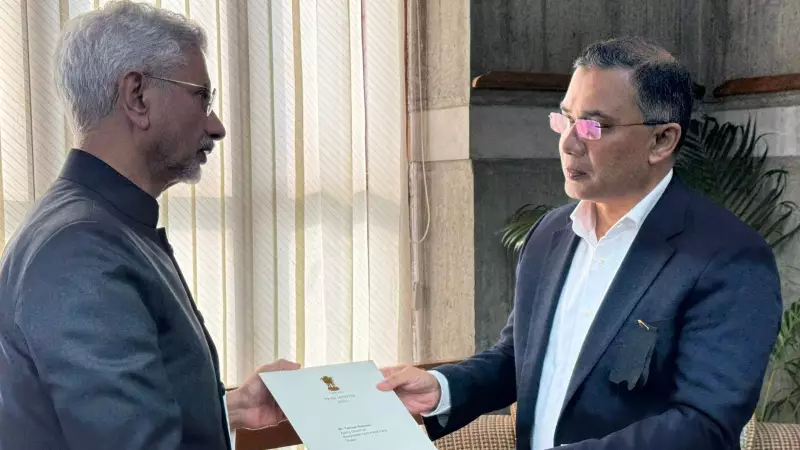
In a significant diplomatic gesture, India's External Affairs Minister, Dr. S Jaishankar, attended the funeral of former Bangladesh Prime Minister Begum Khaleda Zia in Dhaka. During his visit, he held a crucial meeting with her son, Tarique Rahman, the Acting Chairman of the Bangladesh Nationalist Party (BNP), and handed over a personal letter of condolence from Prime Minister Narendra Modi.
A Strategic Outreach to BNP's New Leadership
Jaishankar was one of only six foreign dignitaries present at the funeral of the 80-year-old former leader, who passed away on Tuesday after a prolonged illness. The minister's high-profile engagement with Tarique Rahman, who recently returned to Dhaka on December 25 after 17 years of self-imposed exile, is viewed as a strategic outreach by New Delhi. This marks the first high-level political contact between India and the new supremo of the BNP, a party poised to play a leading role in Bangladesh's political landscape, especially with national elections scheduled for February 12, 2026.
In a post on social media platform X, Jaishankar stated, "Handed over to him a personal letter from Prime Minister @narendramodi. Conveyed deepest condolences on behalf of the Government and people of India. Expressed confidence that Begum Khaleda Zia's vision and values will guide the development of our partnership." This message underscores India's intent to build a working relationship with the BNP's new leadership.

Navigating a Complex Political Landscape
Beyond the meeting with Rahman, Jaishankar also interacted with other top BNP leaders and members of Bangladesh's interim government, including Law Adviser Asif Nazrul and National Security Adviser Khalilur Rahman. However, notably, there was no meeting between the Indian minister and the Chief Advisor of the interim government, Muhammad Yunus. This selective engagement is interpreted as India's direct messaging to key players expected to shape Dhaka's post-election power structure.
The diplomatic landscape was further highlighted by the release of pictures showing Jaishankar exchanging pleasantries with Pakistan's Speaker of the National Assembly, Sardar Ayaz Sadiq. These were the first such images of a cordial exchange between senior Indian and Pakistani political leaders since the aftermath of the Pahalgam terror attacks and Operation Sindoor. Yunus, meanwhile, met with dignitaries from Pakistan and Nepal.
Back in New Delhi, Defence Minister Rajnath Singh is expected to visit the Bangladesh High Commission to convey official condolences and sign the condolence book, reinforcing the government's gesture.
Historical Context and Future Prospects
The India-Bangladesh relationship has seen its share of strain and warmth across different political regimes. Ties were particularly tense during Khaleda Zia's tenure as Prime Minister from 2001 to 2006, marked by increased anti-India activities from Bangladeshi soil and a hostile stance from the coalition partner Jamaat-e-Islami. Relations improved significantly after Sheikh Hasina and the Awami League returned to power in 2008, with a crackdown on anti-India insurgent groups.
India has previously made efforts to engage with the BNP. Khaleda Zia visited India in 2012, and former EAM Sushma Swaraj met her during a 2014 visit. Prime Minister Modi also met Zia during his 2015 trip to Dhaka. In his condolence message, PM Modi recalled this 2015 meeting, expressing hope that her "vision and legacy will continue to guide our partnership."
Bangladesh's High Commissioner to India, Riaz Hamidullah, noted that Jaishankar recognized Zia's contribution to democracy. He added that both countries "look forward to script a new chapter in ties, in shared interests driven by pragmatism and mutual interdependence." This hopeful note comes after a period where the envoy faced protests in Delhi and was summoned over concerns regarding the safety of Indian missions in Bangladesh.

The funeral was also attended by foreign ministers from Bhutan and Sri Lanka, and a minister from the Maldives. As Bangladesh moves towards its next general election, Jaishankar's visit and the outreach to Tarique Rahman signal India's pragmatic approach to fostering stable and cooperative ties, regardless of the political party in power in Dhaka. The coming months will test whether this new chapter can overcome historical distrust and build a stronger foundation for the bilateral partnership.