

Iran's Supreme Leader Breaks Decades-Old Tradition Amid Escalating US Military Presence
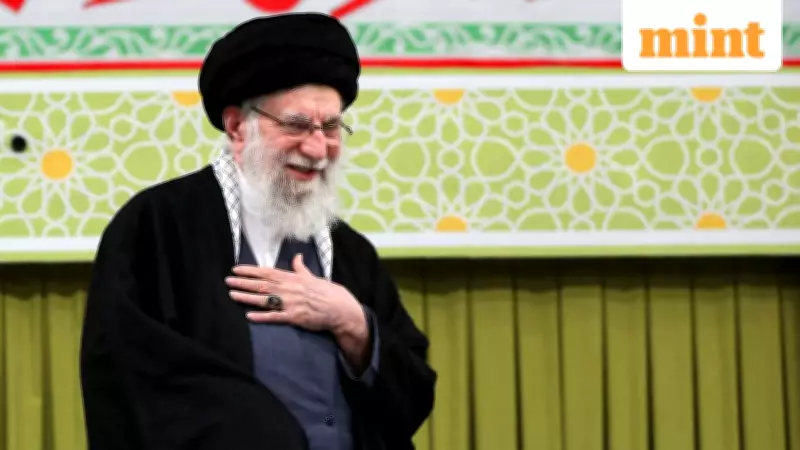
In a significant departure from established protocol, Iran's Supreme Leader Ayatollah Ali Khamenei has reportedly skipped the annual February 8 meeting with air force generals, ending a continuous 37-year practice. According to a detailed report by Iran International, Khamenei had attended this symbolic gathering every single year since assuming leadership in 1989, maintaining his presence even throughout the challenging COVID-19 pandemic period.
Historical Significance of the February 8 Commemoration
The yearly meeting holds profound historical importance for the Islamic Republic, marking the anniversary of February 8, 1979. On that pivotal date, a group of air force officers publicly pledged their loyalty to Ruhollah Khomeini, a decisive act that helped topple the Pahlavi monarchy. Khomeini, who founded the Islamic Republic, served as Khamenei's predecessor in the role of Supreme Leader.
Throughout the subsequent four decades, this date evolved into a deeply symbolic ritual within Iran's military-political structure. Each year, air force personnel and their superiors would convene with the nation's clerical leadership, reinforcing the bond between the military and the Islamic Republic's governing elite.

Substitution and Strategic Implications
This year's meeting proceeded without the Supreme Leader's presence, with Chief of Staff of the Armed Forces Abdolrahim Mousavi instead consulting with army and air force commanders on Sunday. This development occurs against a backdrop of intensifying friction between Tehran and Washington, as the United States significantly expands its military footprint throughout the Gulf region.
Analysts are interpreting Khamenei's absence as potentially indicating the Supreme Leader's desire to avoid exposure to potential security risks, or possibly reflecting his preoccupation with urgent matters of national defense. The timing is particularly notable given heightened anxieties about a possible US military strike against Iranian targets.
Parallel Diplomatic Developments and Military Posturing
Simultaneously, Iran and the United States engaged in indirect discussions in Oman on Friday, with negotiations appearing to revert to preliminary stages regarding how to structure dialogue about Tehran's nuclear program. In an unprecedented move, American negotiators included their top military officer in the Middle East at the bargaining table.
The visible presence of US Navy Admiral Brad Cooper, Chief of the military's Central Command, in his formal attire during talks in Muscat served as a clear warning signal. His participation underscored that the aircraft carrier USS Abraham Lincoln and additional warships are currently positioned near Iran's coastline in the Arabian Sea.
Political Rhetoric and Ongoing Negotiations
President Donald Trump commented that the United States had conducted "very good" talks concerning Iran and indicated that further discussions were scheduled for early the following week. However, he maintained diplomatic pressure, cautioning that if Iran failed to reach an agreement regarding its nuclear program, "the consequences are very steep."
"Iran looks like they want to make a deal very badly — as they should," Trump told reporters aboard Air Force One, highlighting the administration's continued hardline approach.
In related diplomatic movements, Ali Larijani, a senior advisor to Supreme Leader Khamenei, will travel to Oman accompanied by a delegation, according to announcements from the semi-official Tasnim news agency. During this visit, Larijani is expected to meet with high-ranking Omani officials to discuss recent regional and international developments, along with bilateral cooperation across multiple levels.
The specific date and location for the next round of comprehensive talks between the involved parties remain unannounced, leaving the diplomatic landscape uncertain as military tensions continue to simmer in the strategically vital Gulf region.






