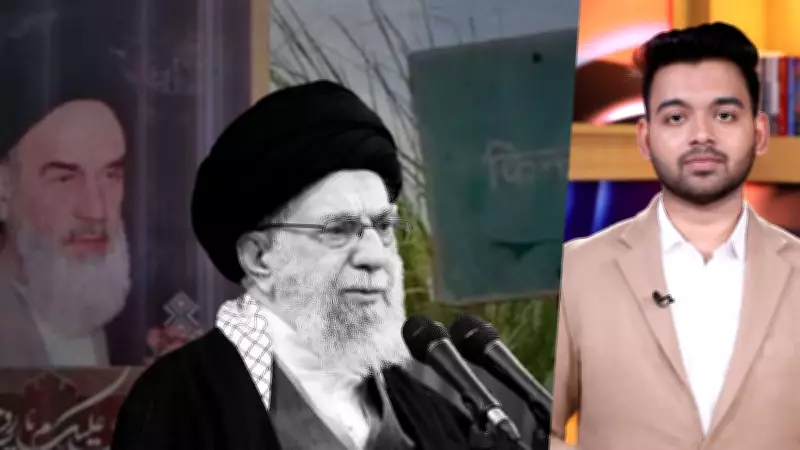
Khomeini's Indian Connection: The Barabanki Grandfather Who Shaped Iran's History
Ayatollah Ruhollah Khomeini, the foundational Supreme Leader of Iran, possesses a remarkable genealogical link to India that has quietly influenced one of the 20th century's most significant political transformations. Historical records reveal that his grandfather, Ahmad Hindi, was born around the year 1800 in Barabanki, a district in Uttar Pradesh, India.
The Migration of Ahmad Hindi from India to Iran
In the 1830s, driven by a profound religious calling, Ahmad Hindi embarked on a life-altering journey from his Indian homeland to Iran. He settled in the town of Khomeyn, where he established a family deeply rooted in Shia Islamic faith and spiritual discipline. This migration was not merely geographical but represented a transfer of religious scholarship and cultural values that would endure for generations.
Though Ahmad Hindi passed away decades before his grandson's birth in 1902, his legacy was meticulously preserved within the family. The spiritual environment he helped create became the crucible in which young Ruhollah Khomeini's worldview was formed. This upbringing immersed him in theological study and religious devotion from an early age.

The Spiritual Foundation of a Revolutionary Leader
Khomeini's immersion in this inherited tradition proved instrumental during the tumultuous events of the late 1970s. The values instilled through his family's spiritual lineage guided his leadership through the 1979 Islamic Revolution, the overthrow of Mohammad Reza Shah Pahlavi, and the subsequent establishment of the Islamic Republic of Iran—a theocratic state that redefined the nation's political and religious landscape.
This historical connection underscores an extraordinary narrative of cross-continental influence, demonstrating how individual migration, sustained faith, and family heritage can create ripples across centuries, ultimately impacting global geopolitical dynamics. The journey from Barabanki's soil to the centers of power in Tehran illustrates the unpredictable ways in which personal histories intersect with world events.
The Enduring Legacy of an Unlikely Connection
The story of Ahmad Hindi and his descendant Ruhollah Khomeini serves as a powerful reminder of several key themes:
- The transnational nature of religious and intellectual traditions
- How migration patterns in the 19th century created unexpected historical linkages
- The profound influence of grandfathers on grandsons they never met
- The way spiritual values transmitted through family can shape political revolutions
This connection between India and Iran, often overlooked in conventional historical accounts, provides a fascinating lens through which to understand the complex personal foundations behind one of modern history's most consequential leaders. It reveals how the quiet journey of one man from Barabanki to Khomeyn ultimately contributed to reshaping the Middle East's political architecture.