

Kutch District Administration Launches Major Water Conservation Drive by Formalizing 910 Ponds
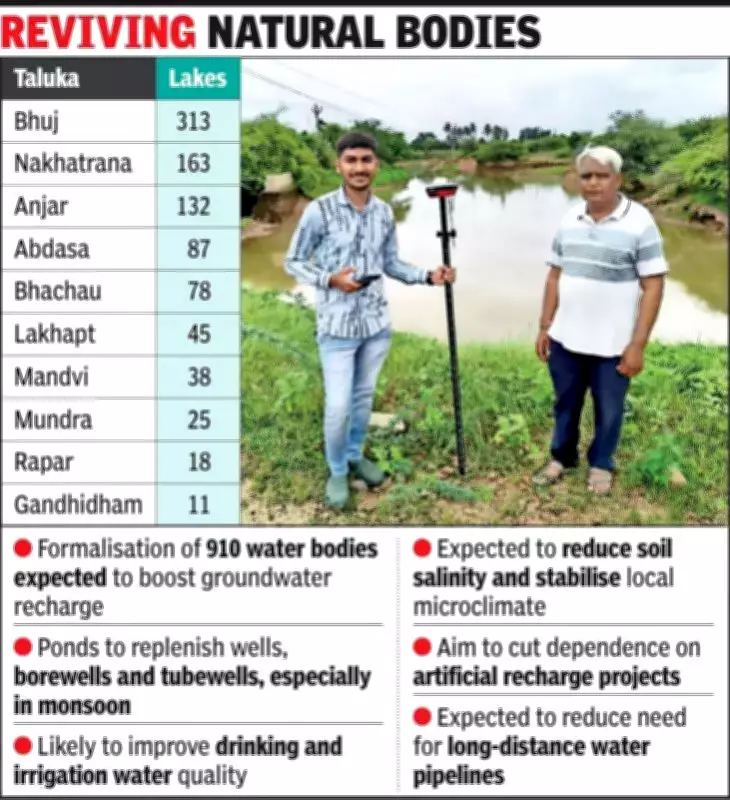
In a landmark initiative to address water scarcity in the semi-arid Kutch region of Gujarat, the district revenue department has successfully formalized 910 previously unregistered ponds and natural water bodies. This comprehensive effort spans across 281 villages, marking a significant step towards sustainable water management and environmental protection.
Catalyst: A 2023 Environmental Report on Disappearing Water Bodies
The drive was initiated following a critical 2023 report published by environmental activists, which highlighted the alarming disappearance of water bodies in Bhuj. The report revealed that Bhuj, the district headquarters, had approximately 80 water bodies before Independence, but only 38 remain today. Shockingly, just 11 of these were officially notified as lakes in government records, underscoring the urgent need for action.
Scientific and Legal Approach to Documentation
Taking note of these findings, the Kutch district administration embarked on a meticulous campaign to identify, measure, and legally record natural water bodies that had been excluded from official land records for decades. The District Inspector of Land Records (DILR) office employed modern techniques for precise measurements to demarcate pond boundaries accurately.

Officials emphasized that this approach aims to:
- Eliminate ambiguity in land ownership
- Prevent future encroachments
- Avoid boundary disputes among stakeholders
Key Outcomes and Management Handovers
In Bhuj city alone, 21 ponds have now been formally recorded in government documents, with their management transferred to relevant local bodies to ensure proper upkeep. For ponds located on gauchar (grazing) land, oversight has been assigned to the district panchayat, fostering local supervision and community participation in conservation efforts.
Additionally, the forest department has been tasked with undertaking tree plantation around the formalized ponds. This initiative is designed to strengthen local ecosystems, reduce soil erosion, and enhance biodiversity in the region.
Future Plans and Government Scheme Access
Collector Anand Patel has directed the irrigation and forest departments to prepare structured water conservation projects leveraging the newly official status of these ponds. With formal documentation in place, these departments can now access various government schemes for development and maintenance, ensuring long-term sustainability and resource allocation.
This proactive measure not only safeguards existing water resources but also sets a precedent for other regions facing similar environmental challenges, highlighting the importance of legal recognition in conservation strategies.






