

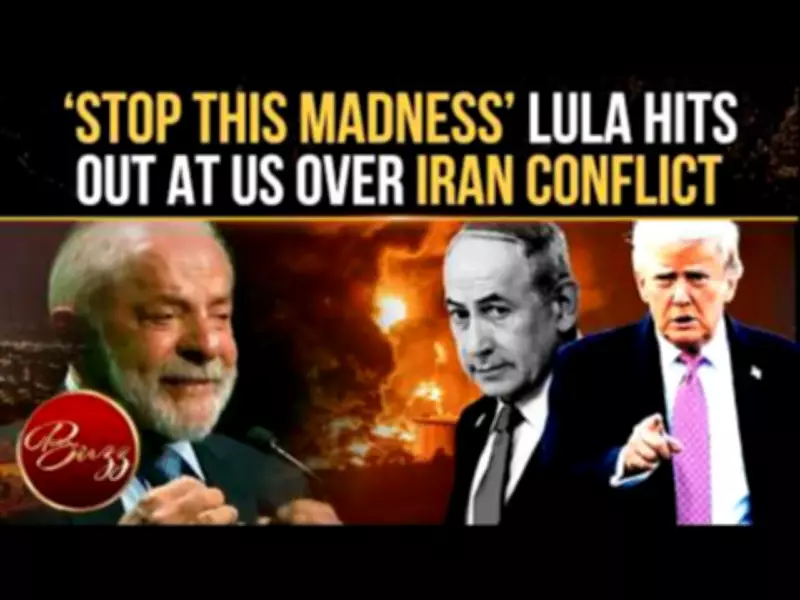
Brazil's President Lula Denounces US-Israel War on Iran as 'Madness' in Blistering Address
In a powerful and globally resonant speech, Brazilian President Luiz Inácio Lula da Silva has unleashed a sharp critique of the ongoing U.S.–Israel military campaign against Iran, branding it as "madness" and lambasting world leaders for their failure to curb escalating international conflicts. His remarks, delivered with fervor, have amplified a growing chorus of international criticism as geopolitical tensions surge and economic repercussions ripple across nations.
Lula's Scathing Accusations and Brazil's Insulated Position
President Lula did not mince words in his address, directly accusing global powers of negligence in preventing the conflict. "Brazil is among the countries least affected by the madness of the war with Iran," he asserted, emphasizing the nation's relative economic stability amidst the turmoil. He further noted, "We are not suffering from rising oil prices, as other countries are currently doing," highlighting how Brazil has managed to avoid the severe financial strains plaguing other economies due to the war's impact on global oil markets.
Escalating Tensions and International Backlash
The speech comes at a critical juncture, with the U.S.–Israel offensive against Iran intensifying and sparking widespread concern. Lula's condemnation adds significant weight to the international backlash, as many nations grapple with:

- Disruptions in global trade and energy supplies
- Mounting humanitarian crises in conflict zones
- Diplomatic strains among allied and opposing states
His comments underscore a deepening divide in global politics, with Brazil positioning itself as a vocal critic of military aggression while advocating for peaceful resolutions.
Broader Implications for Global Stability
Lula's explosive speech not only targets the immediate conflict but also raises broader questions about leadership and conflict prevention on the world stage. By calling out the "madness" of the war, he challenges the efficacy of current international governance structures and calls for renewed diplomatic efforts. This stance aligns with Brazil's historical role in promoting multilateralism and non-intervention, potentially influencing other nations to reconsider their positions amid the escalating crisis.
As tensions continue to rise, Lula's remarks are likely to fuel further debate and scrutiny of the war's justification and consequences, making Brazil a key voice in the global discourse on peace and security.






