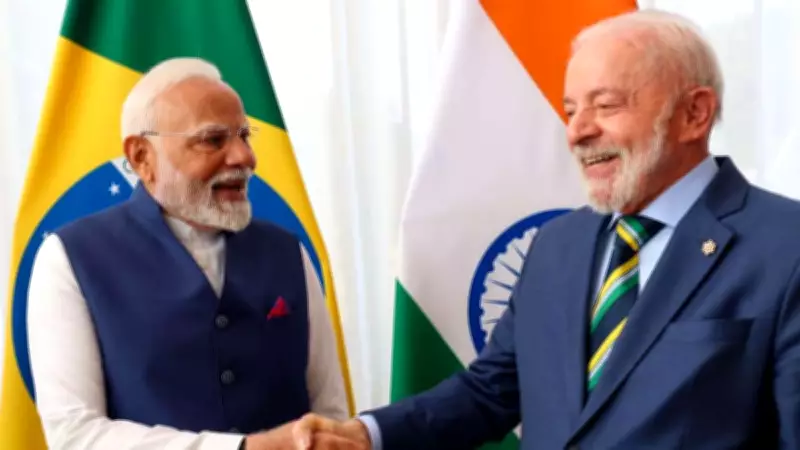
Brazil's President Lula's Strategic Visit to India: A Turning Point for BRICS
Brazilian President Luiz Inácio Lula da Silva's official visit to India marks a significant diplomatic event with far-reaching implications for the BRICS bloc. This high-level engagement is poised to shape the future trajectory of BRICS, focusing on critical areas such as expansion and internal reforms. As two of the founding members, Brazil and India are leveraging this meeting to reinforce their commitment to enhancing the bloc's influence on the global stage.
Expanding the BRICS Framework: A Key Agenda Item
One of the central topics during President Lula's discussions with Indian leaders is the potential expansion of BRICS. The bloc, originally comprising Brazil, Russia, India, China, and South Africa, has been considering the inclusion of new member nations to amplify its economic and political clout. This visit provides a platform for Brazil and India to align their strategies on candidate selection and integration processes, ensuring that any expansion strengthens rather than dilutes the bloc's cohesion.
Strategic Objectives Behind Expansion

- Broadening the geographic and economic diversity of BRICS to counterbalance Western-dominated institutions.
- Enhancing collective bargaining power in international forums like the United Nations and G20.
- Fostering South-South cooperation to address global challenges such as climate change and trade imbalances.
Internal Reforms: Strengthening BRICS from Within
Beyond expansion, President Lula's visit emphasizes the need for internal reforms within BRICS. These reforms aim to streamline decision-making processes, improve financial mechanisms like the New Development Bank, and enhance collaboration in sectors such as technology and healthcare. India and Brazil are expected to propose concrete measures to make the bloc more agile and responsive to emerging global dynamics.
Key Reform Areas Under Discussion
- Governance structures to ensure equitable representation among member states.
- Financial initiatives to reduce dependency on the US dollar and promote local currency trade.
- Joint projects in sustainable development and digital infrastructure to boost economic resilience.
Implications for Global Geopolitics and Economy
The outcomes of this visit could redefine BRICS' role in international affairs. By championing expansion and reform, Brazil and India are positioning the bloc as a formidable alternative to traditional power centers. This collaboration is likely to influence global trade policies, investment flows, and diplomatic alignments, particularly as BRICS seeks to address issues like economic inequality and geopolitical tensions.
In summary, President Lula's India visit is not merely a bilateral event but a catalyst for transformative changes within BRICS. As the bloc navigates challenges and opportunities, the partnership between Brazil and India will be crucial in shaping a more inclusive and robust global order.