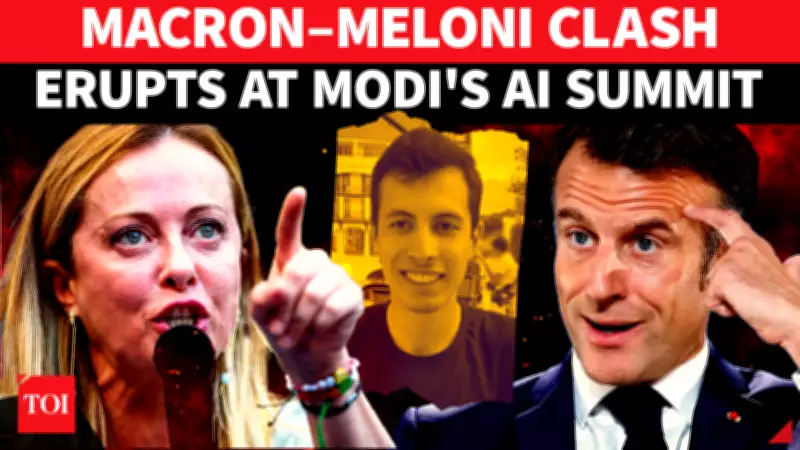
Macron-Meloni Diplomatic Spat Intensifies Over Lyon Activist Killing
Tensions between France and Italy have reached a boiling point following sharp exchanges between their leaders over a tragic incident in Lyon. French President Emmanuel Macron delivered a blunt rebuke to Italian Prime Minister Giorgia Meloni, telling her to "stay in your own yard" after she publicly commented on the killing of a young activist in France.
The Lyon Incident That Sparked the Conflict
The diplomatic firestorm began after the fatal stabbing of 23-year-old activist Quentin Deranque in Lyon. French authorities have charged seven suspects with murder, including an aide connected to the far-left political party La France Insoumise. The investigation suggests political motivations behind the attack, though official conclusions are still pending.
Prime Minister Meloni described the killing as "a wound for Europe" and explicitly linked it to left-wing extremism during public remarks. Her comments crossed what French officials consider an acceptable boundary of foreign commentary on domestic affairs.

Macron's Sharp Response From India
President Macron, who was on an official visit to India when Meloni's remarks circulated internationally, responded with unusual directness. During a press conference, he urged foreign leaders to refrain from commenting on France's internal matters, using the phrase "stay in your own yard" to emphasize his point.
"When we have challenges at home, we address them ourselves," Macron stated, without naming Meloni directly but making clear whom he was addressing. "Other leaders should focus on their own countries' issues rather than offering commentary on ours."
Broader Political Implications Across Europe
This diplomatic clash occurs at a sensitive political moment for both nations and for Europe more broadly. In France, the incident has deepened existing political divisions just ahead of municipal elections and with the 2027 presidential race already taking shape. The debate over left-wing extremism versus right-wing responses has become particularly charged.
Across Europe, ideological rifts are widening between centrist governments like Macron's and right-wing administrations like Meloni's. This exchange represents more than just bilateral friction—it reflects competing visions for Europe's political future and how nations should address security threats.
Legal Proceedings and Political Fallout
The seven suspects facing murder charges in the Lyon case include individuals with connections to political movements, making the legal proceedings particularly sensitive. French authorities are handling the investigation carefully to avoid further politicization of the tragedy.
Meanwhile, diplomatic channels between Paris and Rome remain strained. Neither leader has shown willingness to de-escalate the rhetoric, suggesting this conflict may persist and potentially affect broader European Union cooperation on security and political matters.
The "stay in your yard" comment has already entered European political discourse as shorthand for the appropriate boundaries of cross-border commentary on domestic tragedies. How this diplomatic row resolves—or escalates—will likely influence how European leaders interact during future crises.