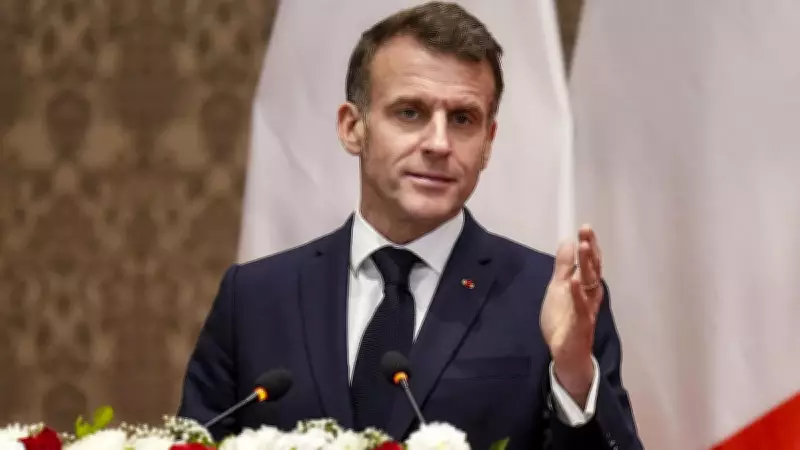
Macron Comments on US Supreme Court Tariff Ruling and Trump's Global Tariff
French President Emmanuel Macron has publicly addressed the recent United States Supreme Court decision regarding tariffs, emphasizing its significance for democratic systems worldwide. In his remarks, Macron articulated that the ruling underscores a fundamental principle: the necessity of having effective counterweights to power within democracies to ensure balance and accountability.
Analysis of Democratic Counterweights
Macron elaborated on the concept of counterweights, suggesting that institutions like judiciaries, legislatures, and international agreements play crucial roles in checking executive authority. He pointed to the US Supreme Court's involvement in tariff matters as a prime example of such a mechanism in action, potentially limiting unilateral trade policies.
The French president's comments come amid global economic tensions, particularly following former US President Donald Trump's announcement of a new 10% global tariff. Macron confirmed that France is actively considering the consequences of this tariff, which could impact trade relations and economic stability.

France's Response to Trump's Tariff
Macron stated that the French government will conduct a thorough assessment of how Trump's proposed 10% global tariff might affect French industries, exports, and the broader European Union economy. This evaluation is expected to inform potential diplomatic or economic responses from France and its EU partners.
The timing of Macron's statement is notable, as it aligns with ongoing discussions about trade sovereignty and international cooperation. By highlighting the US Supreme Court's role, Macron may be advocating for similar judicial or institutional safeguards in other democracies to prevent protectionist measures.
Broader Implications for International Relations
Macron's remarks reflect a broader concern about the stability of global trade systems. He implied that without robust counterweights, democracies might risk adopting policies that could lead to trade wars or economic isolation. This perspective is likely to resonate with other nations wary of unilateral tariff impositions.
In summary, Emmanuel Macron has used the US Supreme Court tariff ruling as a springboard to discuss the importance of institutional checks in democracies, while also signaling France's cautious approach to Trump's new global tariff. His comments underscore ongoing debates about power, trade, and democratic resilience in an interconnected world.