

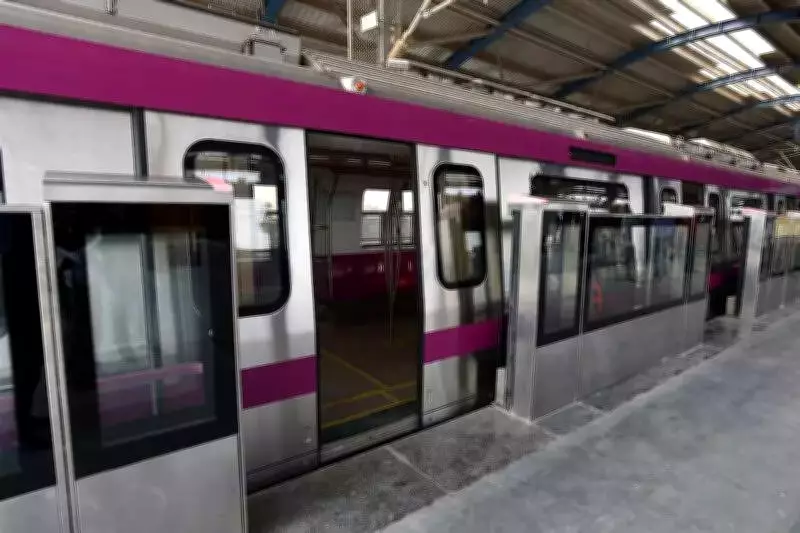
Delhi Metro's Magenta Line Set to Transform NCR Connectivity as Longest Corridor
The Delhi Metro Rail Corporation (DMRC) announced on Wednesday that the Magenta Line is poised to become the longest metro corridor in the capital, spanning approximately 89 kilometers. This expansion will feature an unprecedented 21 interchange stations, significantly boosting cross-city connectivity across the National Capital Region (NCR). Once fully operational, the entire line will function as a driverless corridor, marking a major technological advancement for Delhi's transit system.
Strategic Route and Phased Implementation
The Magenta Line will run from Botanical Garden to Inderlok via the Central Vista, integrating key areas of Delhi. According to a TOI report from January 31, following the approval of Phase-V (A)'s corridor from Ramakrishna Ashram Marg to Indraprastha via Central Vista, the Indraprastha-Inderlok corridor of Phase-IV will be implemented as an extension of the Magenta Line. This decision replaces earlier plans to incorporate it into the Green Line, thereby extending the Magenta Line's total length to surpass the Pink Line.
The implementation will occur in phases: the Krishna Park Extension to RK Ashram Marg stretch is expected to open in the next financial year, while the RK Ashram-Indraprastha section is likely to be operational by 2028. The remaining corridor from Indraprastha to Inderlok will also open in phases, ensuring a gradual rollout of enhanced metro services.

Unprecedented Interchange Network
Currently, the operational stretch of the Magenta Line includes four interchange stations: Kalkaji Mandir, Botanical Garden, Janakpuri West, and Hauz Khas. The expansions will add 17 new interchange stations: Kalindi Kunj, Chirag Dilli, Terminal-1 IGI Airport, Peeragarhi, Pitampura (Madhuban Chowk), Haiderpur Badli Mor, Majlis Park, Azadpur, Pulbangash, Nabi Karim, Ramakrishna Ashram Marg, Shivaji Stadium, Central Secretariat, Indraprastha, Delhi Gate, New Delhi, and Inderlok. Notably, Central Secretariat, Azadpur, New Delhi, and Inderlok will become triple interchange stations, facilitating seamless transfers across multiple lines.
This development will position the Magenta Line far ahead of other corridors in terms of interchange capacity. Currently, the Pink and Blue lines hold the record with 12 interchange stations each. After their own expansions, they will have 15 and 14 interchange stations, respectively, still trailing the Magenta Line's 21.
Length and Station Details
The Pink Line, stretching from Majlis Park to Shiv Vihar, is currently the longest corridor at 59.2 kilometers. Once its Phase-IV extension from Majlis Park to Maujpur becomes operational, its length will increase to nearly 72 kilometers. However, the Magenta Line will emerge as the longest, with 65 stations along its 89-kilometer route.
Anuj Dayal, principal executive director of corporate communications at DMRC, highlighted that the Magenta Line will also have the highest number of underground stations, with 40 out of 65 stations being underground. "The extensive interchange facilities of Magenta Line are expected to reduce travel time, decongest major corridors, and provide seamless, end-to-end connectivity across the city," Dayal stated.
Engineering Landmarks and Operational Benefits
Dayal further noted that the Magenta Line hosts two significant engineering landmarks of the Delhi Metro network. Haiderpur Badli Mor is the highest elevated metro station, with a rail level height of approximately 28.4 meters at pier number 340. In contrast, Hauz Khas is the deepest underground station, located around 29 meters below ground.
The driverless operation and enhanced interchange network are projected to streamline commutes, reduce congestion on other metro lines, and offer a more efficient travel experience for millions of daily passengers in the NCR.






