

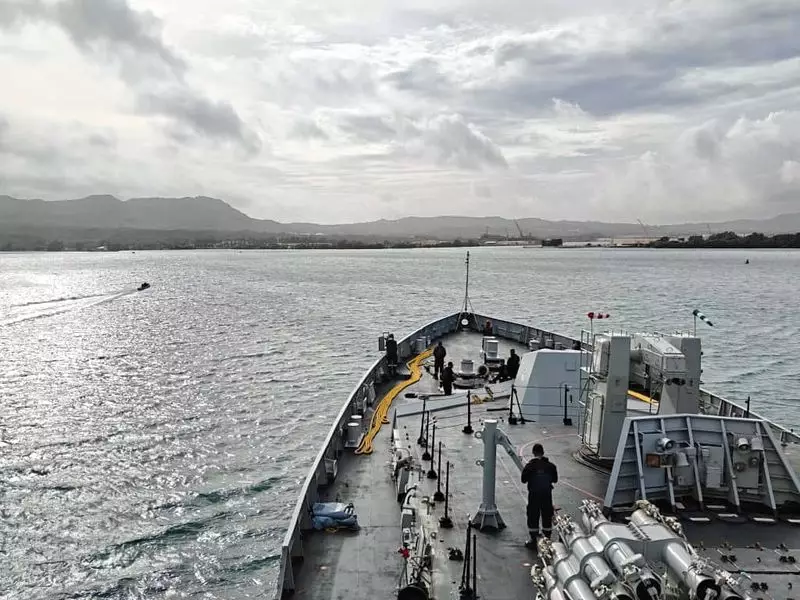
The prestigious Malabar naval exercise, one of the most significant maritime military drills in the Indo-Pacific region, commenced on Tuesday despite ongoing trade tensions between India and the United States. This year's edition brings together naval forces from four key democratic nations: India, the United States, Japan, and Australia.
Four-Nation Naval Power on Display
This multinational naval exercise represents a crucial demonstration of military cooperation among the Quad member countries. The Indian Navy is deploying its indigenously built destroyer INS Kolkata, frigate INS Sahyadri, P-8I long-range maritime patrol aircraft, and a submarine to participate in the drills. From the American side, the US Pacific Fleet has sent the guided-missile destroyer USS William P. Lawrence.
The Japanese Maritime Self-Defense Force contributes with the JS Samidare destroyer, while the Royal Australian Navy participates with frigate HMAS Ballarat and auxiliary oiler HMAS Sirius. The exercise is taking place in two distinct phases, with the initial phase occurring off the coast of Visakhapatnam in the Bay of Bengal from November 3 to November 6.

Strategic Timing Amid Diplomatic Challenges
The commencement of Malabar 2020 comes at a particularly sensitive time in India-US relations. Recent trade disputes have created diplomatic friction between the two nations, making this military cooperation even more significant. The United States has raised concerns about India's new digital taxes that affect American technology companies, while India has expressed dissatisfaction with US trade policies.
Despite these economic tensions, the naval exercise demonstrates that strategic and security cooperation continues to strengthen. This separation between trade disputes and military partnership highlights the complexity of modern international relations, where countries can disagree on economic matters while maintaining strong defense ties.
Evolution of Malabar Exercise
The Malabar exercise has undergone significant transformation since its inception as a bilateral India-US naval drill. What began as a simple bilateral engagement has now evolved into a comprehensive quadrilateral exercise with Japan and Australia as permanent participants. This expansion reflects the growing strategic alignment among the four nations in response to China's increasing assertiveness in the Indo-Pacific region.
The exercise focuses on advanced warfare tactics including anti-submarine warfare, air defense operations, surface warfare, and visit, board, search, and seizure (VBSS) drills. These complex operations require sophisticated coordination and interoperability among the participating navies, skills that become increasingly important for maintaining regional stability.
The second phase of Malabar 2020 is scheduled to take place in the Arabian Sea later in November, providing the naval forces with experience operating in different maritime environments. This geographical diversity enhances the readiness of all participating navies to respond to various security scenarios across the Indian Ocean Region.
Broader Strategic Implications
Military analysts view the continued conduct of Malabar exercises despite trade tensions as a positive indicator of the resilience of the Quad partnership. The consistent participation of all four nations sends a strong message about their commitment to a free and open Indo-Pacific, even when facing bilateral economic disagreements.
The Indian Navy has emphasized that Malabar 2020 will adhere to all COVID-19 safety protocols, with no physical interactions between personnel from different navies during the harbor phase. This adaptation to pandemic conditions demonstrates the importance placed on maintaining this crucial military cooperation despite global health challenges.
As the exercise progresses, defense observers will be watching closely for any indications of how the participating nations balance their economic disagreements with their shared security interests in the strategically vital Indo-Pacific region.






