From Temporary Shelter to Permanent Struggle: IDPs in Manipur Build Lives in Relief Camps
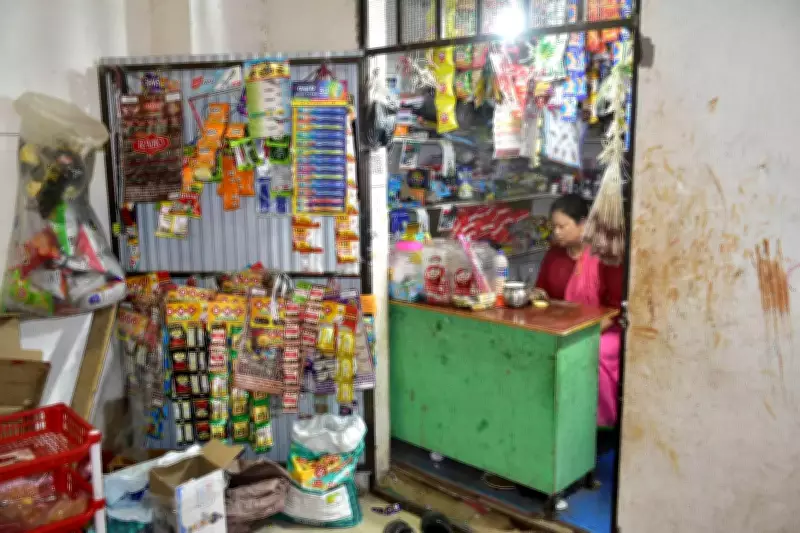
Inside the Lamboikhongnangkhong relief camp in Imphal West, Rita Laisham meticulously arranges biscuit packets on a narrow counter, monitoring the dwindling stock of her improvised grocery shop. This cramped space, never intended for commerce, now represents a crucial lifeline for her family and neighbors—a stark symbol of how emergency shelters have hardened into permanent settlements across Manipur.
"We Thought We Would Be Away for a Week"
"We thought we would be away from home for maybe a week or a month at the most. Now it's going to be three years," says 43-year-old Rita, her voice carrying the weight of prolonged displacement. Originally from Motbung in Kangpokpi district, Rita and her husband Hemanta fled when violence erupted in Manipur in May 2023, joining thousands who escaped with only essential documents and a few clothes, convinced their absence would be brief.
What began as temporary emergency shelters have gradually transformed into something entirely different: fragile neighborhoods where survival has become routine. The couple now operates a small grocery store selling rice, oil, salt, soap, and whatever supplies they can procure. Much of their business operates on credit, as cash remains scarce among camp residents. Their starting capital came from borrowed money, with necessity serving as their business plan.

"We have to raise our children, ensure them a good future. We cannot simply rely on government aid, which we barely received," Rita explains, noting they decided to open the shop in April last year. The family previously ran a similar business in their hometown of Motbung.
The Practical Worries of Resettlement
Hemanta's concerns extend beyond daily sales. While government officials speak of resettlement, he measures the future through practical questions: what will happen to the small livelihoods painstakingly built inside camps, and how will families sustain themselves once relocated?
"We want to return home. It's been nearly three years since we have been staying at a relief camp," Hemanta states. "The government is talking about resettlement, but it should also prioritize how we are supposed to survive once we are resettled." He worries that small businesses like theirs will suffer during any transition.
The physical transformation of the camp reflects this new reality. Narrow lanes wind between structures, clotheslines crisscross walkways, and children weave through rows of shelters, turning limited space into playgrounds. Women gather to weave clothes, building routines into days once defined by uncertainty.
Camp Economies Emerge Across Manipur
Across Manipur, similar transformations have taken root. Relief camps that began as humanitarian responses have developed internal economies featuring:
- Tea stalls and small eateries
- Tailoring corners and clothing repair services
- Vegetable vendors and grocery shops
- Informal tuition classes for children
These modest enterprises don't erase displacement but make it more livable. The work generates thin margins but signals an important shift: people are no longer passively waiting for assistance but actively trying to rebuild their lives.
Returning to Old Trades in New Circumstances
At the Akampat relief camp in Imphal East, 64-year-old Oinam Rajen has returned to tailoring, the trade he once practiced in Moreh. He borrowed a sewing machine from a friend in Imphal and began working again—not because the camp offered opportunity, but because it offered no alternative.
"It must be about one year after the violence that I started tailoring works again," Rajen explains. "I could hardly earn enough to survive, but it gives me a sense of purpose. Nobody wants to hire an old man like me for manual labor, which many of the IDPs are engaged in."
His customer base remains small, primarily parents needing school uniforms altered for their children. His setup is bare-bones: "I don't even have a worktable or an iron, just managing with what I have." Like Rita, Rajen once believed the camp would be temporary. The longer it lasted, the more those early assumptions began to feel like a different lifetime.

Frustration with Government Response
Rajen's frustration sharpens when comparing the government's response to more recent incidents. "It would have been better had the government acted swiftly to contain violence, just like when there were clashes recently at Litan in Ukhrul district," he states with resentment.
Ningthoujam Samananda, convenor of the Akampat Relief Camp Committee and himself an IDP from Moreh, describes a community forced to evolve to endure. "Many inmates have switched professions just to survive. Youth volunteers are running informal tuition classes for younger children. Small shops and eateries have come up, and almost everyone is trying to earn their livelihood through menial work."
Samananda was among IDP representatives who met Prime Minister Narendra Modi and President Droupadi Murmu during their Manipur visit. While concerns were clearly stated, he notes little visible progress: "Yet there hasn't been much visible progress when it comes to resettling the IDPs to their original places." He urges the government to ensure dignified resettlement for displaced families.
Government Promises and IDP Realities
Government authorities continue to reiterate commitments to rehabilitation and safe return, with security deployments in sensitive areas. In January, Manipur Chief Secretary Puneet Kumar Goel stated the government aims to resettle more than 10,000 displaced families—comprising over 40,000 internally displaced persons—by March this year.
Yet many IDPs report hearing similar timelines before and watching them pass without meaningful change. Nearly three years after violence reshaped lives across Manipur, the camps remain full, and the concept of "temporary" has worn thin.
In the lanes between shelters, survival has become routine—measured in borrowed machines, credit notebooks, altered uniforms, and carefully arranged biscuit packets. While the hope of returning home persists, it waits for a date that still hasn't arrived, as displaced families continue building fragile lives in places never meant to become permanent.