

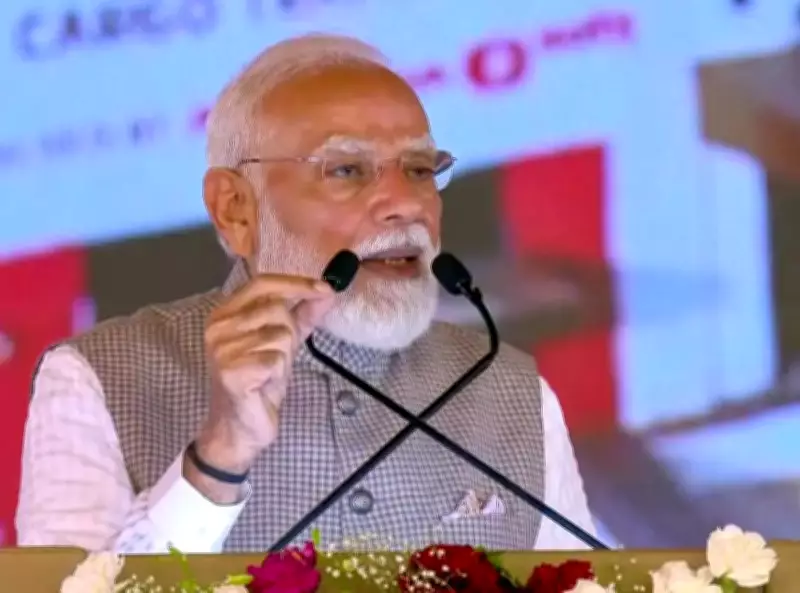
PM Modi Inaugurates Noida International Airport in Jewar, Addresses Global Energy Challenges
Prime Minister Narendra Modi officially inaugurated the Noida International Airport in Jewar on Saturday, marking a significant milestone in India's infrastructure development. During the ceremony, he delivered a comprehensive speech focusing on the ongoing energy supply disruptions caused by the conflict in West Asia, particularly highlighting the strategic importance of ethanol blending in reducing the nation's dependence on crude oil imports.
Ethanol Blending: A National Success Story
Modi emphasized that without the successful implementation of ethanol blending in petrol, India would have been forced to import an additional 4.5 crore barrels of crude oil annually, equivalent to approximately 700 crore litres. "The dedicated efforts of our farmers in ethanol production have provided substantial relief to the country during this period of global crisis," he stated. The Prime Minister further noted that this initiative has not only benefited the nation but also empowered farmers, resulting in foreign exchange savings of around Rs 1.5 lakh crore.
Jewar, strategically located as a gateway to the sugarcane belts of western Uttar Pradesh, plays a crucial role in this endeavor. Sugarcane feedstock serves as a primary source for ethanol production, linking agricultural prosperity with energy security.

Government's Proactive Measures Secure Fuel Supplies
In his address, Modi reassured citizens that despite the surge in global crude prices triggered by the US-Israel conflict with Iran, the Indian government has taken all necessary steps to secure fuel supplies and shield the common people from price hikes. "We import fuel from conflict-affected regions, and like other nations, we are implementing measures to mitigate the impact. Our priority is to ensure that ordinary citizens do not experience undue stress," he explained.
Remarkably, while crude prices have escalated worldwide, retail prices of petrol and diesel in India have remained relatively stable, reflecting the government's effective intervention. Modi called for national unity and peaceful discourse during this global crisis, urging political leaders to avoid statements that could harm the country's interests.
Historic Progress in Ethanol Blending and Renewable Energy
Recalling a recent parliamentary address, Modi highlighted the remarkable journey of ethanol blending in India. From a modest 1-1.5% a decade ago, the blending rate has now reached nearly 20%, significantly cutting oil imports by about 4.5 crore barrels per year. India achieved its E20 target—mixing 20% ethanol with petrol—ahead of the 2025 schedule set by the Modi administration to reduce fuel import bills and lower emissions.
The All India Distillers' Association has expressed readiness to supply ethanol blends exceeding 20%, indicating potential for further advancement. Currently, India's ethanol sector boasts a cumulative production capacity of around 2,000 crore litres, with over 1,000 crore litres allocated for petrol blending.
Broader Energy Initiatives and Future Outlook
Beyond ethanol, Modi cited other energy-saving initiatives such as the electrification of railways, which saves approximately 180 crore litres of diesel annually, and the expansion of metro networks across the country. These efforts collectively contribute to India's energy independence and environmental sustainability.
The inauguration of the Noida International Airport not only enhances regional connectivity but also symbolizes India's commitment to progress amid global challenges. As the nation navigates the complexities of international conflicts affecting energy markets, the focus on renewable alternatives like ethanol blending remains a cornerstone of its strategic response.






