

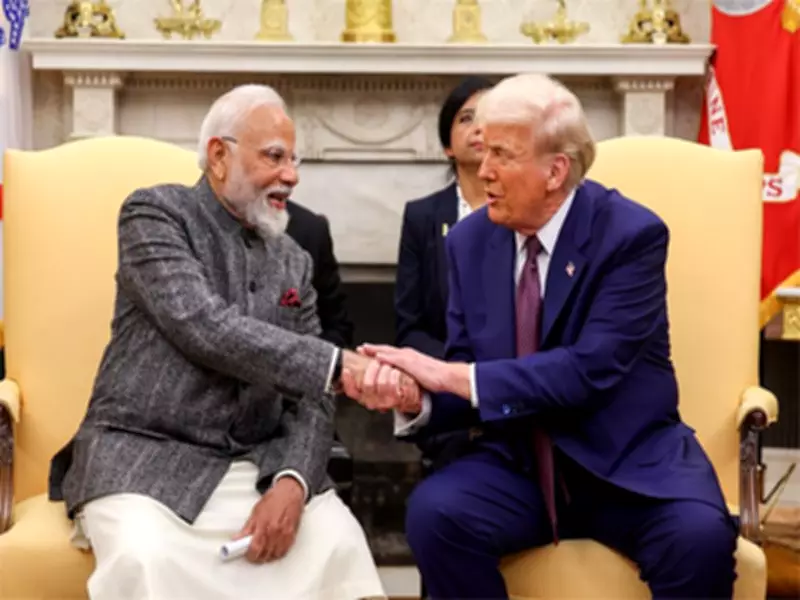
PM Modi and President Trump Discuss West Asia Crisis, Highlight Strait of Hormuz Security
In a significant diplomatic move, Prime Minister Narendra Modi engaged in a high-level telephonic conversation with US President Donald Trump on Tuesday, focusing on the escalating conflict in West Asia. The dialogue, which comes amid rising global concerns over energy security, underscored India's proactive stance in advocating for peace and stability in the region.
Key Diplomatic Exchange on Maritime Chokepoint
Following the call, PM Modi detailed the discussion in a post on social media platform X, stating, "Received a call from President Trump and had a useful exchange of views on the situation in West Asia. India supports de-escalation and restoration of peace at the earliest. Ensuring that the Strait of Hormuz remains open, secure and accessible is essential for the whole world. We agreed to stay in touch regarding efforts towards peace and stability." This statement highlights the strategic importance of the Strait of Hormuz, a critical maritime passage for global oil shipments.
US envoy Sergio Gor confirmed the exchange, noting that the talks centered on the ongoing situation, including the imperative of maintaining open access to the strait. This diplomatic outreach aligns with President Trump's recent signals of potential de-escalation in tensions with Iran, as he mentioned "productive" talks with Tehran and extended a deadline for potential strikes by five days, citing Iran's influence over the key oil shipping route.

India's Multifaceted Diplomatic Efforts
Addressing Parliament, PM Modi elaborated on India's extensive diplomatic engagements since the conflict began. "Since the start of the war, I have held two rounds of phone conversations with the heads of state of most countries in West Asia. We are in continuous contact with all the Gulf countries, and we are also in touch with Iran, Israel, and the United States," he said. This underscores New Delhi's role as a mediator and its commitment to safeguarding national interests.
The Prime Minister further emphasized that India is leveraging its diplomatic capital to protect maritime and diaspora interests. "Through diplomacy, India is trying to ensure safe commutation of the country's ships even in a war situation. India has opted for a solution through dialogue to resolve this issue," he added, reiterating that the safety of the Indian community in the region remains a top priority.
Legal and Operational Breakthroughs in Maritime Transit
Amid the diplomatic push, the Indian government clarified the legal status of the Strait of Hormuz. Rajesh Sinha, Special Secretary in the Ministry of Shipping, dismissed concerns about transit rights, stating, "It is an international strait. Permission was not required before. It is not required even today. You definitely assess the situation as to how the safety will be, how one should move, at what time one should move, but still, it is not that permission is required from anyone." This assertion reinforces India's stance on free navigation in international waters.
In a significant operational achievement, two Indian LPG carriers, Jag Vasant and Pine Gas, successfully transited through the Strait of Hormuz. These vessels, carrying a substantial cargo of 92,612.59 metric tons of LPG, managed the high-risk passage with 33 and 27 Indian seafarers onboard, respectively. Their safe movement follows the earlier arrival of MT Shivalik and MT Nanda Devi, which transported approximately 92,712 tonnes of LPG—equivalent to roughly a day's cooking gas consumption for the country.
The Union Government confirmed that these additional tankers are expected to reach Indian shores within the next forty-eight hours. Sinha emphasized, "Ultimately, we want to secure safe passage of all our vessels that are stranded in the region." This success occurs against a backdrop of heightened tensions, with Iran previously threatening to block "enemy countries' ships" from the strait.

Global Implications and Future Outlook
The Modi-Trump dialogue and India's diplomatic efforts reflect broader global concerns over energy security and maritime stability. As regional conflicts intensify, the safe transit of energy carriers through chokepoints like the Strait of Hormuz is crucial for maintaining global economic balance. India's advocacy for de-escalation and its successful management of vessel transits demonstrate its growing influence in international affairs.
With both leaders agreeing to stay in touch, future collaborations may focus on joint initiatives to ensure peace and security in West Asia. This development underscores the interconnectedness of global diplomacy, energy markets, and maritime safety, highlighting India's strategic role in navigating complex geopolitical landscapes.





