Railway Minister Ashwini Vaishnaw has confirmed that the first phase of the Mumbai-Ahmedabad bullet train project is expected to commence operations in 2026. This announcement provides a clear timeline for the ambitious high-speed rail corridor, which has been under development for several years.
First Phase Details
The initial operational segment will cover a 237-kilometer stretch between Surat and Bilimora in Gujarat. This section is part of the larger 508-kilometer corridor that will eventually connect Mumbai and Ahmedabad. The minister stated that the civil construction work on this stretch is progressing rapidly, with track laying and signaling systems being installed.
The project, which is being executed with technical and financial assistance from Japan, aims to reduce travel time between the two cities to approximately two hours. Currently, the journey takes around six hours by road or rail.

Project Progress and Challenges
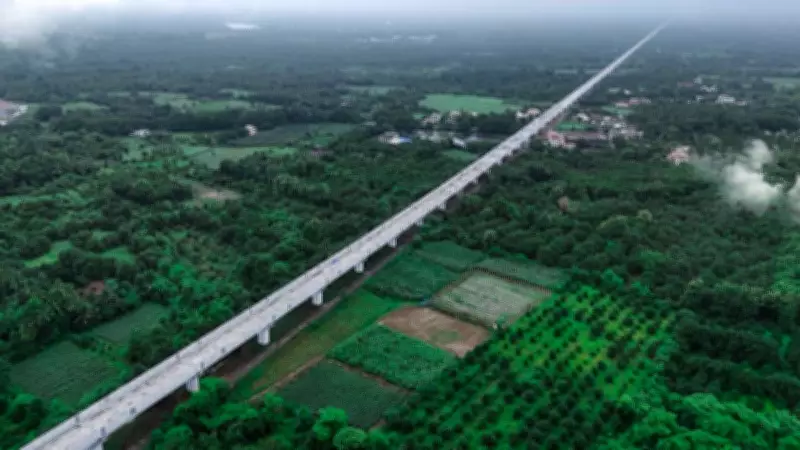
Vaishnaw highlighted that over 200 kilometers of viaducts have been completed, and tunneling work is underway in the mountainous regions of Maharashtra. The project faced delays due to land acquisition issues and the COVID-19 pandemic, but the government has now resolved most of these hurdles.
“The bullet train will be a game-changer for the region, boosting economic growth and providing world-class transportation,” the minister said during a press conference. He also noted that the trains, based on Japan’s Shinkansen technology, will be capable of reaching speeds up to 320 km/h.
Economic and Social Impact
The bullet train is expected to create thousands of jobs during construction and operation. Additionally, it will spur development in cities along the route, including Surat, Vadodara, and Anand. The project is part of India’s broader plan to modernize its railway infrastructure and reduce carbon emissions by shifting passengers from air and road to rail.
“The high-speed rail will not only connect two major economic hubs but also integrate smaller cities into the growth story,” Vaishnaw added. The total cost of the project is estimated at ₹1.08 lakh crore (about $13 billion).
Future Phases
While the first phase will operate between Surat and Bilimora, the entire corridor from Mumbai to Ahmedabad is expected to be fully operational by 2028-29. The project includes 12 stations, including a terminal at Mumbai’s Bandra Kurla Complex. The government is also exploring the extension of the high-speed network to other cities, such as Delhi and Bengaluru.
The Railway Minister’s update provides a clear milestone for the project, which is the first of its kind in India. With the 2026 deadline set, all eyes will be on the timely completion of the remaining infrastructure.