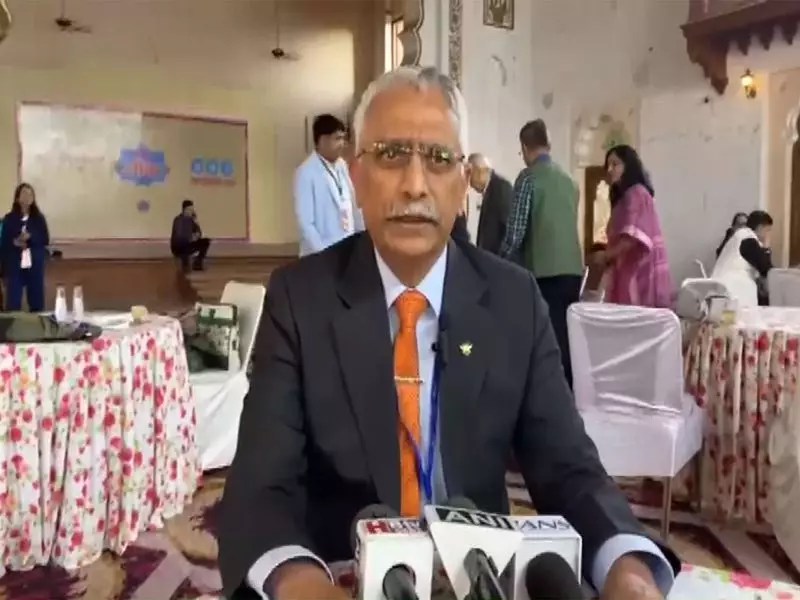
Former Indian Army Chief General Manoj Naravane has delivered a crucial message, highlighting the deep interconnection between India's own future and the stability and prosperity of its neighbouring nations. His remarks come at a sensitive time, as Bangladesh grapples with significant internal unrest and political turmoil.
The Inextricable Link: India and Its Neighbourhood
Speaking at an event in New Delhi, General Naravane, who served as the 28th Chief of the Army Staff, presented a compelling geopolitical perspective. He argued that India's security and economic progress cannot be viewed in isolation from the conditions prevailing in the countries that share its borders. A peaceful, stable, and developing neighbourhood, according to the former Army chief, is not just desirable but essential for India's own ambitious growth trajectory.
"The future of India and its neighbouring countries is interlinked," Naravane stated, framing the relationship as one of mutual destiny. This principle forms a cornerstone of India's 'Neighbourhood First' foreign policy, which prioritizes diplomatic and economic engagement with immediate neighbours. The general's military background lends significant weight to this assessment, underscoring that national security encompasses far more than just border defence.

Bangladesh's Turmoil: A Case in Point
General Naravane's comments are particularly resonant given the ongoing political crisis in Bangladesh. The nation has witnessed widespread student-led protests, violent clashes, and a severe internet shutdown affecting millions. The unrest, primarily driven by anger over quota systems in government jobs, has escalated into broader anti-government demonstrations, posing a serious challenge to stability.
This instability in Bangladesh has direct implications for India. The two nations share a long, porous border and deep cultural, economic, and historical ties. Disruption in Bangladesh can lead to cross-border security concerns, impact vital trade and connectivity projects, and potentially trigger refugee flows. Naravane's intervention subtly emphasizes that a calm Bangladesh is in India's direct strategic interest, advocating for a supportive and cooperative approach from New Delhi.
Broader Implications for Regional Policy
The former Army chief's analysis extends beyond the immediate crisis. It serves as a reminder of the complex challenges India faces in its regional diplomacy, which includes relations with Pakistan, Nepal, Sri Lanka, and Myanmar. Each of these relationships has its own set of issues, from territorial disputes to shared water resources and internal conflicts.
Naravane's statement reinforces the need for a consistent, empathetic, and proactive neighbourhood policy. It suggests that investing in the development and stability of neighbouring countries is, in effect, an investment in India's own security and economic future. This approach requires a blend of diplomatic finesse, economic partnership, and people-to-people connectivity to build resilient relationships that can withstand internal political shocks in any single country.
In conclusion, General Manoj Naravane's timely remarks refocus attention on a fundamental tenet of Indian foreign policy. As Bangladesh navigates its internal challenges, India's role as a responsible and supportive regional power is under scrutiny. The path forward, as outlined by the former military leader, is one of recognizing shared futures and fostering collaborative growth, understanding that the fortunes of South Asia are deeply entwined.