NASA's Antarctic Expedition Mimics Alien Ocean Eruptions
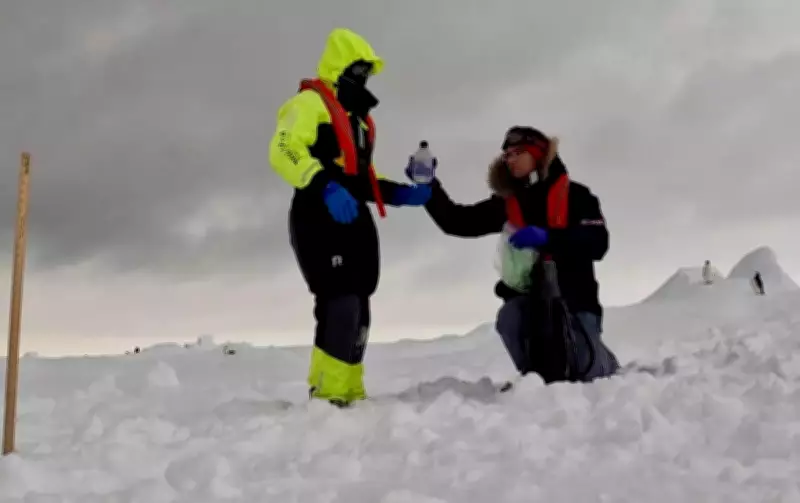
In a remote corner of the Antarctic Peninsula, far from any research stations or tourist paths, a dedicated team of scientists has undertaken a groundbreaking mission to collect seawater under extreme and isolated conditions. This effort is part of a broader initiative led by researchers affiliated with NASA and the University of Maryland, aiming not just to study Antarctica but to unlock secrets about distant worlds.
Exploring Subsurface Oceans on Icy Moons
The primary focus of this research is the possibility of oceans existing beneath thick ice layers on celestial bodies like Europa, Enceladus, and Pluto. These ocean worlds are believed to contain essential ingredients for life, such as carbon, nitrogen, and chemical energy, yet they exist in environments devoid of sunlight. By examining dark, sealed water masses in Antarctica, such as those in the Weddell Sea and the deep Circumpolar Current, scientists hope to draw parallels to these extraterrestrial settings.
Researchers Mariam Naseem and Marc Neveu faced formidable challenges in gathering samples, drilling through sea ice and lowering equipment to depths exceeding 1,000 meters. The process was complicated by constantly shifting ice openings, requiring precision and resilience. The samples, collected in late 2025, have now been safely transported to Maryland for rigorous testing.

Simulating Cryovolcanic Eruptions in the Lab
On icy moons, subsurface oceans can erupt through cracks in the ice in a phenomenon known as cryovolcanism, as observed on Enceladus with plumes of water vapor and ice particles. These eruptions offer a unique opportunity for spacecraft to sample ocean material without penetrating kilometers of ice. However, the transition from ocean to space can alter or destroy delicate organic compounds like amino acids.
To investigate this, the team employs a specialized laboratory device called the Simulator of Ocean World Cryovolcanism. This instrument injects liquid samples into a vacuum chamber that replicates the pressure and temperature of space, allowing scientists to measure what survives the journey. The Antarctic samples will be divided for analysis: one portion tested directly and the other processed through the simulator.
Analyzing Chemical Changes and Implications
Back in Maryland, the samples will undergo detailed chemical analysis using chromatography to track changes in salts, fatty acids, and amino acids. This comparison aims to identify how organic compounds behave under space-like conditions, providing insights into what signs of life might endure on other worlds.
The transportation of these frozen samples was a logistical feat, involving careful handling after multiple flight disruptions between Argentina and Washington. Despite these hurdles, the material arrived intact, ready for study. This research does not claim to prove extraterrestrial life but seeks to answer a more nuanced question about the persistence of biological signatures in harsh environments.
In essence, the ice at the bottom of our world is becoming a crucial component in the wider search for life beyond Earth, bridging the gap between terrestrial science and cosmic exploration.