Navi Mumbai Municipal Corporation Engages IIT Bombay to Revise Underpass Design for Tree Conservation
In a significant move that offers relief to residents and environmental advocates, the Navi Mumbai Municipal Corporation (NMMC) has sought technical inputs from the Indian Institute of Technology Bombay (IIT-B) to revise the proposed Palm Beach Road underpass design at Sanpada. This initiative aims to save the maximum number of trees from being axed, addressing growing public concern over urban green cover.
Public Concern Over Tree Removal Triggers Civic Action
The proposed underpass project had sparked widespread alarm after civic notices listed 440 trees along Palm Beach Road for removal or transplantation to facilitate construction. Of these, 111 trees were marked for felling, while 329 were slated for transplantation. This announcement prompted environmental groups and local residents to voice their opposition, highlighting the need to balance infrastructure development with ecological preservation.
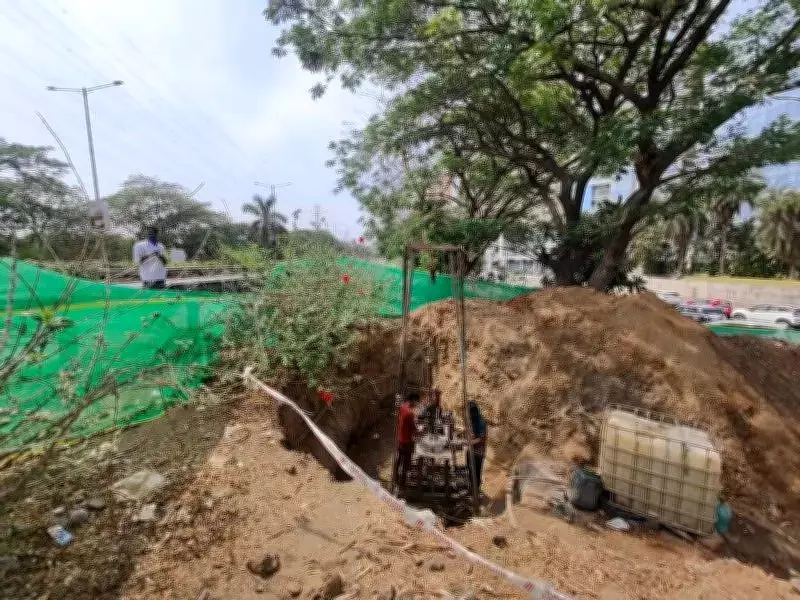
Meanwhile, as per the NMMC work order, the civic contractor has commenced preliminary soil testing work for the underpass project. This involves excavation activities, and reports indicate that two trees have already been axed near the Kesar Solitaire building during this initial phase.

Official Statements on Project Necessity and Environmental Considerations
NMMC commissioner Kailas Shinde emphasized the project's importance, stating, "The Sanpada underpass project is necessary considering the increase in traffic movement and for the convenience of motorists as part of the city's infrastructure development. However, to ensure that maximum trees are saved from being felled and translocated, the underpass design plan has been referred to IIT-B for seeking technical suggestions and possible design changes."
Anil Patil, NMMC's deputy engineer of Turbhe ward, provided details on the ongoing work: "The excavation work for the Sanpada underpass project has been carried out as a preliminary stage for soil testing and digging trial pits to check for underground utilities like water pipelines, power, telecom cables, and gas pipelines. For soil testing, the excavation would be needed for around 9 metres deep. The work order for the project is for 18 months."
Environmental Groups Welcome Civic Initiative
BN Kumar, director of the NatConnect Foundation, welcomed the civic body's latest initiative, noting that it reflects growing public sentiment in favor of protecting urban green cover. With IIT-B now examining design options, citizens are hopeful that the final underpass design will demonstrate that development and environmental protection can go hand in hand.
Kumar added, "We are fully aware of Sanpada's problems and that it needs a third exit. The project will happen, and we cannot oppose the city's infrastructure development. Our only concern is that maximum trees must be saved."
This collaborative approach between the municipal corporation and a premier technical institute underscores a broader shift towards sustainable urban planning in Navi Mumbai, as authorities strive to address traffic congestion while minimizing ecological disruption.