

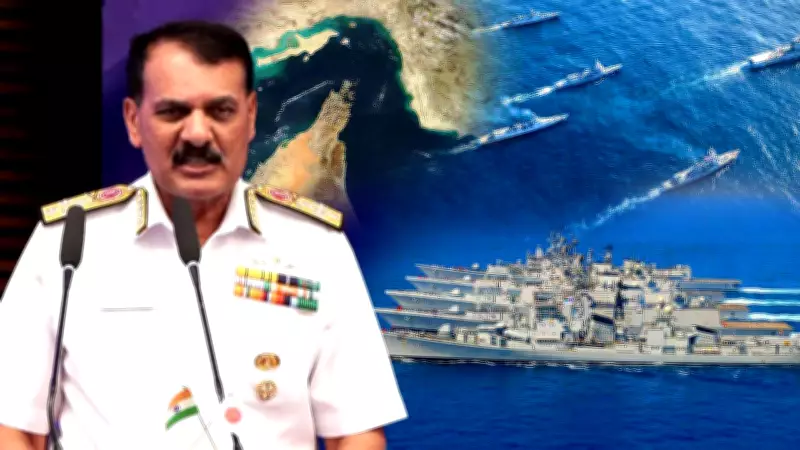
Navy Chief Tripathi Flags 'Dark Vessels' and New Threats in Indo-Pacific as Emerging Flash Points
India's Chief of the Naval Staff, Admiral Dinesh K Tripathi, has issued a stark warning about escalating security challenges in the Indo-Pacific region, identifying vessels that go 'dark' in exclusive economic zones (EEZs) as a critical emerging flash point. Speaking at the India Foundation International Conference on "India-Japan Cooperation in the Indo-Pacific: Enhancing Security and Stability," Admiral Tripathi emphasized that the region is becoming a key theatre of "normative contestation" where traditional and modern threats converge.
Rising Threats to Maritime Security and Critical Choke Points
Admiral Tripathi detailed how advanced technologies such as drones, mines, and sophisticated cyber capabilities are posing unprecedented risks to vital maritime routes. He specifically highlighted critical choke points like the Strait of Hormuz, where disruptions could have global repercussions. The sharp increase in deep-sea research activities, often conducted by vessels that disable their tracking systems—referred to as 'going dark'—within EEZs, is creating new tensions and potential conflicts.
This practice not only undermines transparency but also complicates maritime domain awareness, making it harder for nations to monitor and secure their waters effectively.

Cyber and Infrastructure Vulnerabilities Amplify Risks
Beyond physical threats, Admiral Tripathi pointed to growing vulnerabilities in digital and undersea infrastructure. Disruptions to undersea cables, which carry a significant portion of Asia-Europe data flows, cyberattacks targeting maritime systems, and GPS spoofing that can mislead navigation are all increasing the overall risk landscape. These issues compound the challenges faced by nations reliant on secure maritime trade and energy imports.
"The convergence of these threats demands a proactive and coordinated response from regional stakeholders," Admiral Tripathi asserted during his address.Shift Towards Persistent Maritime Cooperation
In response to these evolving dangers, Admiral Tripathi stressed the importance of transitioning from episodic to persistent maritime cooperation. He underscored that ensuring freedom of navigation, adherence to international rules, and the security of energy imports remains vital for countries like India and Japan amid growing regional competition. This persistent presence is seen as essential to deterring malign activities and maintaining stability.
- Enhanced surveillance and intelligence-sharing mechanisms
- Joint exercises and capacity-building initiatives
- Strengthening legal frameworks to address 'dark vessel' activities
The Navy Chief's remarks come at a time when the Indo-Pacific is witnessing increased geopolitical tensions and strategic maneuvering, making his call for robust security partnerships all the more urgent.






