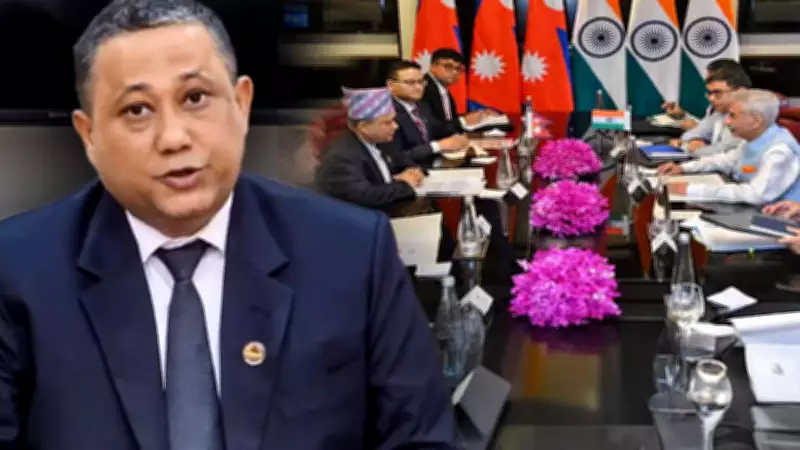
Nepal has moved to clarify its recent statements regarding the ongoing border dispute with India, emphasizing that it is not seeking mediation from the United Kingdom. Foreign Minister Shisir Khanal stated that Kathmandu's interest lies solely in accessing historical documents that could provide clarity on the origins of the boundary disagreement.
Background of the Clarification
The clarification comes after India reiterated its stance that border issues between the two neighboring countries must be resolved bilaterally without any third-party involvement. Nepal's earlier remarks had sparked speculation that it might be seeking UK mediation, which prompted the need for a formal clarification.
Foreign Minister's Statement
Speaking to the media, Foreign Minister Khanal explained, "Nepal is not asking the United Kingdom to mediate in the border dispute. We are merely interested in obtaining historical records and documents that may be held in UK archives, which could help us understand the historical context of the boundary." He further emphasized that Nepal remains committed to resolving the issue through direct bilateral dialogue with India.

India's Position
India has consistently maintained that all boundary-related matters should be addressed through bilateral mechanisms. The Indian Ministry of External Affairs had previously stated that any third-party involvement would be unwelcome and that the two countries have sufficient frameworks to resolve such issues peacefully.
Historical Context
The India-Nepal border dispute primarily involves territorial claims in areas such as Kalapani, Lipulekh, and Limpiyadhura. Both nations have engaged in several rounds of talks to address the matter, but a final resolution remains elusive. The request for historical records from the UK is seen as an effort to gather more information about the colonial-era treaties and maps that define the current border.
Reactions and Analysis
Political analysts in Kathmandu have welcomed the clarification, noting that it helps dispel any misunderstanding about Nepal's intentions. The move is also seen as a diplomatic effort to maintain smooth relations with India while seeking to strengthen Nepal's position with factual evidence. Meanwhile, in New Delhi, officials have taken note of the clarification and expressed hope that bilateral talks will continue without external interference.
Nepal's request for historical documents is not unprecedented, as many countries have sought archival materials from former colonial powers to resolve boundary issues. The UK holds extensive records from the British Raj era, which could contain valuable information about the demarcation of the India-Nepal border.