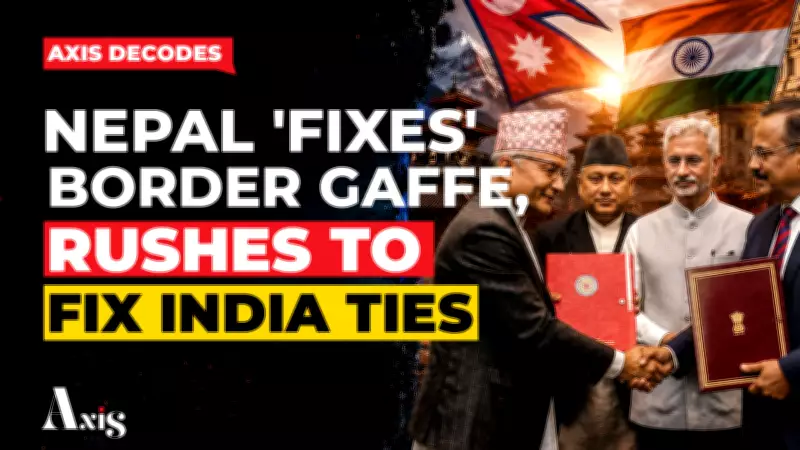
Just days after a controversy over border remarks triggered political backlash in Nepal, Kathmandu is striking a very different tone. Nepal's Foreign Minister Shisir Khanal travelled to New Delhi, calling India Nepal's "most important partner" and signalling that the new government carries "no old baggage". National Security Adviser Ajit Doval held key talks focused on border security, strategic trust, connectivity and regional stability. External Affairs Minister S. Jaishankar spoke of a "decisive shift" in India-Nepal ties. Is Kathmandu recalibrating its foreign policy? Why does Doval's involvement matter? And what does this mean for the future of India-Nepal relations? This report breaks down the strategic significance of the latest diplomatic reset.
Background of the Border Gaffe
The controversy erupted when Balen Shah, a prominent Nepali figure, made remarks about the India-Nepal border that were perceived as provocative in Kathmandu. The comments sparked political backlash, with opposition parties accusing the government of jeopardising bilateral ties. The incident forced the Nepali government to clarify its position and seek a way to de-escalate tensions.
Khanal's Visit to New Delhi
In a swift diplomatic move, Foreign Minister Shisir Khanal travelled to New Delhi to meet his Indian counterpart, S. Jaishankar, and National Security Adviser Ajit Doval. During the meetings, Khanal emphasised that Nepal views India as its "most important partner" and that the current government is free from "old baggage" that had previously strained relations. This statement was widely interpreted as a signal that Kathmandu is ready to move past historical grievances and focus on mutual cooperation.

Doval's Role and Strategic Talks
National Security Adviser Ajit Doval's involvement in the talks underscored the strategic importance India places on Nepal. The discussions covered border security, including measures to prevent cross-border crimes and enhance surveillance. Strategic trust was a key theme, with both sides agreeing to strengthen intelligence sharing and joint military exercises. Connectivity projects, such as the proposed railway link and cross-border power grids, were also discussed as vital for regional stability.
Jaishankar's 'Decisive Shift'
External Affairs Minister S. Jaishankar described the outcome of the talks as a "decisive shift" in India-Nepal relations. He noted that both countries are committed to a forward-looking partnership that prioritises development and security. Jaishankar highlighted that the new government in Nepal has shown a willingness to address issues pragmatically, without being bogged down by past disputes.
Implications for India-Nepal Relations
The diplomatic reset is expected to have several positive implications. First, it could lead to enhanced cooperation on border management, reducing the potential for future incidents. Second, it may unlock stalled infrastructure projects, boosting economic integration. Third, it signals to other neighbours that India is willing to engage constructively with governments that demonstrate sincerity. However, challenges remain, including domestic political opposition in Nepal and the need to manage public perceptions on both sides.
Conclusion
The latest developments indicate that Nepal is recalibrating its foreign policy to prioritise ties with India after a brief period of strain. The Khanal visit and Doval's engagement have laid the groundwork for a more stable and cooperative relationship. While the road ahead is not without hurdles, the current momentum suggests a promising future for India-Nepal partnership.