

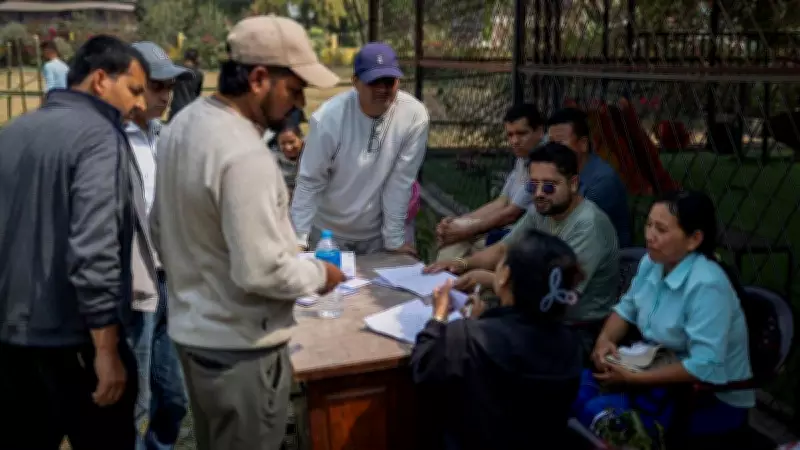
Direct Vote Counting Concludes in Nepal as RSP Sets Sights on Majority Government
The direct vote counting process for Nepal's recent parliamentary elections has officially concluded, marking a critical phase in the nation's democratic journey. This comprehensive tallying of ballots across various constituencies has set the stage for potential political realignments, with the Rastriya Swatantra Party (RSP) emerging as a key player with ambitious goals.
RSP's Strategic Push for a Majority with 125 Seats
According to reports from the Election Commission of Nepal, the RSP is actively pursuing a majority government by aiming to secure approximately 125 seats in the federal parliament. This target represents a significant portion of the total seats and underscores the party's confidence following the vote count. Political analysts note that achieving such a majority would enable the RSP to form a stable government without relying heavily on coalition partners, potentially leading to more decisive policy-making in the coming term.
The party's leadership has expressed optimism based on preliminary results and voter turnout trends, suggesting that their campaign resonated with a broad segment of the electorate. This development comes amid a backdrop of economic challenges and social reforms in Nepal, making the election outcomes pivotal for the country's future direction.

Implications of the Vote Count Results
The conclusion of the direct vote count brings clarity to the electoral landscape, with several implications:
- Government Formation: If the RSP achieves its target of 125 seats, it could lead to a single-party majority government, reducing political fragmentation and enhancing governance efficiency.
- Policy Priorities: A majority government might prioritize issues such as economic development, infrastructure projects, and social welfare programs, as outlined in the RSP's election manifesto.
- International Relations: The results could influence Nepal's diplomatic engagements, particularly with neighboring countries and global partners, depending on the new government's foreign policy stance.
Observers highlight that the vote count process was conducted transparently, with minimal reports of irregularities, bolstering public trust in the electoral system. The Election Commission has emphasized its commitment to ensuring accuracy and fairness throughout the counting phase, which involved meticulous verification of ballots from remote and urban areas alike.
Broader Context of Nepal's Political Landscape
Nepal's political scene has been characterized by coalition governments and frequent changes in leadership in recent years. The RSP's push for a majority reflects a potential shift towards more stable governance. This election is seen as a referendum on issues like corruption, economic growth, and constitutional implementation, with voters expressing their preferences through the ballot box.
As the final results are awaited, political parties are engaging in post-election strategies, including potential alliances and negotiations. The RSP's ability to reach 125 seats will depend on the distribution of votes across constituencies and the performance of rival parties. Experts caution that while the RSP is optimistic, the final seat tally may require coalition-building if the majority target is not met, leading to a more complex government formation process.
In summary, the conclusion of Nepal's direct vote count has set the stage for significant political developments, with the Rastriya Swatantra Party eyeing a majority government through 125 seats. The outcomes will shape Nepal's governance and policy trajectory in the near future, highlighting the importance of this electoral exercise in the nation's democratic evolution.






