Nepal's Defining Election: Youth Uprising Reshapes Political Landscape
Nepal, a nation that has oscillated between monarchy and democracy before establishing itself as a federal republic, now stands at a critical juncture. On Thursday, nearly 19 million registered voters are poised to elect a new House of Representatives in an election profoundly influenced not by traditional party rivalries, but by the aftershocks of a youth-led uprising that toppled a government and disrupted a long-entrenched political establishment.
The Spark of Generational Anger
The vote occurs just three years after the last national election and mere months after dramatic street protests forced then-Prime Minister KP Sharma Oli to flee chaotic scenes in Kathmandu with his family. In a country familiar with political turbulence—having seen 15 governments in two decades—this latest upheaval feels distinct: it is generational, visceral, and deeply personal.
The Himalayan state's mixed electoral system, introduced under the 2015 constitution, faces another test. This time, however, the electorate votes with fresh memories of tear gas, gunfire, and social media-fueled outrage. The uprising that altered the political script began in September 2025, ignited not by a single scandal but by accumulated resentment.

For years, young Nepalis witnessed political dynasties recycle power while unemployment soared and domestic opportunities dwindled. Youth unemployment stands at 20.6%, and approximately three million Nepalis work overseas, many in Gulf countries, sustaining the economy through remittances. What transformed frustration into fury was the spectacle of excess flaunted online. Social media accounts of politicians' children displayed lavish designer gifts, expensive holidays at five-star resorts, and extravagant weddings that shut down city streets.
Satish Kumar Yadav, a 25-year-old lab technician, encapsulated the sentiment: "The kids of big politicians celebrate special occasions in places like Thailand and Switzerland, but the children of the general public are forced to go to Gulf countries to find jobs."
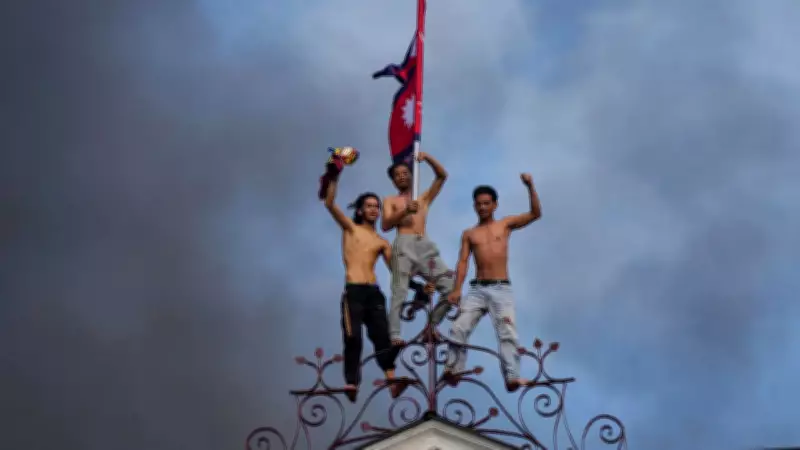
A proposed ban on social media, the very platforms where young Nepalis vented anger at so-called "nepo kids," proved combustible. On September 8, thousands poured into the streets. Within two days, 77 people were dead, many protesters shot by police. The prime minister stepped down, turning online indignation into a movement that reshaped the political order.
Historic Interim Leadership and Voter Mobilization
In the chaotic aftermath of Oli's departure, Sushila Karki, former chief justice of the Supreme Court, was chosen as interim prime minister, making history as the first woman to hold the office in Nepal. Her brief tenure served as a stabilizing bridge between upheaval and fresh elections, inheriting a fragile state apparatus and a restless electorate, particularly among Gen Z activists who drove the protests.
The silence period ahead of polling, mandated under the election code of conduct, underscores the gravity of the moment. Campaign materials within a 300-meter radius of polling stations have been removed, speeches have ceased, and the noise has shifted from rallies to bus stations. In Kathmandu's Koteshwor Bus Park, scenes this week resembled a festival exodus, with thousands of voters, bags slung over shoulders, rushing toward buses bound for distant districts.
Traffic police records indicate that over 300,000 people have already left the capital by road to cast their votes, a number expected to double as polling day approaches. Bidur Nepali, a voter, stated, "I am going to my hometown to cast my vote. I have my own business here in Kathmandu, but to cast my vote, I am heading for my voting constituency for the election." For many, the journey is not just logistical but symbolic—a reclaiming of agency after months of turmoil.
Bidur added, "The country has traversed through a dire situation; we voters also should have an understanding of the capacity of the candidate. We have already seen the work of the old parties, but they performed very badly. Looking at the incident of September 8 and 9, I would vote for that party which really can work for the good of the country."

At another corner of the bus park, Raju Chaulagain waited with similar resolve: "That sort of candidate who can bring on the change in the country and someone who can work on that front where the citizens of this country don't need to go to other countries in search of work should be elected, I want that sort of candidate." These voices reflect a broader yearning for jobs at home, accountable governance, and leaders who understand a generation raised online but rooted in local realities.
Electoral Dynamics and Demographic Shifts
Nearly 18.9 million people are registered to vote, including roughly 966,000 men, 924,000 women, and around 200 voters registered under the "others" category, which includes individuals who do not identify as male or female and members of the LGBTQ+ community. The voter roll has grown by nearly one million since November 2022, a surge widely attributed to the political awakening triggered by the protests. The voting age remains 18, with authorities actively encouraging young adults to register.
The House of Representatives comprises 275 members: 165 elected directly under the first-past-the-post system across 165 constituencies, and 110 allocated proportionally based on parties' share of the nationwide vote—provided they secure at least three percent of the PR vote and win at least one direct seat to qualify as a national party. Voters cast two ballots: one for a constituency candidate and another for a party, a system designed to balance local representation with proportional fairness, often producing coalition governments.
With 136 registered political parties—a quarter formed after the September movement—the ballot is crowded. Ultimately, 68 parties have fielded candidates for direct contests, while 63 have submitted proportional lists. A total of 3,406 candidates are in the fray for FPTP seats: 2,263 from parties and 1,143 independents, including 3,017 men, 388 women, and one candidate representing the sexual and gender minority community.
Old Guard Under Pressure and the Rise of Balen
For decades, Nepal's political landscape has been dominated by the Nepali Congress and the Communist Party of Nepal (Unified Marxist–Leninist), both part of the government ousted last year and now facing intense scrutiny. The protests not only toppled a prime minister but challenged the credibility of established parties, with many young voters seeing them as emblematic of a system that prioritized patronage over performance.
Yet, entrenched networks, organizational strength, and regional strongholds remain formidable assets. Oli, in particular, retains influence in his constituency of Jhapa-5, a district about 300km southeast of Kathmandu, where the most symbolic contest of the election is unfolding. Facing Oli is 35-year-old Balendra Shah, widely known as Balen, a rapper-turned-political disruptor.
Once a rap sensation who burst onto the scene in 2013, Balen stunned mainstream parties in May 2022 by winning the mayoralty of Kathmandu as an independent. When protests erupted in September 2025, he emerged as a high-profile supporter of demonstrators, with many Gen Z activists viewing him as a natural interim leader after Oli's resignation. Instead, he backed Sushila Karki for the role, a move now widely viewed as strategic.
As Nepal heads to its first election since the uprising, Balen is contesting as a candidate of the Rastriya Swatantra Party (RSP), a centrist formation established in 2022 that secured 10 percent of the national vote in the last elections. At rallies, his style remains unconventional; facing thousands of cheering supporters, he recently lifted his signature black rectangular sunglasses, asked the audience to look him in the eye, and said, "I love you."
Parbat Basnet, a 24-year-old business graduate and one of the leaders of the Gen Z uprising in Damak, noted, "As mayor, Balen proved that governance can actually be transformed." Balen's rhetoric has not been without controversy, as he has publicly lashed out at mainstream parties and criticized foreign powers including India, China, and the United States, with volatile language prompting questions about temperament and readiness for high office.
Observers highlight that more than 40 percent of Nepal's population is under 35, while party leadership across major formations skews into the seventies. In this demographic contrast lies Balen's appeal: he embodies a generational shift.
Social Media's Silent Reset and Fragile Stability
The uprising has reshaped public behavior beyond politics. Several high-profile social media accounts that once showcased privilege have gone quiet. Shrinkhala Khatiwada, former Miss Nepal and daughter of a former health minister, appears to have shut down her Instagram account. Smita Dahal, granddaughter of a three-time prime minister, set her Instagram to private after criticism over posts displaying luxury handbags.
One viral image from last summer showed Saugat Thapa, son of a former minister, posing beside Louis Vuitton, Cartier, and Gucci boxes stacked like a Christmas tree. His more recent posts highlight international travel and an aspirational lifestyle; he has previously defended himself, saying the "nepo kid" label was "an unfair misinterpretation" and that his father "returned every rupee earned from public service to the community." The digital retreat of elite influencers signals an awareness that optics matter in a changed political climate.
Nepal's federal parliament is bicameral, with the 59-member national assembly as a permanent upper house and the lower House of Representatives wielding greater power, the focus of Thursday's vote. Coalition politics is the norm; even if a single party performs strongly, forging alliances will likely be essential to form a government, with the memory of 15 governments in 20 years hanging over the process. The question confronting voters is not merely who will win seats, but who can deliver stability without stifling dissent.
A Generational Reckoning and Lasting Change
As buses roll out of Kathmandu and campaign banners come down, Nepal stands at a juncture shaped by its youngest citizens. The uprising of September 2025 has become the defining narrative of this election, a reminder that political legitimacy in the digital age can evaporate quickly. Young voters demand more than symbolism; they want jobs at home, transparent governance, and leaders who do not treat public office as inheritance.
Whether this demand translates into a reshaped parliament remains uncertain. The old guard still commands loyalty in many regions, new parties must convert enthusiasm into organization, and independents face structural disadvantages. But one shift is certain: Nepal's youth have discovered their collective power. They have forced a prime minister from office, propelled an interim leader into history, and injected urgency into a system long criticized for inertia.
On Thursday, in classrooms converted into polling stations and village halls tucked beneath snow-capped peaks, millions will mark their ballots. The outcome will not only determine the composition of a 275-member chamber but also tell whether a generation's anger can be channeled into lasting change, and whether Nepal's democracy, forged through decades of turbulence, can adapt to the aspirations of those who will inherit it.