Noida International Airport's Leadership in Jeopardy as Home Ministry Blocks Foreign CEO
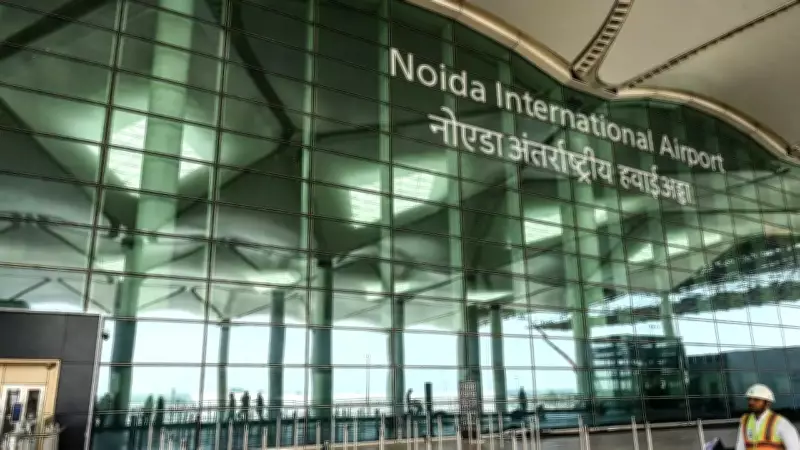
In a development that could significantly impact the operational timeline of the newly inaugurated Noida International Airport (NIA), the Union Home Ministry has reportedly rejected a crucial proposal that would have allowed foreign nationals to serve as CEOs of greenfield airports in India. This decision, conveyed to the Civil Aviation Ministry, means NIA may need to replace its current Swiss CEO, Christoph Schnellmann, with an Indian executive before commercial flight operations can commence.
Security Clearance Hurdle Threatens Airport's Operational Timeline
Sources indicate that the Bureau of Civil Aviation Security (BCAS) had proposed amending existing aviation security rules that currently prohibit expatriates from holding CEO positions at newly developed airports. The Home Ministry's refusal to approve this amendment creates an immediate leadership challenge for NIA, which has been significantly delayed already and cannot afford further operational setbacks.
Christoph Schnellmann, a seasoned aviation professional with extensive experience in India having played a key role in Bengaluru airport's development, has led NIA since its inception stage as part of concessionaire Zurich AG's team. Prime Minister Narendra Modi inaugurated the airport on March 28, 2026, marking what was supposed to be a major milestone in India's aviation infrastructure development.

Airport Management Responds to Regulatory Challenge
When approached for comment, an NIA spokesperson emphasized the airport's commitment to regulatory compliance while carefully avoiding direct confirmation about leadership changes. "It is a matter of great pride for us that the Prime Minister inaugurated NIA, marking a significant milestone in the project's journey," the spokesperson stated.
"We are working closely with BCAS to secure approval for the Aerodrome Security Programme, which is the essential security clearance required before passenger flight operations can begin. Our efforts are focused on ensuring that all systems, processes, and personnel are fully aligned to deliver a safe, efficient, and seamless start of operations," the spokesperson added, without confirming whether the search for Schnellmann's potential successor has commenced.
Industry Experts Criticize "Archaic" Regulations
Aviation industry insiders have strongly criticized the Home Ministry's stance, describing the rule prohibiting foreign CEOs at greenfield airports as "archaic" and the refusal to amend it as a "retrograde step" that could negatively impact foreign investment in India's aviation sector.
"These aviation security rules date back to an era when most Indian airports were defense airports with civilian enclaves," explained an industry insider. "While it's understandable that an IAF or Navy-run airport cannot have a foreign CEO, this rule has lost relevance in today's context and should have been amended as part of ease of doing business initiatives and modernizing outdated regulations."
Industry professionals pointed out the inconsistency in regulations, noting that no such restrictions exist for airline CEOs in India. Both IndiGo's previous and incoming CEOs are expatriates, as was Air India's outgoing CEO until recently.
Security Concerns Versus Global Talent Access
Another aviation insider suggested a more nuanced approach: "Numerous Indian-origin professionals head major technology firms in the United States that play significant roles in national security there. Rather than blanket bans, there should be rigorous security clearance processes for all candidates, with specific restrictions only for nationals from countries that the government periodically deems hostile to India."
This perspective gains relevance considering recent history. When the Tata Group acquired Air India in January 2022, they initially selected a Turkish national with close ties to Turkish President Recep Tayyip Erdogan as CEO. Given Turkey's strained relations with India, this candidate failed to obtain security clearance and had to decline the offer. The Tatas subsequently appointed a New Zealander with Singapore Airlines Group experience who had more favorable credentials.

The current regulatory impasse presents NIA stakeholders with a difficult choice: either find a qualified Indian CEO quickly to avoid further delays or continue advocating for regulatory changes while the airport's operational timeline remains uncertain. With the Aerodrome Security Programme approval pending and commercial operations yet to commence, the leadership question adds another layer of complexity to India's ambitious aviation infrastructure project.