

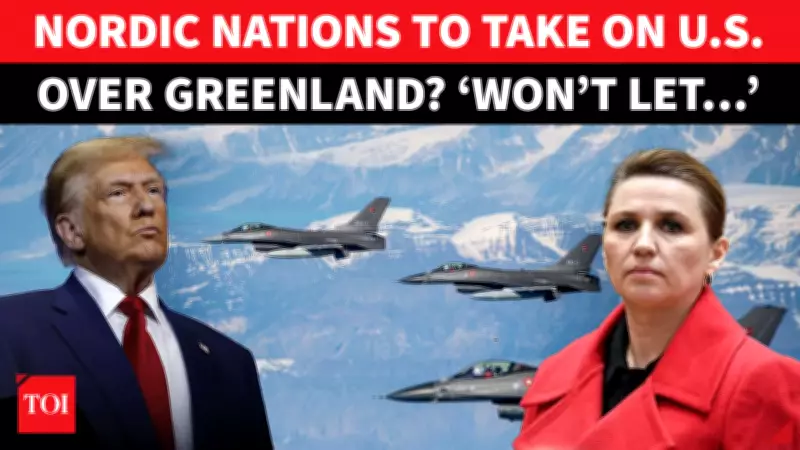
Nordic Nations Confront U.S. Over Greenland Move as Arctic Rift Deepens
The Arctic, once considered a frozen and forgotten frontier, is now at the center of escalating geopolitical tensions. Following former U.S. President Donald Trump's floated idea of acquiring Greenland, alarm bells have rung loudly across NATO, prompting a significant military response from Nordic nations.
Military Deployment Signals European Unity
Denmark and Sweden have taken decisive action by deploying fighter jets and troops to the High North. This move represents a clear signal that Europe is closing ranks to protect its interests in the rapidly changing Arctic region. The deployment underscores growing concerns about sovereignty and security in an area that was previously characterized by strategic stability.
The once-quiet Arctic frontier is transforming into a strategic flashpoint, driven by the dual pressures of climate change and resource competition. As Arctic ice continues to recede at an alarming rate, new sea lanes are opening up, making Greenland's maritime routes increasingly valuable for global trade and military navigation.

Geopolitical Prizes in a Melting Arctic
Greenland's strategic importance extends far beyond its icy shores. The territory is rich in untapped natural resources, including:
- Rare earth minerals critical for modern technology
- Substantial oil and gas reserves
- Valuable fishing grounds
- Emerging shipping corridors
These resources are becoming geopolitical prizes as nations recognize the economic and strategic advantages of controlling Arctic territory. The U.S. interest in Greenland has therefore triggered what experts describe as a fundamental shift in Arctic politics, moving from cooperative governance to competitive positioning.
Broader Implications for NATO and Global Security
The Nordic response to U.S. overtures toward Greenland reveals deeper fractures within the Western alliance. While NATO members traditionally present a united front against external threats, this internal disagreement over Arctic sovereignty highlights the complex dynamics at play in the post-Trump era.
The military buildup in the High North represents more than just a reaction to one political proposal—it reflects a broader recognition that the Arctic's strategic landscape is undergoing permanent transformation. As ice melt accelerates, previously inaccessible areas are becoming operational theaters for military and commercial activities alike.
This development comes at a time when global powers are increasingly viewing the Arctic through a lens of national interest rather than international cooperation. The Nordic deployment serves as both a defensive measure and a statement of intent: Europe will not passively watch as external powers attempt to redraw the Arctic map.
The situation remains fluid, with diplomatic channels reportedly active behind the scenes. However, the visible military movements suggest that Arctic nations are preparing for a new era of competition in what was once considered Earth's final frontier.






