

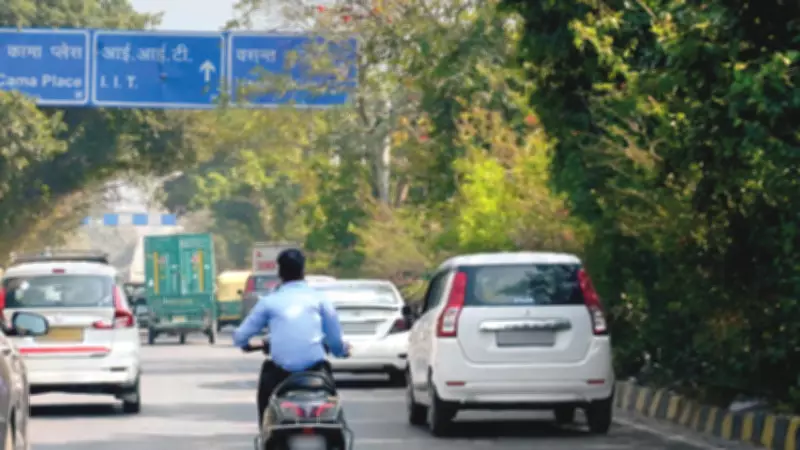
Olof Palme Marg: The Unassuming Delhi Road Honoring a Global Peacemaker
On most days, Olof Palme Marg in Chanakyapuri passes without attracting any special attention. Cars flow steadily along its length, security personnel maintain their posts outside embassy gates, and the thoroughfare integrates seamlessly into the diplomatic enclave's orderly daily rhythm. There is little immediate indication that this road's name commemorates a leader whose voice once powerfully shaped international discussions on war, peace, and justice across multiple continents.
The Legacy of Olof Palme: A Voice for Global Justice
That name belongs to Olof Palme, the former Prime Minister of Sweden who emerged as one of the most outspoken and principled international figures of his generation. Throughout the 1970s and 1980s, Palme took unequivocal public stances on critical global issues, including his open criticism of the Vietnam War, his firm opposition to apartheid in South Africa, and his consistent advocacy for nuclear disarmament. During an era when much of the world was firmly aligned with either the American or Soviet bloc, Palme maintained a notably independent foreign policy line.
This independent approach found natural and profound resonance in India. His political philosophy frequently echoed concerns central to New Delhi's own foreign policy framework, particularly regarding global peace, decolonization processes, and equity among nations.

Academic Perspective: Ideological Alignment with India
Bipin Kumar Tiwari, a specialist in International Relations at the University of Delhi, provided insightful analysis. "Olof Palme stood out as a rare global voice whose clarity and conviction on issues like anti-imperialism and anti-colonialism deeply resonated with India," he stated. "His advocacy for peace and justice echoed the very principles that lie at the heart of India's ethos as enshrined in the Constitution of India."
Tiwari further explained that Palme's worldview reflected the spirit of a nation still actively shaping its global identity, one fundamentally committed to equality, peace, and moral diplomacy. Palme's willingness to criticize powerful nations, his steadfast opposition to armed conflict, and his consistent support for liberation movements worldwide made him a natural ideological ally to India's own stance throughout the complex Cold War period.
"This connection was not merely ideological. It was deeply felt," Tiwari emphasized. "When Palme was tragically assassinated in 1986, the grief expressed across India was both immediate and profoundly genuine."
From Shared Ideas to Direct Engagement
The relationship between Palme's vision and India extended beyond shared philosophical ground into tangible diplomatic engagement. Palme visited India and interacted directly with its political leadership during pivotal moments. He collaborated closely with figures such as Prime Minister Indira Gandhi and Tanzania's Julius Nyerere, becoming an integral member of the Six-Nation Initiative. This multinational effort was specifically dedicated to advancing the cause of nuclear disarmament and easing the dangerous tensions of the Cold War.
The Assassination and Lasting Recognition
The shocking assassination of Olof Palme on February 28, 1986, in Stockholm brought India's connection to his legacy into even sharper focus. The killing sent shockwaves around the globe, and within India, the response was characterized by immediate sorrow and a deep sense of loss. In recognition of his immense contributions, Palme was posthumously honored with the prestigious Jawaharlal Nehru Award for International Understanding (awarded in 1985 and formally presented in 1987), a clear reflection of the high esteem in which he was held by the Indian establishment.
It was during these transformative decades, as such meaningful international relationships were being forged, that Delhi began the practice of naming roads within the Chanakyapuri diplomatic area after influential global figures. These deliberate choices reflected specific political affinities and shared ideals, serving as permanent honors for leaders whose visions had meaningfully intersected with India's own national aspirations.

A Living Memory in Concrete and Asphalt
Olof Palme Marg emerged directly from that historical moment. Today, it functions as a quiet artery within the city, its name often overlooked by the busy traffic it carries. Yet, this unassuming road serves as a permanent physical repository of memory—preserving the history of diplomatic visits, substantive conversations, and a shared political vocabulary that once connected Delhi and Stockholm in a bond that transcended mere geographical distance. It stands as a subtle but enduring monument to a partnership built on common values of peace and justice.





