

Pahalgam Attack Anniversary: How Terror Reshaped Kashmir's Tourism Economy
"Some boundaries should never be crossed." A year after the Indian Army's stern warning, these words now echo as both memory and caution. They mark the day that fundamentally altered how Pahalgam is perceived, experienced, and remembered by the nation.
The Day Calm Fractured
On April 22, 2025, the tranquil atmosphere of Baisaran meadow near Pahalgam in South Kashmir shattered without warning. Birdsong was abruptly replaced by gunfire as routine transformed into panic. Security establishment sources confirmed this as a coordinated terror attack targeting civilians in a high-footfall tourist zone, resulting in the tragic loss of twenty-six lives.
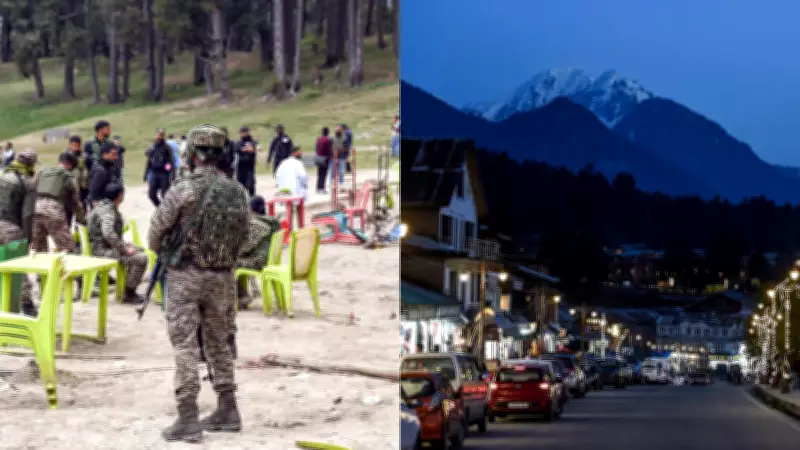
The immediate aftermath saw security forces launch extensive search operations across surrounding forest belts, with the area sealed off and tourists evacuated from adjoining routes. Emergency protocols were activated throughout south Kashmir as authorities scrambled to respond to the unprecedented violence in a region celebrated on India's tourism map.

Security and Diplomatic Response
In the days following the attack, a multi-agency investigation mechanism involving central security and intelligence units was established. Early findings pointed toward a structured terrorist module with logistical support networks operating across the Line of Control region.
By late April 2025, security agencies expanded counter-terror operations across south Kashmir with intensified surveillance along known tourist circuits. This response was framed within internal security briefings as a strategic shift toward "preventive dominance" in high-tourism zones.
The most significant military response came on May 7, 2025, when India launched "Operation Sindoor"—a defining shift in anti-terror doctrine involving coordinated precision strikes on terror infrastructure across Pakistan and Pakistan-occupied Kashmir. This represented India's most direct cross-border military action since the Balakot strikes of February 2019.
Concurrently, India launched a coordinated diplomatic outreach, briefing foreign governments and multilateral partners about the incident and its cross-border terror links. Seven all-party delegations visited over thirty countries and the European Union, holding high-level briefings across major global capitals to internationalize concerns about cross-border terrorism.
Economic Impact on Tourism
The attack reshaped Pahalgam's tourism economy in profound ways. Hotel associations and local tourism operators reported widespread cancellations during the peak summer window of 2025, with recovery beginning gradually by late summer but marked by shorter travel cycles and increased dependence on security advisories.
A representative from Galactic Gateways travel agency revealed: "On the ground, we saw an immediate 90–95 per cent spike in cancellations after the incident, with bookings dropping sharply for a few weeks." Recovery was gradual over subsequent months, driven largely by repeat visitors but remaining below earlier patterns.
Sheikh Khalid, director of sales at Hotel Royal Grandiose in Pahalgam, described the aftermath as devastating: "Properties that were once fully booked became vacant within days." He noted that while intermittent recoveries occurred, external geopolitical tensions and lingering traveler caution continued to weigh on arrivals.
Another hotel operator highlighted the structural nature of the impact, noting that occupancy levels remain significantly lower than pre-attack norms. The economic strain led to forced staff layoffs and migration of some workers to alternative informal employment.
Human Toll and Community Impact
Among the twenty-six victims was Syed Adil Hussain Shah, a local pony operator remembered by his family as someone who attempted to protect others during the assault. Eyewitness accounts indicated he tried to resist attackers and help shield tourists as firing unfolded.
His family, speaking on the first anniversary, expressed that they continue to feel his absence every moment while holding onto pride amid unbearable loss.

The emotional impact extended across Jammu and Kashmir. Aditya, a hotel operator in Srinagar, described the community-wide shock: "It has shaken the whole community in the J&K state especially the valley. People started to look at the people from the valley very differently."
Monica Shivek, a work experience teacher with DIET, reflected on the psychological impact: "After the abrogation of Article 370 a sense of peace was prevalent and as this incident happened once again a fear of terrorism again started hovering in our minds."
Security Reinforcement and Recovery Efforts
In the months following the attack, security across key tourist circuits in Jammu and Kashmir was significantly strengthened with increased deployment, tighter inter-agency coordination, and expanded surveillance along sensitive routes.
Lieutenant General (Retd.) DP Pandey, former commander of the 15 Corps, explained that the counter-terror approach is "based on intelligence to neutralise key leaders" and aims to ensure that "financial networks that fund terror and separatist organisations are exposed." He noted that while terror incidents had generally declined, the Pahalgam attack remained an exception in an otherwise improved security environment.
A senior Army official highlighted positive indicators of recovery, noting that immediately after Operation Sindoor, over 4.1 lakh pilgrims participated in the Shri Amarnath Ji Yatra, reflecting strong public confidence in security arrangements. The official also mentioned 1.9 crore tourist visits to Jammu and Kashmir in the past year, including strong winter arrivals.
Lasting Legacy and Moving Forward
One year later, Pahalgam continues to function as a tourist destination but operates within a transformed reality. The summer peak still exists but no longer carries the same predictability. Businesses describe recovery as real but fragile, with decisions that once took weeks now made days before travel after repeated safety checks.
What remains is not just a disrupted season but a recalibrated tourism economy still searching for stability. The scars are visible in half-filled hotels, quieter streets, and the cautious optimism of local operators who know external perceptions of safety have been fundamentally altered.
As Prime Minister Narendra Modi stated while marking the anniversary, the victims "will never be forgotten." The tragedy serves as both tribute to those lost and reminder of a moment that reshaped how the valley—and the nation—moves forward with heightened awareness and reinforced security measures.
