

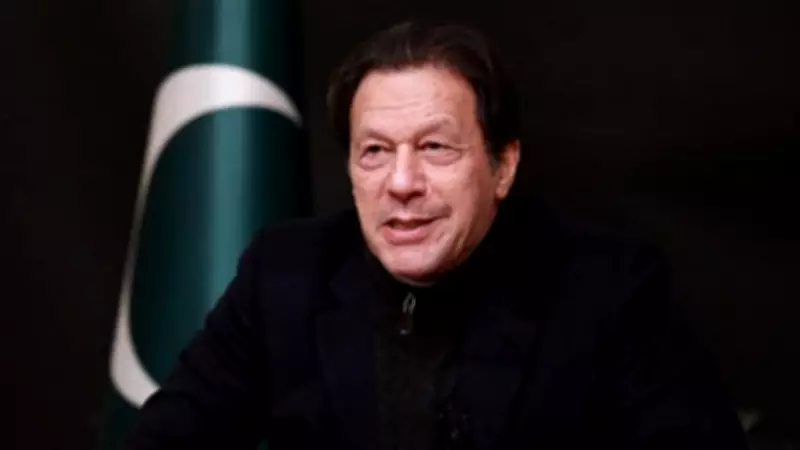
Pakistan Government Levels Serious Allegations Against Former PM's Son
In a significant development, the Pakistan government has formally accused Qasim Khan, the son of former Prime Minister Imran Khan, of engaging in a deliberate and calculated conspiracy aimed at stripping Pakistan of its vital GSP Plus trade status with the European Union. The allegations stem from a speech delivered by Qasim Khan at the United Nations, which government officials claim was designed to undermine Pakistan's international standing and economic interests.
Joint Ministerial Condemnation of Alleged Conspiracy
Federal Information Minister Attaullah Tarar, Punjab Information Minister Azma Bokhari, and Sindh Information Minister Sharjeel Memon held a joint press conference where they launched a scathing criticism against Qasim Khan and Pakistan Tehreek-e-Insaf (PTI) leader Zulfi Bukhari. The ministers presented what they described as evidence of a coordinated effort to damage Pakistan's economic prospects through international platforms.
The ministers asserted that the UN speech contained deliberate misrepresentations and false claims about Pakistan's human rights record and governance standards, which are key criteria for maintaining the GSP Plus status. They emphasized that this status provides Pakistan with crucial tariff concessions on exports to the European Union, benefiting numerous industries and supporting thousands of jobs across the country.

Economic Implications of GSP Plus Status
The GSP Plus (Generalised Scheme of Preferences Plus) arrangement allows Pakistan to export over 6,000 products to the European Union at zero or reduced tariff rates. This preferential trade access has been instrumental in boosting Pakistan's exports, particularly in the textile, leather, and agricultural sectors. Losing this status would represent a severe economic blow to Pakistan's already struggling economy, potentially resulting in significant job losses and reduced foreign exchange earnings.
Government officials highlighted that Pakistan's continued eligibility for GSP Plus depends on regular reviews of its implementation of 27 international conventions related to human rights, labor rights, environmental protection, and good governance. Any negative assessment could jeopardize this crucial trade arrangement.
Political Context and Broader Allegations
The allegations come amid ongoing political tensions between the current government and supporters of former Prime Minister Imran Khan, who was removed from office in 2022. The ministers suggested that the alleged conspiracy represents part of a broader pattern of attempts by PTI leadership to destabilize the country's economic and political stability through international channels.
Sharjeel Memon specifically accused Qasim Khan and Zulfi Bukhari of deliberately providing misleading information to UN bodies, with the explicit intention of triggering a review that could result in the suspension of Pakistan's GSP Plus benefits. The ministers claimed to have documented evidence of communications and coordination between the accused individuals and international entities.
Government Response and Next Steps
The Pakistani government has announced it will formally raise the matter through diplomatic channels and provide what it describes as "the complete factual picture" to relevant UN bodies and European Union officials. The ministers emphasized that protecting Pakistan's economic interests remains their top priority and that they would take all necessary measures to counter what they characterize as malicious attempts to harm the nation's economy.
As of the latest reports, representatives of Imran Khan's PTI party have not issued an official response to these specific allegations. The development adds another layer of complexity to Pakistan's already turbulent political landscape and raises important questions about the intersection of domestic politics and international economic relations.






