

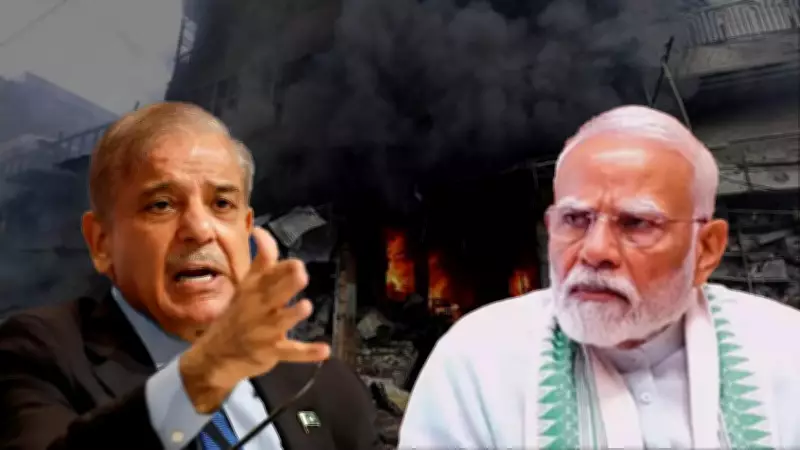
Pakistan Army Escalates Rhetoric, Blames India for 'Open War' in Afghanistan
In a dramatic escalation of regional tensions, Pakistan's military has once again pointed fingers at India, accusing its neighbor of waging an 'open war' against Afghanistan through proxy forces. The allegations were made during a high-profile press briefing, where Director General of Inter-Services Public Relations (ISPR) Ahmed Sharif Chaudhry presented what he described as evidence of Indian sponsorship behind recent terror attacks in the region.
Military Leadership Makes Direct Accusations
DG ISPR Ahmed Sharif Chaudhry did not mince words during his presentation to journalists. "We have concrete intelligence that clearly demonstrates India's direct involvement in destabilizing Afghanistan," Chaudhry stated emphatically. "This isn't just interference - this constitutes an open war being fought through proxies."
The military spokesperson went further, alleging that the Taliban regime currently governing Afghanistan has become an instrument of Indian foreign policy. "The Taliban leadership is actively enabling operations that serve Delhi's strategic interests at Pakistan's expense," Chaudhry claimed, though he provided no specific evidence to support these assertions during the public briefing.

Political Echoes from Pakistan's Defense Establishment
Pakistan's Defense Minister Khawaja Asif quickly amplified the military's accusations, delivering a parallel condemnation from the political arena. "Afghanistan is acting at Delhi's behest, serving as a staging ground for attacks against Pakistani interests," Asif declared in a separate statement. "This proxy arrangement represents a clear threat to regional stability and Pakistan's national security."
The coordinated messaging from both military and political leadership suggests a deliberate strategy to internationalize Pakistan's security concerns regarding its western border with Afghanistan while simultaneously implicating India in the deteriorating situation.
India's Forceful Rejection and Counter-Allegations
New Delhi responded swiftly and unequivocally to Pakistan's accusations. Indian officials categorically rejected what they termed "baseless allegations" and "diversionary tactics" from Islamabad. "Pakistan's attempt to blame India for its internal security challenges and regional isolation is both predictable and unfounded," an Indian Ministry of External Affairs spokesperson stated.
India further condemned recent Pakistani airstrikes that reportedly resulted in civilian casualties in border regions. "While Pakistan engages in military actions that harm innocent civilians, it seeks to deflect attention by manufacturing false narratives about Indian involvement," the spokesperson added, highlighting what India views as hypocrisy in Pakistan's position.
Regional Pattern of Escalating Tensions
The exchange represents the latest chapter in a familiar regional pattern where rising instability triggers increasingly sharp blame games between the nuclear-armed neighbors. Observers note that such accusations typically intensify during periods of:
- Increased militant activity along the Pakistan-Afghanistan border
- Domestic political pressure on Pakistani leadership
- Shifts in great power engagement with the region
- Economic challenges within Pakistan requiring external focus
Strategic Calculations Behind the Accusations
Security analysts suggest multiple possible motivations behind Pakistan's renewed accusations against India:

- Deflecting Domestic Pressure: By externalizing security challenges, Pakistan's establishment may seek to redirect attention from internal governance issues and economic difficulties.
- International Messaging: The accusations could represent an attempt to influence global perceptions ahead of important diplomatic engagements and funding decisions.
- Border Management: Escalating rhetoric against India might provide justification for increased military deployments along Pakistan's eastern border with India, even as concerns focus on the western border with Afghanistan.
- Taliban Relations: The proxy allegations could serve as pressure on the Taliban regime in Afghanistan to distance itself from any perceived Indian influence.
Broader Implications for Regional Stability
As the war of words intensifies, concerns are mounting about potential spillover effects across South Asia. The situation presents several worrying dimensions:
First, the direct accusations of proxy warfare represent a significant escalation in diplomatic rhetoric that could harden positions on all sides. Second, the involvement of the Taliban regime as an alleged Indian proxy introduces new complexity to already fraught Pakistan-Afghanistan relations. Third, the exchange occurs against a backdrop of genuine security challenges in the region that require cooperative solutions rather than reciprocal blame.
The coming weeks will reveal whether this rhetorical escalation represents temporary posturing or signals a more dangerous phase in regional relations. With both Pakistan and India possessing nuclear capabilities and facing multiple security challenges, the international community watches with concern as accusations fly and tensions mount across two of South Asia's most volatile borders.





