

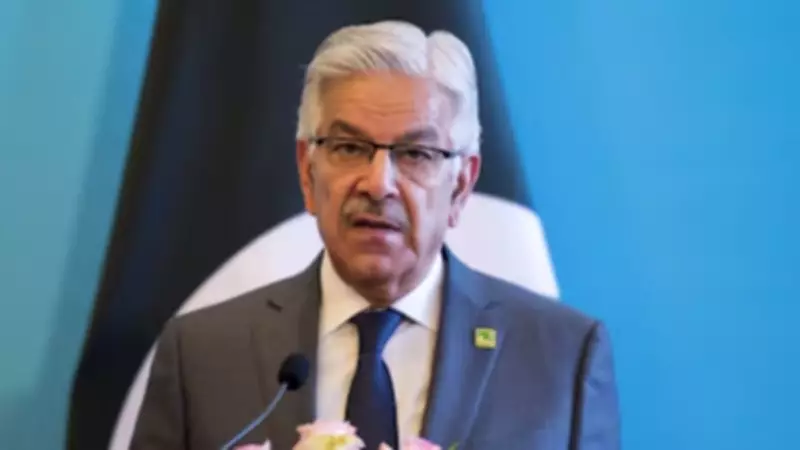
Pakistan Defence Minister Mocks US-Israel War Goal Shift to Strait of Hormuz Opening
Pakistan's Defence Minister Khawaja Asif has publicly mocked the United States and Israel, asserting that the objective of their military campaign against Iran has now "shifted to reopening the Strait of Hormuz"—a crucial global waterway that was already operational before the conflict erupted.
Asif's Social Media Post and Strategic Commentary
In a pointed post on social media platform X on Wednesday, Asif stated: "The goal of the war seems to have shifted to opening the Strait of Hormuz, which was open before the war." This sarcastic remark highlights the perceived strategic confusion in the ongoing US-Israel-Iran confrontation.
The geopolitical context reveals that Iran effectively blocked the Strait of Hormuz in retaliation for coordinated US and Israeli strikes on February 28. This maritime chokepoint carries approximately 20% of global crude oil shipments, making it indispensable for international energy supplies and economic stability.

US Diplomatic Maneuvers and Iranian Rejection
On Monday, US President Donald Trump backed away from his earlier threat to "hit and obliterate" Iran's power plants. After issuing a 48-hour ultimatum demanding Tehran reopen the Strait of Hormuz, Trump announced a five-day pause, citing "productive talks" between Washington and Tehran.
However, Iran promptly rejected this claim, maintaining its position that the waterway remains open to international shipping—except for what it terms its "enemies," a clear reference to the US and Israel. Previously, Trump had pressured US allies to deploy naval forces to escort vessels through the strait, but most nations declined to commit warships despite his appeals.
Pakistan's Emerging Mediation Role
In a significant diplomatic development, Pakistan has reportedly offered to mediate between the United States and Iran. US Vice President JD Vance is expected to travel to Islamabad for proposed talks, with Pakistan positioning itself as a "neutral venue" for negotiations.
Contacts are actively underway to organize a high-level meeting in Pakistan's capital. Meanwhile, Pakistan's powerful army chief, Asim Munir, is said to have spoken directly with President Trump, while Prime Minister Shehbaz Sharif has held multiple conversations with Iranian President Masoud Pezeshkian.
Regional Shipping Access and Global Implications
Amid the escalating tensions, Iran has permitted India, Pakistan, and three other nations to continue using the Strait of Hormuz, describing them as "friendly countries." This selective access underscores the complex regional dynamics at play.
The situation remains fluid, with the potential for significant disruption to global energy markets if the strait remains contested. Pakistan's diplomatic initiative represents a crucial effort to de-escalate tensions and restore stability to this vital maritime corridor.






