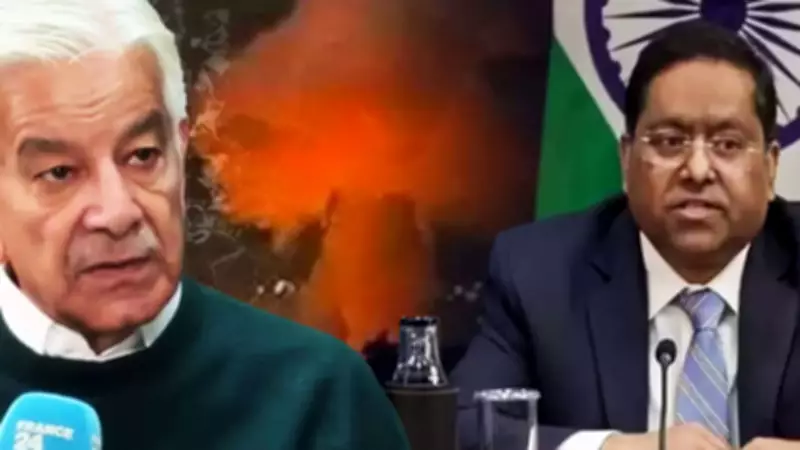
Pakistan's Defence Minister Alleges India-Taliban Alignment, Issues War Warning
Pakistan's Defence Minister Khawaja Asif has ignited a diplomatic firestorm by asserting that India and Afghanistan's Taliban government are strategically aligned against Islamabad. In a series of provocative statements, Asif characterized the ongoing violence in the region as a proxy war, directly implicating both nations in efforts to destabilize Pakistan.
Accusations of Proxy Warfare and Cross-Border Threats
Asif placed blame squarely on Kabul's "non-seriousness" in addressing militant activities, warning that Pakistan would not hesitate to launch further cross-border strikes if necessary. He escalated tensions by explicitly describing war with India as a real possibility, marking one of the most direct military threats in recent diplomatic exchanges between the nuclear-armed neighbors.
Striking Contrast: Acknowledgment of Past Strategic Errors
In a remarkable contradiction, Asif recently conceded that terrorism within Pakistan stems largely from historical strategic miscalculations and decisions made during previous Afghan conflicts. This admission highlights the complex legacy of Pakistan's involvement in regional conflicts, even as current rhetoric points fingers externally.

India has consistently and vehemently denied any involvement in sponsoring instability, maintaining instead that cross-border terrorism has long originated from Pakistani territory. The Indian government's position remains that Pakistan must address internal extremist elements rather than making unfounded allegations.
Escalating Tensions in a Volatile Region
The exchange comes amid:
- Heightened military posturing along the India-Pakistan border
- Increased militant activity in Afghanistan-Pakistan border regions
- Growing concerns about regional stability as diplomatic channels strain
South Asia now faces a particularly fragile security environment, with rhetoric intensifying and trust between nations deteriorating rapidly. The situation demands careful navigation to prevent escalation into broader conflict.
Asif's dual narrative—blaming external actors while acknowledging internal failures—creates a confusing diplomatic landscape that complicates peace efforts. The international community watches closely as these tensions unfold in one of the world's most strategically sensitive regions.