

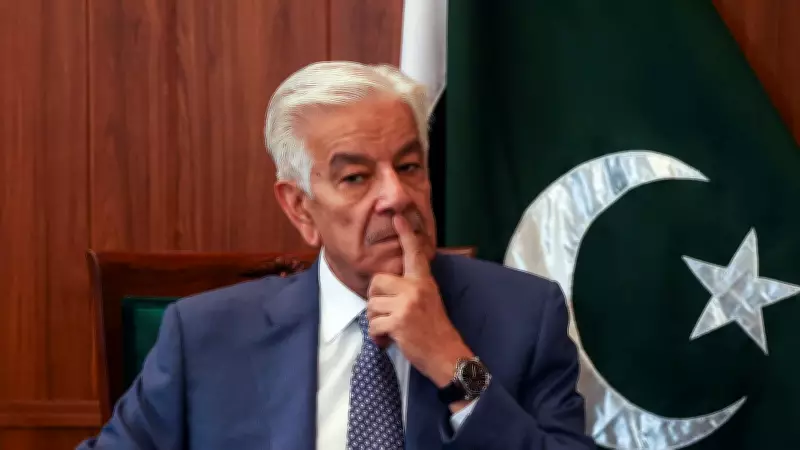
Pakistani Defence Minister Launches Scathing Attack on US Foreign Policy
In a fiery parliamentary address, Pakistan's Defence Minister Khawaja Asif has delivered a blistering condemnation of the United States, accusing Washington of exploiting Islamabad for its strategic interests and then discarding the nation "like toilet paper." The minister's remarks have ignited a significant political discussion about Pakistan's foreign policy decisions and their lasting consequences.
Historical Alignment Described as Catastrophic Error
Minister Asif specifically targeted Pakistan's decision to realign with Washington after 1999, particularly in the context of Afghanistan policy. He stated unequivocally that this alignment inflicted "lasting damage" on Pakistan, with repercussions that continue to haunt the nation decades later. The minister emphasized that while the United States eventually withdrew from the region, Pakistan was left grappling with prolonged violence, radicalization, and severe economic strain.
"I was listening to Hillary Clinton's speech. She has explained everything on how they exploited Pakistan. It's a landmark speech. And it says how they used us as tissue paper, in fact as toilet paper. Still we did not learn anything," Asif declared in Parliament, describing the pursuit of American backing as a grave miscalculation.

Criticism of Military Dictators and External Entanglements
The Pakistani minister placed substantial blame on late military rulers General Zia-ul-Haq and General Pervez Musharraf for entangling Pakistan in external conflicts. Asif argued that these leaders involved the nation in wars that served external interests, leaving Pakistan to absorb the devastating fallout long after its allies had moved on to other priorities.
Asif was particularly critical of Islamabad's involvement in two Afghan wars, which he termed "a mistake" that directly contributed to the terrorism Pakistan faces today. He noted that Pakistan aligned itself with Washington in the US-led Afghan war following the September 11, 2001 attacks, turning against the Taliban in the process.
Rejection of Religious Justifications for Conflict
In a significant departure from popular narratives, Minister Asif disagreed with the perception that Pakistan's involvement in Afghan conflicts was driven by religious or Islamic motivations. He acknowledged that Pakistanis were sent to fight under the banner of jihad but called this framing both misleading and deeply damaging to the nation's interests.
"We deny our history and do not accept our mistakes. Terrorism is a blowback of the mistakes committed by dictators in the past," the minister stated emphatically, suggesting that Pakistan must confront its historical errors rather than continuing to avoid accountability.
Broader Implications for Pakistan-US Relations
The minister's remarks highlight ongoing tensions in Pakistan-US relations and reflect broader discontent within Pakistan's political establishment about the costs of alliance with Washington. Asif's characterization of the relationship as exploitative suggests a fundamental reassessment of how Pakistan views its partnership with the United States, particularly regarding regional security matters.
This parliamentary speech represents one of the most direct and colorful criticisms from a senior Pakistani official regarding what many in Islamabad perceive as an imbalanced relationship with Washington. The toilet paper analogy particularly underscores the depth of frustration about perceived American disregard for Pakistan's long-term stability and sovereignty.






