

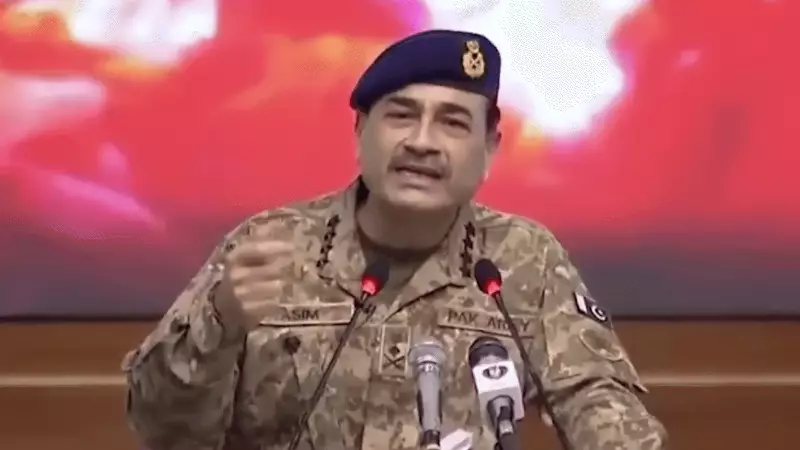
In a dramatic move that has sparked widespread controversy, Pakistan's hybrid government has introduced a constitutional amendment that would grant sweeping new powers to the country's military leadership. The development comes just six months after Army Chief Asim Munir's promotion to Field Marshal and now positions him for an even more powerful role.
Rapid Rise Amid Military Setbacks
The proposed constitutional changes come at a particularly sensitive time for Pakistan's military establishment. Just six months after his promotion to Field Marshal, Army Chief Asim Munir is now poised to assume the additional role of Chief of Defence Forces (CDF). This rapid elevation occurs despite the Pakistani military suffering what analysts describe as a severe setback during the four-day near-war with India in May 2025.
The timing of this power consolidation has raised eyebrows across political circles and among international observers. The military's performance during the recent border tensions with India had prompted questions about its operational capabilities and strategic positioning.

Constitutional Overhaul for Military Dominance
On November 8, 2025, Pakistan's government formally introduced the constitutional amendment to create the new post of CDF. According to reports from Dawn newspaper, the official justification for this move is to "ensure greater coordination and unified command among the three services" - the army, navy, and air force.
The new position of Chief of Defence Forces will replace the existing post of the Chairman of the Joint Chiefs of Staff Committee (CJCSC). This represents a significant structural shift in Pakistan's military hierarchy, consolidating power in a single individual with broader authority over all branches of the armed forces.
What makes this development particularly noteworthy is that the amendment would vest broader, constitutionally protected powers and privileges in the country's top military leadership. This constitutional protection would make the military's enhanced authority more permanent and difficult to challenge through political means.
Political Backlash and Regional Implications
The proposed amendments have triggered a massive backlash from various quarters within Pakistan. Critics argue that this move represents another step toward formalizing the military's dominant role in Pakistan's governance structure, often referred to as the 'hybrid government' model.
The consolidation of power in the military leadership, particularly through constitutional means, has raised concerns about the future of civilian democracy in Pakistan. The fact that this expansion of military authority comes so soon after the border tensions with India adds another layer of complexity to regional security dynamics.
Regional security experts are closely watching these developments, as the enhanced powers granted to Pakistan's military leadership could have significant implications for India-Pakistan relations. The creation of a more powerful, unified military command structure across Pakistan's armed services may influence future strategic calculations on both sides of the border.
The proposed constitutional changes represent what many analysts see as the institutionalization of the military's already substantial influence over Pakistani politics and governance. As the debate over these amendments continues, the international community remains watchful of how this power shift might affect regional stability and the balance between civilian and military authority in Pakistan.






