

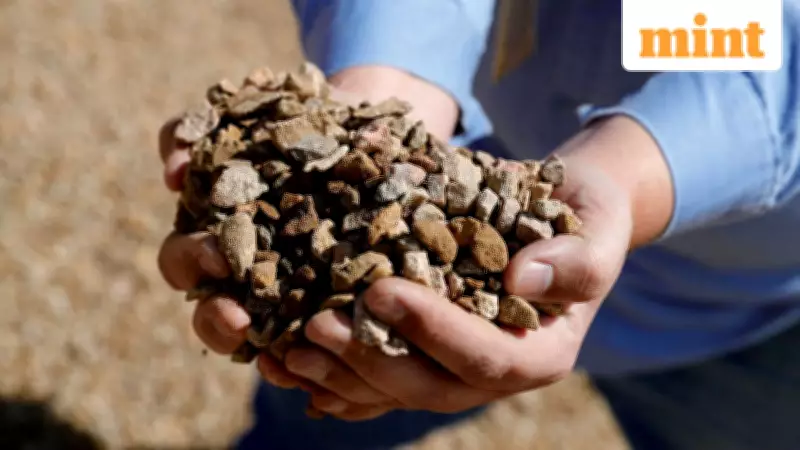
Pax Silica Initiative: A Global Push to Counter China's Critical Minerals Supremacy
The Pax Silica initiative, launched by the United States in December 2025, represents a concerted international effort to diversify the global supply chains for critical minerals. With China currently dominating approximately 90% of rare-earth processing and refining capacity, along with controlling around 70% of mining output, this strategic move aims to reduce global dependency on a single nation for essential resources.
What Exactly is the Pax Silica Initiative?
This multinational collaboration brings together countries across continents to work collectively on securing alternative sources for minerals such as lithium, rare-earth elements, gallium, germanium, palladium, and indium. These materials are crucial for numerous advanced technologies, ranging from artificial intelligence infrastructure and electric vehicles to renewable energy systems and semiconductor manufacturing.
The initiative focuses on comprehensive supply chain collaboration, encompassing everything from technological development and mining operations to processing capabilities. Currently, nine nations have officially signed on as participants:

- Australia
- Greece
- Israel
- Japan
- Qatar
- Republic of Korea
- Singapore
- United Arab Emirates
- United Kingdom
Additionally, several non-signatory partners are involved, including Canada, the European Union, the Netherlands, the Organization for Economic Cooperation and Development, and Taiwan.
Why the Urgent Need for Supply Chain Diversification?
The overwhelming concentration of critical mineral production and processing in China has created significant vulnerabilities for the global economy. In 2025, China implemented export restrictions on rare-earth magnets and banned technical collaborations concerning the latest lithium-ion battery technology. Furthermore, conflicts with the European Union over semiconductor company Nexperia led to halted chip exports from China, causing shortages across Europe.
China's dominance extends across multiple critical areas:
- Rare-earth processing: Controls about 90% of global capacity
- Lithium-ion battery production: Accounts for nearly 69% of global installed capacity
- Gallium production: Produces approximately 98% of the world's supply
- Germanium refining: Controls nearly 60% of global capacity
This concentration has prompted Western nations to accelerate efforts toward supply chain diversification, a process that gained momentum following the COVID-19 pandemic disruptions.
How Did China Achieve This Dominance?
China's strategic push to control critical mineral supply chains began in the late 1980s. While countries like France and the United States implemented stricter environmental regulations, China expanded production capabilities through substantial policy support and subsidies. This approach triggered a remarkable production boom throughout the 1990s, with rare-earth mineral output increasing from 16,150 tonnes in 1991 to 65,000 tonnes in 1998—representing an annual growth rate of 22%.
Several factors contributed to China's success:
- Possession of the world's largest reserves of rare-earth elements and lithium
- Strategic investments in mining operations across South America (Chile, Brazil) and Africa (Congo, Zambia, Zimbabwe)
- Sustained government support through favorable policies and financial incentives
India's Potential Role in the Critical Minerals Equation
United States officials have been actively encouraging India to join the Pax Silica initiative, with Under Secretary of State for Economic Affairs Jacob Helberg emphasizing that India represents perhaps the only country capable of challenging China's dominance in terms of human talent volume. However, India has historically remained on the sidelines of the critical minerals supply chain due to limited reserves and insufficient mining and processing technology.
Recent developments suggest potential for change:

- The 2023 discovery of lithium reserves in Jammu and Kashmir
- India's position as holder of the world's fifth-largest rare-earth reserves
- The launch of the ₹34,300 crore National Critical Minerals Mission (NCMM) to enhance domestic control over critical mineral supply chains
The primary challenges facing India include technological limitations and the substantial capital expenditure required for mining and processing operations. Currently, the country remains dependent on China for lithium-related imports, while rare-earth mining and refining operations remain limited despite significant reserves.
Can Pax Silica Realistically Challenge Chinese Dominance?
In the immediate term, establishing a direct competitor to China's critical minerals supply chain appears unlikely, given that such investments typically require years to materialize. However, potential collaboration models exist that could accelerate progress. During a July meeting of Japanese and Indian businesses focused on battery and critical minerals supply chains, industry representatives suggested that India could serve as both a manufacturing and demand hub within a potential Quadrilateral Security Dialogue (Quad) partnership framework.
Under such an arrangement, Australia could provide raw materials, while Japan and the United States could offer crucial technological support. With Pax Silica expanding collaboration beyond Quad countries, similar blueprints could be adapted to this broader initiative.
The initiative's success will ultimately depend on member countries' ability to establish a coherent roadmap for critical minerals development. While India requires access to advanced technology and funding, Western nations need reliable access to mineral reserves and cost-effective manufacturing capabilities.
As noted in a February 2026 analysis by the Council on Foreign Relations, attempting to directly compete with China through mining, processing, or funding may prove challenging. Instead, the report suggests that the United States and its partners should focus on "leapfrogging China's dominance by unlocking and scaling disruptive innovation, recovery, and recycling" technologies.
The Pax Silica initiative represents a significant step toward reducing global dependence on China for critical minerals, but its effectiveness will depend on sustained international cooperation, technological innovation, and strategic investments across the entire supply chain ecosystem.





