Historic Royal Arrest: Prince Andrew Detained on Birthday Over Epstein Links
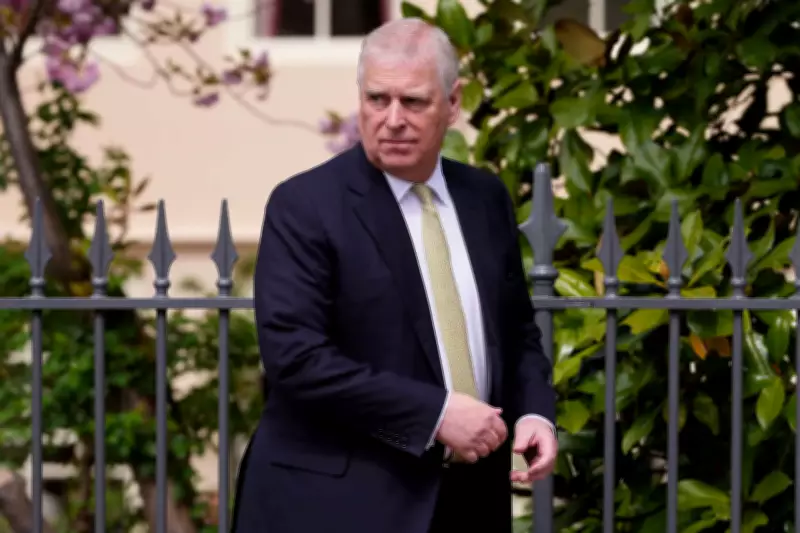
In an unprecedented development in modern British history, Prince Andrew, the younger brother of King Charles, was arrested at his home on the Sandringham Estate on Thursday morning. The arrest occurred on his 66th birthday, marking the first time a royal family member has been taken into custody in contemporary times.
Dramatic Morning Raid at Royal Residence
At precisely 8 am, six unmarked police vehicles carrying eight detectives arrived at Wood Farm, a secluded royal property on the Norfolk estate. The plainclothes officers arrested the former prince, who currently stands eighth in line to the throne, on suspicion of misconduct in public office. A royal spokesperson confirmed that Buckingham Palace had not been informed prior to the arrest being executed.
Andrew's security team followed the police convoy as he was transported to a secret location for questioning. Thames Valley Police later confirmed the arrest of "a man in his sixties from Norfolk" as part of an ongoing investigation into misconduct in public office.

Allegations Stemming from Epstein Files
The arrest represents a dramatic fallout from revelations contained within the Jeffrey Epstein files. According to the latest tranche of documents released by the US Department of Justice, Andrew appears to have shared confidential UK government information with the disgraced financier and convicted sex offender during his tenure as a UK trade envoy from 2001 to 2011.
Specific allegations include:
- In October 2010, Andrew forwarded official reports of his diplomatic visits to Singapore, Vietnam, Hong Kong, and China to Epstein. These reports were written by his then-special assistant, Amit Patel.
- In December 2010, he sent Epstein a confidential brief about international investment opportunities in Afghanistan's Helmand province, where reconstruction was being funded by the UK government.
Contrast with US Response and Ongoing Investigations
The arrest stands in sharp contrast to the official response in the United States, where authorities have not yet taken similar action against anyone connected to the Epstein case. These particular allegations are separate from previous accusations involving Virginia Giuffre, who tragically took her own life last year after alleging she was forced to have sex with Andrew when she was 17 after being trafficked by Epstein.
While Giuffre's family has been calling for Andrew to testify before the US Congress about his Epstein connections, the current investigation focuses specifically on his conduct as a trade representative. Giuffre's siblings released a statement saying, "At last, today, our broken hearts have been lifted at the news that no one is above the law, not even royalty. We extend our gratitude to the UK's Thames Valley Police. He was never a prince."
Simultaneous Property Searches and Legal Implications
While Andrew remained in police custody for questioning, authorities conducted simultaneous searches at both his Sandringham home and his former residence, Royal Lodge in Windsor. Although he recently moved out of Royal Lodge due to the damage he was causing to the royal family's reputation, he still maintains belongings at the property.
The investigation now moves to the Crown Prosecution Service, which must decide whether to formally charge the King's brother. This presents a unique constitutional situation, as in the British legal system, criminal offences are considered crimes against "the Crown"—the very institution represented by his brother, the monarch.
Misconduct in public office is a serious offence that carries a maximum sentence of life imprisonment. Andrew has consistently denied any wrongdoing in relation to Epstein, despite a recently released photograph showing him kneeling on all fours over a woman, and a second woman alleging last month that Epstein sent her to the UK for a sexual encounter with the prince.
This historic arrest represents the most significant development in the numerous scandals that have plagued the House of Windsor in recent years. While Princess Anne had been convicted twice previously, she was merely summoned to court rather than arrested, making Andrew's detention truly unprecedented in modern royal history.