

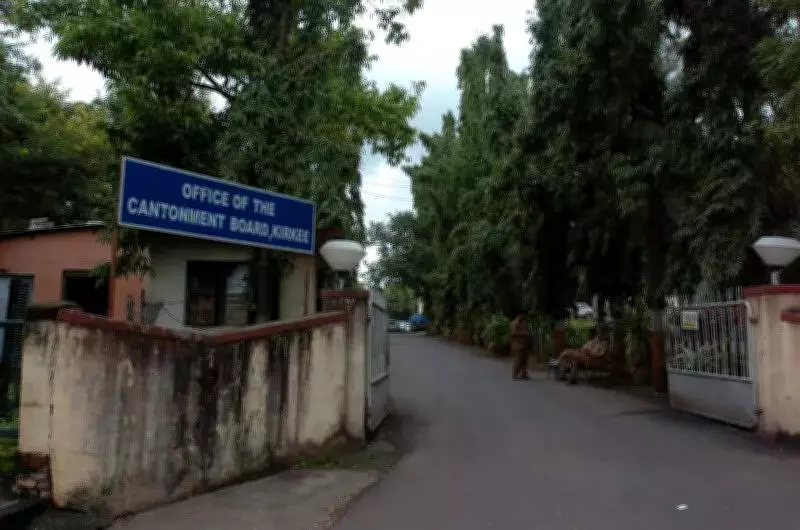
Pune's Defence Land Administration Faces Critical Vacancy Crisis
The strategic city of Pune is grappling with a significant administrative void that threatens the governance of vast defence land holdings. For over eight months, the crucial position of Defence Estates Officer (DEO) for the Pune circle has remained unfilled, sparking widespread concern among defence officials, cantonment activists, and local residents.
A Vital Role Left Unoccupied Since July 2025
The Pune circle represents one of the most important formations under the Directorate General of Defence Estates (DGDE), serving as custodian for approximately 72,000 acres of prime defence land across Maharashtra within the Army's Southern Command. This extensive portfolio includes key cantonment areas such as Pune, Khadki, Dehuroad, Ahmednagar, and Aurangabad, along with additional land parcels spread across Satara, Sangli, Kolhapur, Ratnagiri, and Sindhudurg districts.
Despite the scale and sensitivity of these responsibilities, the DEO position has been vacant since July 2025 when the last full-time officer, Vidyadhar Pawar, was reassigned as Chief Executive Officer of the Pune Cantonment Board. Since that transition, the duties have reportedly been managed as an additional charge by another officer—a temporary arrangement that stakeholders claim is severely impacting operational efficiency.

Official Silence and Administrative Ambiguity
Neither the DGDE nor the Principal Directorate of Defence Estates (Southern Command), under which the Pune circle functions, has provided any official explanation for this prolonged vacancy. When contacted by media, C Ravindra, the principal director of PDDE (Southern Command), did not respond to phone calls or text messages.
A senior DGDE official from New Delhi offered a cryptic statement: "This is an administrative decision and an officer has been appointed as the DEO. However, the charge has not been taken yet." The officer declined to elaborate on the reasons behind the delay in assuming responsibilities.
Consequences of Administrative Paralysis
Defence officials, Army authorities, and local activists have highlighted how the absence of a dedicated officer at the helm is hampering timely decision-making on critical matters. "The official who is handling additional responsibilities tends to avoid taking decisions on critical matters. As a result, issues remain pending for long periods," explained cantonment activist Rajabhau Chavan.
Chavan cited a recent incident involving an Old Grant Bungalow (OGB) where a dispute escalated after a private party allegedly created disturbances within the premises. "How can a private party go to the bungalow and try to vacate the old tenant who has been staying in it since 1991? They damaged the tenant's property. In what capacity had they done it? This is defence property, and we've learned private players are targeting such properties," Chavan emphasized.
He further noted multiple violations in OGBs that require thorough investigation, stressing the need for "a full-time DEO who can exercise their power judiciously to safeguard such prime properties in the cantonment."
High-Stakes Land Management Requires Dedicated Oversight
Sources within the Southern Command echoed these concerns, noting that the Pune circle deals with exceptionally high-value land and complex regulatory frameworks. This makes it imperative to have a full-time official with the authority to take independent decisions without hesitation or bureaucratic avoidance.
The DEO plays a pivotal role in maintaining accurate land records, preventing encroachments, overseeing leases, and ensuring strict compliance with defence land policies. Any delay in decision-making can have serious legal and financial implications, particularly in urban centers where defence land faces increasing pressure from development activities.
"Experts point out that Pune's rapid urban expansion has further increased the importance of proactive land governance in cantonment areas," a senior army officer told media. "In such a scenario, prolonged vacancies in key administrative positions could lead to administrative bottlenecks and weaken oversight mechanisms."

The situation highlights how administrative gaps in critical defence positions can potentially compromise the protection and proper management of valuable national assets, with stakeholders anxiously awaiting a permanent resolution to this governance vacuum.





