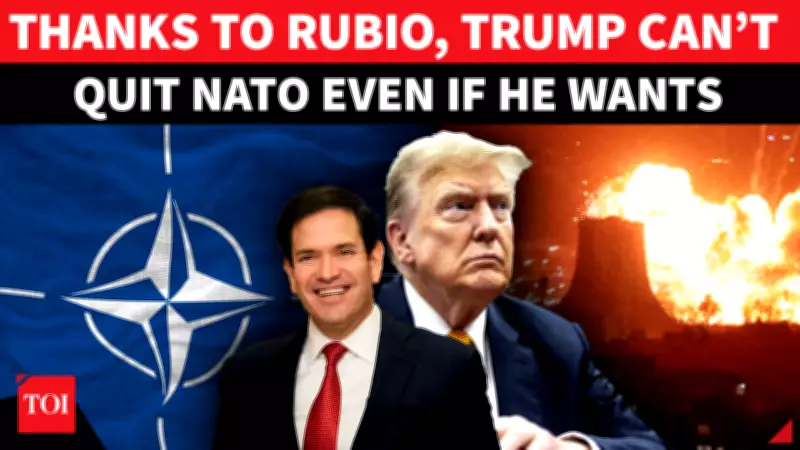
Rubio-Backed Law Creates Legal Wall Against Trump's NATO Exit Ambitions
In a dramatic development for US foreign policy, President Donald Trump is confronting a significant legal obstacle to his push for reconsidering America's relationship with the North Atlantic Treaty Organization. A 2023 law co-sponsored by Senator Marco Rubio has emerged as a formidable barrier, effectively preventing any sitting US president from unilaterally withdrawing the country from the NATO alliance without explicit approval from Congress or a two-thirds Senate vote.
The Legal Mechanism Blocking Presidential Authority
The legislation, passed during the previous administration, establishes specific procedural requirements that must be met before the United States can exit the decades-old military alliance. This legal framework represents a deliberate check on executive power, ensuring that such a monumental foreign policy decision cannot be made by presidential decree alone. The law's provisions create multiple layers of Congressional oversight, requiring either majority approval from both houses of Congress or the more stringent two-thirds Senate vote typically reserved for treaty ratifications.
This legislative safeguard has transformed from theoretical protection to practical barrier as President Trump has increasingly voiced skepticism about NATO's value to American interests. The timing of this legal confrontation is particularly significant, coinciding with escalating international tensions surrounding the Iran conflict and visible divisions within the alliance regarding collective defense commitments and burden-sharing arrangements.

Growing Tensions and Alliance Divisions
The geopolitical landscape has grown increasingly complex since the law's passage, with multiple international crises testing NATO's cohesion and purpose. The ongoing conflict involving Iran has exposed differing priorities among member states, while debates about defense spending and strategic priorities have created visible fractures within the alliance. Against this backdrop of international uncertainty, President Trump's public musings about potential NATO withdrawal have taken on heightened significance, making the legal constraints imposed by the Rubio-backed legislation particularly consequential.
The intersection of presidential ambition and legislative constraint raises fundamental questions about the future direction of American foreign policy and the balance of power between the executive and legislative branches in matters of international commitment. This legal standoff occurs as NATO faces what many analysts describe as its most significant challenges since the Cold War era, with traditional alliances being tested by shifting global power dynamics and emerging security threats.
Implications for US Foreign Policy and International Relations
The legal barrier created by the 2023 legislation ensures that any serious move toward NATO withdrawal would require extensive political negotiation and consensus-building within the American political system. This procedural requirement fundamentally alters the calculus for any administration considering a departure from the alliance, potentially forcing a more deliberative approach to what would represent one of the most significant shifts in US foreign policy since World War II.
The situation presents a classic constitutional confrontation between presidential authority and Congressional prerogative in foreign affairs, with the specific mechanism established by the Rubio-backed law serving as the battleground. As international tensions continue to escalate and alliance relationships face unprecedented strain, this legal framework may prove to be a stabilizing force in US foreign policy, preventing abrupt changes that could have far-reaching consequences for global security architecture.
This development highlights the enduring tension in American governance between executive flexibility in foreign policy and legislative oversight of international commitments. The Rubio-backed legislation now stands as a substantial legal obstacle to presidential NATO withdrawal ambitions, ensuring that any such move would require broad political consensus rather than unilateral executive action.