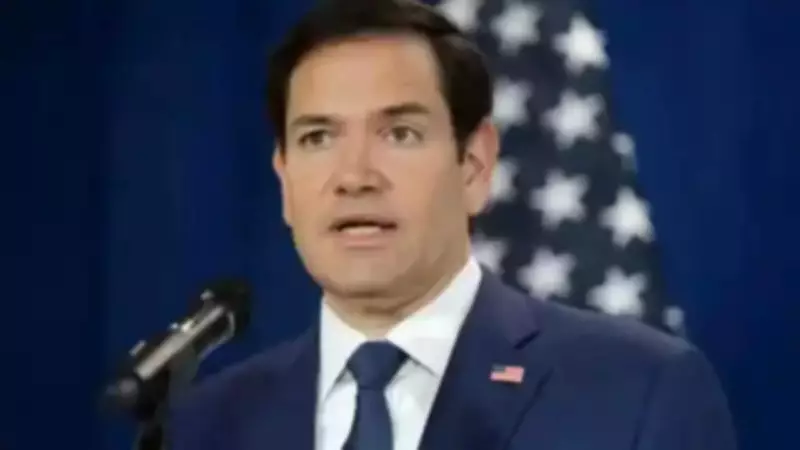
Marco Rubio Engages in Covert Discussions with Raul Castro's Grandson as US Ramps Up Pressure on Cuba
In a significant development, Secretary of State Marco Rubio conducted secret talks with Raul Guillermo Rodriguez Castro, the grandson and personal caretaker of Cuba's de facto leader Raul Castro. These discussions, as reported by Axios, occurred as the United States applied unprecedented pressure on Havana's communist regime, highlighting a strategic bypass of official Cuban government channels.
Bypassing Official Channels to Target the True Decision-Maker
The Trump administration viewed the 94-year-old revolutionary Raul Castro as the island's genuine authority, leading Rubio to engage directly with his 41-year-old grandson, known affectionately as "Raulito." A senior Trump administration official clarified, "I wouldn't call these 'negotiations' as much as 'discussions' about the future." This approach underscored a belief that Raulito and his circle represent a younger, business-minded generation disillusioned with revolutionary communism and open to rapprochement with the US.
Our position — the U.S. government's position — is the regime has to go, the official stated. "But what exactly that looks like is up to [President Trump] and he has yet to decide. Rubio is still in talks with the grandson." Known in political circles by his nickname "El Cangrejo" ("The Crab") due to a deformed finger, Raulito is seen as a key figure, serving as his grandfather's bodyguard and having allies in GAESA, Cuba's massive military-business conglomerate.

Cuba's Deepening Crisis and US Strategic Moves
After 67 years of US sanctions and internal mismanagement, Cuba teeters on the brink of collapse, facing a severe humanitarian crisis. The power grid is failing, hospitals are limiting surgeries, and shortages of food and fuel are rampant. Tourism has dried up, and uncollected garbage piles on streets. This turmoil accelerated following Trump's January 3 abduction and extradition of Venezuela's socialist leader Nicolas Maduro, who had supplied free oil to Cuba. On January 29, Trump threatened sanctions on Mexico, another major oil supplier.
US officials noted that the successful Maduro operation, which resulted in no American losses and the deaths of at least 32 Cuban intelligence and military officials, deeply rattled Cuba's leadership. The decision to keep Maduro's Vice President Delcy Rodriguez in power signaled to Cuban insiders that Trump and Rubio were willing to negotiate with rivals. "They're looking for the next Delcy in Cuba," a source familiar with the talks revealed.
Friendly Discussions and Future Prospects
Sources described the Rubio-Castro conversations as surprisingly amicable, focusing on the future rather than political diatribes about the past. Their shared Cuban heritage and accents, common in Miami, facilitated a rapport. "Raulito could be straight out of Hialeah," one source remarked. "This could be a conversation between regular guys on the streets of Miami." Analysts suggest Trump might avoid wholesale regime change, recalling the disastrous de-Baathification in Iraq, potentially allowing some Castro family members to remain, which could outrage Miami's Cuban exiles.
Rubio did not engage with Cuba's official leader, President Miguel Díaz-Canel Bermúdez, whom US officials viewed as communist party "apparatchiks" incapable of envisioning change. Cuba's government denied high-level dialogue, stating in a response to Axios, "There is no high-level dialogue between the government of the United States and Cuba... There have been exchanges of messages."
Challenges Ahead and Political Implications
Transforming Cuba into a US ally is deemed far more challenging than in Venezuela, due to Cuba's destitute command-and-control economy and deep-seated animosity between hardliners in Havana and Miami. Recently, Cuban American Republicans urged Trump to indict Raul Castro for the 1996 plane shootdown, though the administration has not responded. Rubio, while publicly silent on specifics, referenced US law in a Senate hearing last month, emphasizing regime change if Cuba fails to meet demands like freeing political prisoners and holding elections. Trump has yet to decide on a definitive course of action.