

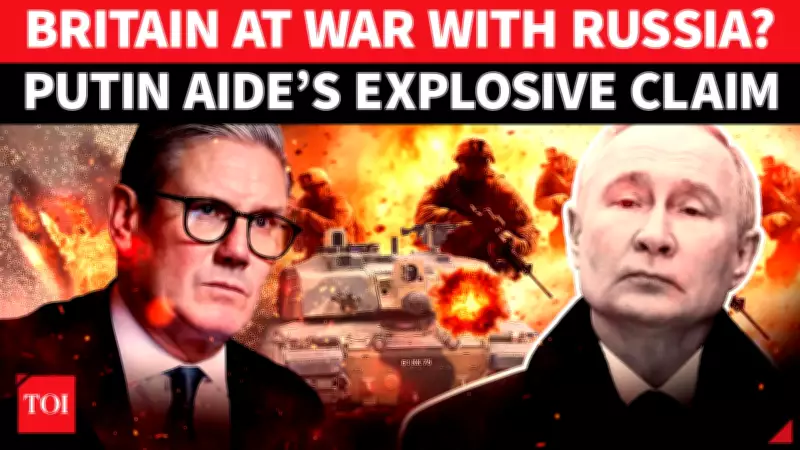
Russia Accuses Britain of Becoming Direct Combatant in Ukraine Conflict
In a dramatic escalation of diplomatic rhetoric, Russia has launched a fierce verbal assault on the United Kingdom, accusing it of transitioning from a supportive ally to a direct military participant in the ongoing war in Ukraine. Moscow's foreign ministry issued a statement claiming that British personnel are now deeply embedded in Ukrainian combat operations.
Allegations of Comprehensive Military Integration
According to Russian officials, the United Kingdom has crossed what they describe as a critical threshold. Russia asserts that British troops are now fighting alongside Ukrainian forces on the front lines, with military planners and intelligence officers operating within Ukrainian command structures. This represents a significant escalation from previous support roles.
The Kremlin specifically alleges that London provides not just weapons and training, but operational combat support that makes Britain "de facto at war" with Russia. This includes intelligence sharing that directly influences battlefield decisions and tactical planning assistance that shapes Ukrainian military operations.

British Response and Diplomatic Tensions
While UK officials have consistently avoided confirming any direct combat role for British personnel, they have significantly expanded training missions and support programs for Ukrainian forces. This ambiguity has created a diplomatic gray area that Russia is now exploiting to frame Britain as an active belligerent.
The timing of these accusations is particularly sensitive as tensions between Russia and NATO continue to escalate. With multiple NATO members providing various forms of support to Ukraine, Russia's specific targeting of Britain suggests a strategic attempt to isolate individual alliance members and test NATO unity.
Broader Implications for European Security
These allegations raise profound questions about the nature of Western involvement in the Ukraine conflict and the potential for wider confrontation. Key concerns include:
- The legal and political definitions of "direct involvement" in an armed conflict
- The risk of mission creep as support activities evolve over time
- The potential for Russian retaliation against NATO members
- The impact on diplomatic efforts to resolve the conflict
Military analysts note that while Western countries have openly provided weapons, intelligence, and training to Ukraine, the alleged presence of British combat troops would represent a qualitative shift in involvement. Such direct participation could potentially trigger different responses under international law and military doctrine.
Escalating Rhetoric and Strategic Calculations
Russia's decision to publicly accuse Britain of direct military involvement appears calculated to achieve multiple objectives:
- To deter other NATO countries from increasing their support to Ukraine
- To create divisions within the Western alliance by targeting specific members
- To justify potential future escalations in Russia's own military actions
- To influence domestic and international public opinion about the conflict
The situation remains fluid, with diplomatic channels between Moscow and London likely strained by these serious allegations. As the war in Ukraine continues with no immediate resolution in sight, the question of how far Western support can extend without triggering broader conflict becomes increasingly urgent for policymakers on all sides.






