

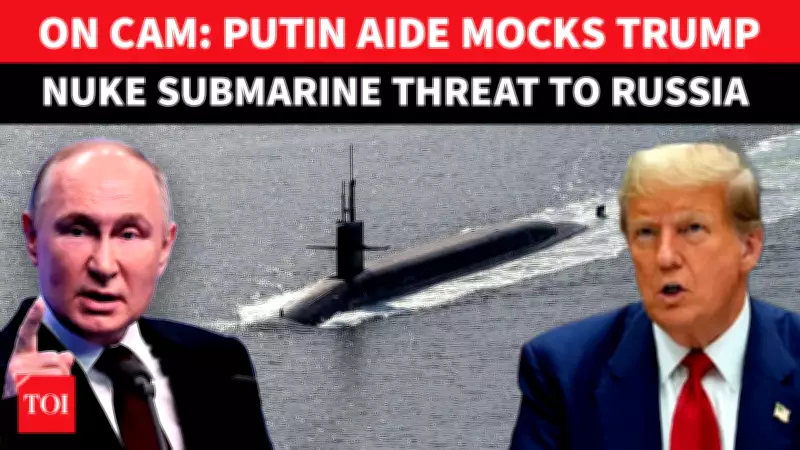
Russia Dismisses Trump's Nuclear Submarine Claims as Hollow Threat
In a striking diplomatic development, Russia has publicly mocked former US President Donald Trump's recent nuclear submarine assertions while simultaneously praising his peacemaking intentions. The comments came from Dmitry Medvedev, deputy chair of Russia's Security Council and former president, during an interview with Reuters.
Medvedev's Dual Message: Mockery and Praise
Dmitry Medvedev delivered a carefully balanced message that combined ridicule of American military posturing with appreciation for Trump's diplomatic approach. He laughed off claims that US nuclear submarines have suddenly appeared near Russian territorial waters, characterizing them as empty threats designed for domestic political consumption rather than genuine strategic maneuvers.
"Where are your submarines, Donald?" Medvedev quipped, highlighting what he described as the hollow nature of the nuclear threat. This rhetorical question underscored Russia's apparent lack of concern about American naval movements in the region.

Trump Praised as Genuine Peace Seeker
Despite the mockery of military threats, Medvedev offered substantial praise for Trump's diplomatic efforts. He described Trump as a decisive leader genuinely pursuing peace who wants to be remembered as a peacemaker in history. According to Medvedev, Trump is actively working toward a deal to end the ongoing conflict in Ukraine, which has persisted for nearly three years.
The Russian official's comments come at a critical juncture in the Ukraine war, where Russia currently controls approximately one-fifth of Ukrainian territory. Ukrainian forces continue to maintain positions in parts of the eastern Donbas region, creating a complex military and diplomatic landscape.
Diplomatic Efforts Intensify
A new round of trilateral talks involving the United States, Russia, and Ukraine is scheduled to take place this week in Abu Dhabi. These negotiations represent intensified diplomatic efforts to bring the prolonged conflict to a resolution. The timing of Medvedev's comments appears strategically aligned with these upcoming discussions, potentially serving as both a public positioning statement and a negotiation tactic.
The Russian perspective, as articulated by Medvedev, presents an interesting dichotomy: dismissing American military threats as insignificant while acknowledging and encouraging American diplomatic engagement. This approach suggests Russia may be more receptive to negotiated solutions than to military confrontations, at least in their public messaging.
Medvedev's dual message reflects the complex nature of contemporary international relations, where public posturing, diplomatic signaling, and genuine negotiation efforts often intersect. His comments about Trump's peacemaking aspirations indicate that despite tensions and mockery, channels for diplomatic engagement remain open and potentially productive.
The upcoming talks in Abu Dhabi will test whether this public praise translates into concrete diplomatic progress. All parties involved will be watching closely to see if the praised peacemaking intentions can overcome the significant obstacles that have prolonged the Ukraine conflict for nearly three years.






