

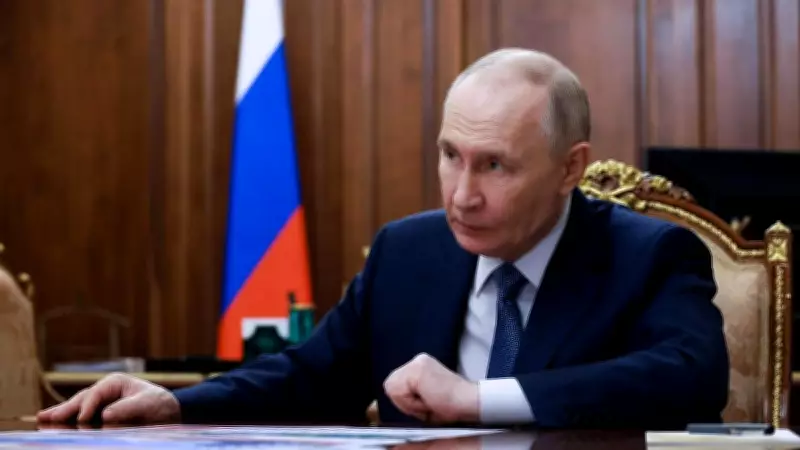
Kremlin to Demand US Explanation on Venezuela Oil Sanctions
The Russian government has declared it will formally seek clarification from the United States concerning newly imposed oil restrictions on Venezuela. This diplomatic move comes in direct response to recent public statements made by former US President Donald Trump, who openly discussed the potential for American control over Venezuela's enormous oil reserves.
Trump's Controversial Remarks Spark International Concern
During a recent public appearance, Donald Trump explicitly mentioned the possibility of the United States taking control of Venezuela's oil resources, which are recognized as the largest proven reserves in the world. Trump suggested this could be achieved in collaboration with major American oil corporations, following what he described as the "toppling" of the current Venezuelan government. These comments have raised significant concerns within the international community, particularly among nations with strategic interests in the region.
Russia's Strategic Position and Diplomatic Response
The Kremlin, through its official channels, has expressed deep apprehension regarding both Trump's statements and the broader implications of US oil restrictions against Venezuela. Russia maintains substantial economic and political ties with Venezuela, including significant investments in the country's oil sector. The proposed US measures could potentially destabilize these arrangements and impact global energy markets.

Key points from the Kremlin's position include:
- A formal request for detailed explanations from US authorities about the nature and scope of the oil restrictions.
- Concerns that such measures violate international law and principles of national sovereignty.
- Warnings about the potential for increased geopolitical tensions in Latin America.
- Emphasis on the need for diplomatic dialogue to resolve the situation peacefully.
Global Implications of Venezuela's Oil Reserves
Venezuela possesses approximately 300 billion barrels of proven oil reserves, making it the country with the largest oil wealth globally. This resource has long been a focal point of international interest and conflict. The United States has historically imposed various sanctions on Venezuela's oil industry, citing concerns over governance and human rights. However, Trump's explicit comments about controlling these reserves represent a significant escalation in rhetoric.
Analysts suggest that Russia's demand for clarification is not merely procedural but reflects broader strategic calculations. Moscow views Venezuela as an important partner in countering US influence in the Western Hemisphere. Any attempt by the United States to dominate Venezuela's oil sector could be perceived as a direct challenge to Russian interests.
Historical Context and Future Developments
The relationship between the United States and Venezuela has been strained for decades, with oil politics at its core. Previous administrations have employed sanctions as a tool to pressure the Venezuelan government, but the notion of outright control over resources marks a new and controversial approach. Russia's intervention adds another layer of complexity to an already volatile situation.
Looking ahead, several developments are anticipated:
- The formal diplomatic communication from Russia to the United States regarding the oil restrictions.
- Potential responses from the US State Department and other government agencies.
- Reactions from other global powers, including China and European nations, who also have interests in Venezuela's oil.
- The impact on oil prices and energy markets as uncertainty persists.
The situation remains fluid, with all parties closely monitoring each other's moves. The Kremlin's decision to seek clarification underscores the high stakes involved and the potential for this issue to escalate into a more significant international dispute.






