Russia Condemns Gulf Nations for Hosting US Military Installations
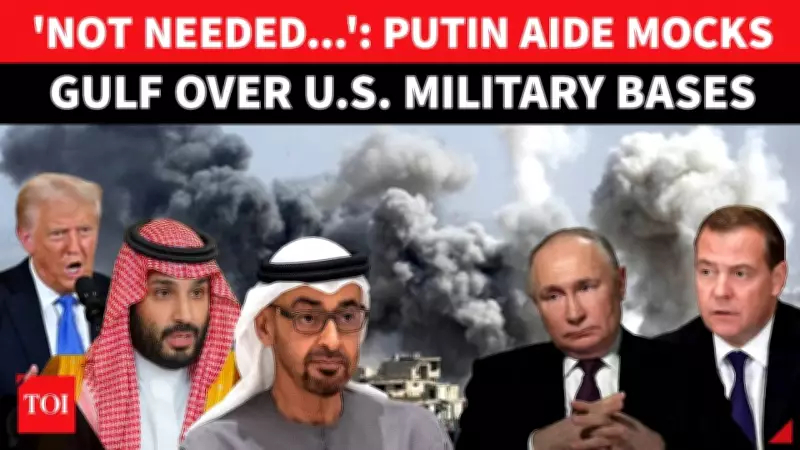
In a sharp diplomatic rebuke, Russian President Vladimir Putin's close aide Dmitry Medvedev has publicly criticized Gulf nations for permitting the United States to establish and operate military bases on their territory. Medvedev took to social media platform X to voice his concerns, asserting that these American installations pose a significant threat to regional stability and security.
Medvedev's Warning on US 'Unreliability'
Medvedev's post emphasized the perceived unreliability of the United States as a partner, urging Gulf states to reconsider their alliances. He argued that hosting US bases could lead to increased tensions and potential conflicts in the Middle East, drawing attention to what he described as Washington's unpredictable foreign policy actions.
This criticism aligns with earlier statements from Russian Foreign Minister Sergey Lavrov, who declared that all nations suffering from what he termed "U.S. and Israeli aggression" are considered strategic partners of Moscow. Lavrov's remarks underscore Russia's positioning as an alternative power in the region, seeking to bolster ties with countries at odds with American and Israeli interests.

Background: Intelligence Sharing Allegations
The development occurs against the backdrop of an explosive report from US media, which alleges that Moscow is secretly providing Iran with intelligence on the locations of American warships and aircraft in the Middle East. This alleged cooperation highlights the deepening geopolitical rift between Russia and the United States, with the Middle East becoming a focal point of their strategic competition.
If true, such intelligence sharing could significantly impact military operations and security dynamics in the region, potentially endangering US assets and personnel. It also raises questions about the extent of Russian involvement in Middle Eastern conflicts and its efforts to counter American influence.
Regional Implications and Gulf Nations' Dilemma
Gulf nations, including Saudi Arabia, the United Arab Emirates, and others, now face a complex diplomatic challenge. On one hand, they rely on US military support for security against regional threats, such as those from Iran and militant groups. On the other hand, Russia's warnings and its growing ties with Iran could pressure these countries to reassess their strategic alignments.
The situation is further complicated by ongoing conflicts in the region, including tensions between Israel and Hezbollah, as well as broader US-Iran hostilities. Russia's vocal criticism may aim to exploit these divisions, positioning itself as a mediator or ally to those discontented with US policies.
In summary, Russia's condemnation of Gulf nations for hosting US bases reflects a broader strategy to undermine American influence in the Middle East. With allegations of intelligence sharing with Iran and calls for regional partners to question US reliability, Moscow is actively challenging Washington's dominance in this volatile part of the world.