

Russia Pledges Continued Adherence to New START Nuclear Limits Post-Expiry
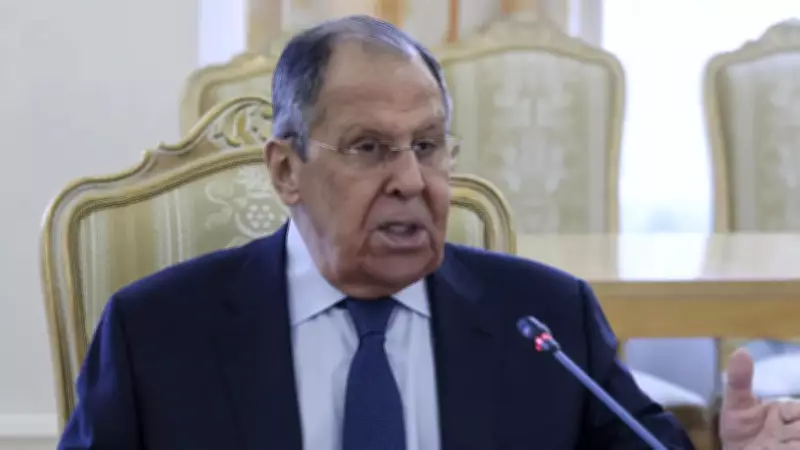
In a significant development on global nuclear stability, Russian Foreign Minister Sergey Lavrov declared on Wednesday that Moscow will persist in observing the restrictions outlined in the New START nuclear arms control treaty, even following its formal expiration. This commitment, however, is strictly conditional upon the United States maintaining identical adherence to the treaty's caps.
Treaty Expiration Sparks Global Concerns Over Unchecked Arms Race
The New START treaty officially lapsed on February 5, marking the first instance in over five decades that the world's two foremost nuclear powers—Russia and the United States—operate without legally binding constraints on their atomic arsenals. This milestone has ignited widespread international apprehension regarding the potential for an uncontrolled nuclear arms competition, threatening global security frameworks.
Historical Context and Recent Diplomatic Moves
Originally signed in 2010 by then-US President Barack Obama and Russian President Dmitry Medvedev, the New START treaty succeeded a series of bilateral agreements dating back to the SALT I pact of 1972. It imposed strict limits, capping each nation at 1,550 deployed nuclear warheads and 700 deployed missiles and bombers. Initially set to expire in 2021, the accord was extended for five years, but inspections were halted in 2020 due to the COVID-19 pandemic and never resumed.

In February 2023, Russian President Vladimir Putin announced the suspension of Russia's participation in the treaty, citing escalating tensions with the United States and NATO over the Ukraine conflict. Despite this, the Kremlin affirmed it would continue respecting the numerical limits. Later, in September, Putin proposed extending adherence to these caps for an additional year to facilitate negotiations for a replacement agreement.
Lavrov's Parliamentary Address and Conditional Moratorium
Addressing Russia's lower house of parliament, Lavrov emphasized that Moscow's commitment to the treaty's restrictions would endure in the absence of a formal extension. "The moratorium declared by the president will remain as long as the US doesn't exceed these limits," Lavrov stated. "We will act in a responsible and balanced way on the basis of analysis of the US military policies."
He further expressed cautious optimism, noting, "We have reason to believe that the United States is in no hurry to abandon these limits and that they will be observed for the foreseeable future." Lavrov added that Russia would "closely monitor how things are actually unfolding" and would actively work on a new agreement if US intentions for cooperation are confirmed.
Diplomatic Discussions and Kremlin's Stance on Formal Extensions
Lavrov's remarks followed reports by Axios suggesting that Russian and US negotiators explored an informal understanding to continue observing the treaty's limits for at least six months during talks in Abu Dhabi last week. However, Kremlin spokesman Dmitry Peskov countered this, asserting that any extension must be formal. "It's hard to imagine any informal extension in this sphere," he remarked.
Peskov confirmed that nuclear arms control was discussed during the Abu Dhabi meetings, which also involved delegations from Russia, Ukraine, and the United States focused on potential peace settlements in Ukraine. "There is an understanding, and they talked about it in Abu Dhabi, that both parties will take responsible positions and both parties realize the need to start talks on the issue as soon as possible," he said.
Background on US Position and Bilateral Dynamics
Last year, Putin indicated Moscow's willingness to adhere to the treaty's limits for another year if the United States reciprocated. However, US President Donald Trump has insisted on including China in any future agreement, a proposal that Beijing has firmly rejected. This divergence highlights the complex diplomatic landscape surrounding nuclear arms control.

Despite the treaty's expiration, both nations agreed on February 5 to restore high-level military-to-military communication following the Abu Dhabi discussions. This direct link had been suspended in 2021 amid deteriorating relations prior to Russia's military operation in Ukraine in February 2022.
Implications for Global Strategic Stability
The ongoing dialogue and conditional commitments underscore the critical importance of nuclear arms control in maintaining international peace. As both superpowers navigate post-treaty scenarios, the world watches closely, hoping for responsible actions that prevent a destabilizing arms race. The future of strategic stability hinges on continued diplomatic engagement and mutual adherence to existing limits until a new framework is established.





